 Breaking News & Live Updates
- Breaking News & Live Updates
- Breaking News & Live Updates
- Breaking News & Live Updates
- Breaking News & Live Updates
- Breaking News & Live Updates
- Breaking News & Live Updates
- Breaking News & Live Updates
- Breaking News & Live Updates
- Breaking News & Live Updates
Exploring the Link Between Gut Bacteria and Stress Resilience
Emerging research highlights the profound connection between our gut's microbial inhabitants and our ability to navigate stressful circumstances. A study conducted by researchers at the University of Vienna indicates that the composition of the gut microbiome is intrinsically linked to how individuals react to acute stress. Specifically, participants demonstrating a richer diversity of gut bacteria also showed a more significant hormonal and emotional response to stress. This outcome is interpreted not as a sign of weakness, but rather as an indicator of a flexible and resilient biological framework.
This investigation, one of the first of its kind to confirm this relationship in healthy human subjects, utilized standardized stress tests and comprehensive analyses of stool and saliva samples. The findings suggest that lifestyle elements, particularly diet, which directly shape microbial diversity, could serve as crucial, albeit often overlooked, determinants of our stress coping mechanisms. The study also delves into the complex interplay between microbial metabolic byproducts, such as butyrate and propionate, and their varied effects on stress reactivity, underscoring the nuanced nature of this biological system.
The intricate relationship between gut health and stress reactivity opens new avenues for therapeutic interventions. By understanding how microbial diversity influences our physiological and psychological responses to stressors, future strategies could involve targeted modulation of the microbiome through specific dietary adjustments or prebiotics. Such approaches hold promise for enhancing well-being and managing stress-related conditions, enabling individuals to adapt more effectively to life's challenges. A diverse and robust gut microbiome may thus be a cornerstone of mental and physical fortitude.
Ultimately, a dynamic and responsive stress system, supported by a healthy gut, is essential for optimal human functioning. This research encourages us to view our internal ecosystems as active participants in our overall health, fostering a proactive approach to nurturing our microbiomes for enhanced resilience and a greater capacity to thrive amidst adversity.
Other Articles
 Apr 16, 2026
Children with ADHD Perceive Lower Effort on Cognitive Tasks Compared to Peers
A new study reveals that children with ADHD report applying less effort on cognitive tasks, regardless of perceived difficulty, compared to neurotypical peers. This suggests that self-reported effort provides unique insights into their daily challenges, separate from objective performance scores. The findings highlight the importance of understanding subjective experiences in ADHD research, suggesting metacognitive monitoring differs in these children.
 Apr 16, 2026
Overcoming Inner Criticism: An ACT Approach to Self-Acceptance
This article explores how Acceptance and Commitment Therapy (ACT) can help individuals shift from self-criticism to self-acceptance. It delves into the nature of the inner critic, how it hinders self-acceptance, and provides a four-step ACT framework to foster psychological flexibility and enable value-driven actions despite self-critical thoughts. The piece emphasizes that the goal isn't to eliminate negative thoughts but to change one's relationship with them, promoting a more compassionate self-view and enhanced well-being.
 Apr 15, 2026
Social Media Use: Is It an Addiction or a Lifestyle?
Recent legal judgments have sparked debate over whether excessive social media engagement constitutes a clinical addiction. While platforms face lawsuits for their 'addictive' design, the scientific community is divided. Researchers note parallels between problematic social media use and substance abuse in terms of brain changes and negative life impacts. However, the American Psychiatric Association (APA) has yet to officially classify it as a disorder, highlighting the need for more rigorous research and data to establish diagnostic criteria and avoid over-pathologizing everyday behaviors.
 Apr 15, 2026
Embracing Self-Acceptance Through ACT Principles
This article explores how Acceptance and Commitment Therapy (ACT) can foster self-acceptance. It delves into the misconception that self-acceptance requires liking all thoughts and feelings, instead emphasizing the practice of acknowledging and coexisting with inner experiences without judgment. The piece highlights how struggling against difficult thoughts can intensify distress and introduces four ACT-based exercises—defusion, gratitude towards the mind, making room for feelings, and value-driven action—to cultivate psychological flexibility and promote a healthier relationship with oneself.
 Apr 14, 2026
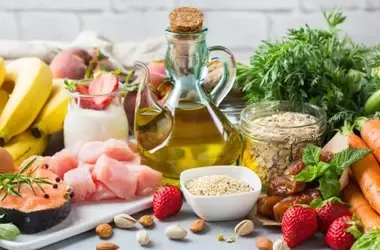
Mind Diet: A Beacon for Brain Health in Aging
New research from the Framingham Heart Study indicates that adhering to the MIND diet, a fusion of Mediterranean and DASH dietary principles, is associated with a slower reduction in brain volume and increased gray matter in older adults. This dietary approach, emphasizing vegetables, berries, and fish while limiting processed foods, suggests a significant role for nutrition in cognitive preservation as we age, offering a promising path to mitigate age-related brain decline.
 Apr 14, 2026
Ketone Esters Show Promise as a Novel Treatment for Alcohol Use Disorder
A recent small-scale study investigated the efficacy of a single dose of a ketone ester supplement in mitigating alcohol cravings among individuals with alcohol use disorder (AUD). The research, published in Psychiatry Research: Neuroimaging, indicated that the supplement significantly reduced self-reported cravings and induced a metabolic shift in the brain, favoring ketone utilization over glucose. These findings suggest that ketone esters could potentially offer a new therapeutic avenue for AUD by addressing the brain's energy deficit during alcohol withdrawal.