 Breaking News & Live Updates
- Breaking News & Live Updates
- Breaking News & Live Updates
- Breaking News & Live Updates
- Breaking News & Live Updates
- Breaking News & Live Updates
- Breaking News & Live Updates
- Breaking News & Live Updates
- Breaking News & Live Updates
- Breaking News & Live Updates
Mapping the Brain's Intelligence Architecture
For many years, scientists have strived to pinpoint the precise cerebral zones underpinning human intellectual capacity. A recent rigorous analysis now indicates that general intelligence is a symphony orchestrated by the entire brain's coordination, rather than the isolated prowess of any single area. By meticulously mapping the intricate web of neural connections, known as the human connectome, researchers have uncovered distinct patterns of global communication that reliably predict cognitive ability.
Unraveling the Brain's Intelligent Design: A New Perspective on Human Cognition
In a groundbreaking investigation led by Ramsey R. Wilcox of the University of Notre Dame, alongside senior author Aron K. Barbey and their esteemed colleagues from the University of Illinois and Stony Brook University, a novel methodology was employed to probe the sophisticated architecture of the human brain. The team delved into extensive datasets from the Human Connectome Project, encompassing brain imaging and cognitive assessments from 831 healthy young adults. To further buttress their conclusions, an independent cohort of 145 participants from a separate study was used for validation.
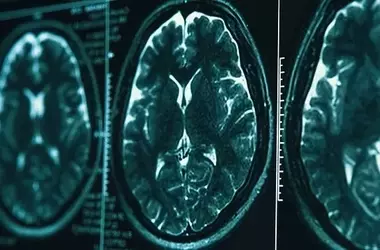
This pioneering research integrated two sophisticated magnetic resonance imaging (MRI) techniques: diffusion-weighted MRI, which meticulously charts the structural white matter pathways, the brain's inherent cabling system, and resting-state functional MRI, which gauges the rhythmic activation patterns of neural cells. This synergistic approach enabled the creation of a unified brain model, capable of estimating the information transmission capacity of structural connections based on observed neural activity. This model thoughtfully addressed and mitigated the limitations inherent in conventional scanning methods, such as the challenge of discerning crossing fibers within the brain’s complex white matter.
The study's revelations, published in the esteemed journal Nature Communications, challenge traditional theories that attributed intelligence to specific networks, particularly those within the frontal and parietal lobes. Instead, it strongly advocates for the Network Neuroscience Theory, which posits that intelligence emerges from the brain's holistic topology—its physical wiring and dynamic activity patterns working in seamless concert. The team's predictive models, incorporating brain-wide connections, demonstrated remarkable accuracy in forecasting intelligence scores, underscoring that cognitive ability is a distributed phenomenon. The most significant predictive connections were not confined to singular regions but were broadly dispersed across the cerebral cortex.
A particularly intriguing discovery pertained to the nature of neural connections. Individuals demonstrating higher intelligence exhibited a greater reliance on 'weak ties' for long-range communication. These 'weak ties,' characterized by their structural flexibility rather than density, serve as crucial bridges between disparate neural communities, demanding less energy for maintenance and allowing for rapid adaptation to novel problem-solving scenarios. Conversely, the strong connections in these individuals tended to be shorter, striking an optimal balance between the energetic cost of long-distance communication and the necessity for system-wide integration.
Furthermore, the concept of 'modal control' emerged as a significant factor. This refers to the ability of specific brain regions to guide the brain into difficult-to-reach activity states, essential for complex cognitive tasks. High modal control regions, predominantly located in areas associated with executive function and visual processing, were positively correlated with general intelligence, acting as orchestrators of inter-network interactions.
The researchers also investigated 'small-worldness,' a measure of network efficiency that reflects both localized clustering and short average path lengths across the system. Higher intelligence scores correlated with greater small-world characteristics, indicating a brain network optimized for specialized local processing while facilitating swift global communication. This balance prevents information from becoming compartmentalized or the network from descending into disorganization.
While acknowledging the correlational nature of their findings and the study's focus on young adults, this research offers profound implications for the future of artificial intelligence. By understanding how the human brain achieves general intelligence through this integrated, dynamic global architecture, engineers may draw inspiration to design more adaptable and broadly capable AI systems, moving beyond task-specific functionalities to mimic the human brain's remarkable flexibility and efficiency in data processing.
This pivotal research heralds a paradigm shift, moving neuroscience from a fragmented view of the brain as a mere collection of tools to an appreciation of its unified, dynamic, and interconnected nature. As our comprehension of the connectome deepens, so too will our understanding and definition of intelligence continue to evolve.
Other Articles
 Feb 04, 2026
High-Salt Diet's Impact on Gut Microbiome, Brain, and Cognition
New research indicates that excessive salt intake can disturb the gut's bacterial balance, leading to changes in brain gene expression and cognitive decline. Published in the European Journal of Pharmacology, the study reveals how a high-salt diet in mice triggers neuroinflammation and memory deficits by altering the gut microbiome, highlighting the intricate connection between diet, gut health, and brain function.
 Feb 03, 2026
The Impact of Dog Size on Trainability and Behavior
A 2025 ELTE study involving 5,000 dogs from 48 breeds revealed a strong correlation between a dog's size and its trainability and behavior. Smaller dogs are often perceived as less trainable, exhibiting more undesirable behaviors such as fear and hyperactivity. However, the study suggests that owner behavior, including inconsistent training and over-indulgence, significantly contributes to these issues, highlighting the need for a tailored approach to training based on canine size.
 Feb 02, 2026
The Profound Impact of Play on Animal Well-being
Investigating how play behaviors mirror an animal's emotional state, Amelia St John Wallis's research highlights play's critical role in animal welfare. From revealing discomfort in calves to fostering resilience, this study suggests that integrating diverse play opportunities can significantly enrich the lives of captive animals, promoting adaptability and positive cognitive biases against environmental challenges. It underscores the multifaceted nature of play as both an indicator and a contributor to overall well-being.
 Feb 02, 2026
Age-Related Brain Connectivity Shifts in Intelligence
New research published in Scientific Reports indicates that the neural pathways connecting genetic predispositions to general intelligence dynamically change with age. The study, utilizing EEG to measure brain activity, reveals that in young adults, intelligence correlates with frontal and parietal lobe activity in beta and theta frequency bands. Conversely, older adults show correlations in lower alpha and theta bands, shifting to sensory processing regions. This suggests a neural reorganization process as individuals age.
 Feb 02, 2026
New Brain Activity Maps Challenge Century-Old Anatomical Boundaries
Groundbreaking research using electrical signals from thousands of neurons in mice reveals that the brain's command center organizes itself by information flow, not physical structure. This challenges the traditional century-old method of mapping the brain based on tissue appearance under a microscope. The findings suggest that neuronal firing patterns, characterized by rate, burstiness, and memory, define functional regions, offering a new perspective on brain organization and potential insights into neurological disorders.
 Jan 29, 2026
The Power of Conversation in Shaping Our Perception of Reality
This article explores how conversations with others, particularly those we are close to, play a crucial role in validating our experiences and shaping our sense of objective reality. Drawing on research, it highlights that shared dialogue, even on mundane topics, fosters a 'shared reality' that enhances authenticity and well-being. The studies demonstrate that this sense of shared understanding helps individuals feel more grounded and less anxious, emphasizing the therapeutic power of human connection.