 Breaking News & Live Updates
- Breaking News & Live Updates
- Breaking News & Live Updates
- Breaking News & Live Updates
- Breaking News & Live Updates
- Breaking News & Live Updates
- Breaking News & Live Updates
- Breaking News & Live Updates
- Breaking News & Live Updates
- Breaking News & Live Updates
Grandparental Care Linked to Enhanced Cognitive Function in Older Adults
A recently published research endeavor highlights the positive correlation between providing care for grandchildren and superior cognitive performance in older individuals. This investigation delves into whether the act of grandparenting itself, rather than the intensity or nature of care activities, contributes to maintaining mental acuity during later life. The findings suggest that engaging in this family role may offer a protective benefit against age-related cognitive decline, particularly for grandmothers.
Grandparental Engagement and Brain Health: A Deeper Look
Researchers, led by Flavia S. Chereches from Tilburg University, embarked on a comprehensive study, leveraging data from the English Longitudinal Study of Ageing, a long-term project spanning from 2016 to 2022. The team meticulously analyzed information from nearly 3,000 grandparents, aiming to understand the nuances of this relationship. To ensure robust comparisons, they employed propensity score matching, carefully selecting non-caregiving counterparts who shared similar demographic and health profiles with the caregiving grandparents. This methodological rigor helped to mitigate the 'healthy caregiver' bias, where healthier individuals are naturally more likely to assume caregiving responsibilities.
Cognitive function was assessed through two key metrics: verbal fluency, measured by the ability to name as many animals as possible in a minute, and episodic memory, evaluated by recalling a list of words immediately and after a delay. Initial analyses revealed that grandparents engaged in caregiving generally displayed higher scores in both memory and verbal fluency, a pattern consistent across both genders. However, a significant divergence emerged when examining cognitive changes over time. Grandmothers who provided care demonstrated a perceptibly slower pace of cognitive decline compared to their non-caregiving female counterparts. Intriguingly, while caregiving grandfathers also started with higher cognitive scores, their rate of decline mirrored that of non-caregivers.
Further investigation into the specifics of caregiving yielded unexpected results. The study found no direct correlation between the frequency of caregiving days and cognitive health, suggesting that daily engagement did not necessarily translate to superior cognitive outcomes. Similarly, while certain activities, such as assisting with homework or engaging in leisure pursuits, were associated with higher baseline cognitive scores, these specific tasks did not appear to influence the long-term trajectory of cognitive change. The diversity of activities performed, however, did show a link to improved initial cognitive function, aligning with the idea that varied mental stimulation benefits the brain.
Gender differences in caregiving roles were also prominent. Grandmothers consistently reported higher engagement across all seven measured care activities, a finding that resonates with established sociological insights into women's typically more active role in childcare. This distinction in the nature of involvement could potentially explain why the sustained cognitive benefits were predominantly observed in women.
Despite these compelling associations, the researchers emphasize that causation cannot be definitively established. It is conceivable that individuals with naturally higher cognitive function are more predisposed to take on caregiving duties. The study also acknowledges limitations, including the lack of data on the perceived burden or voluntariness of care, and the potential impact of the COVID-19 pandemic on family dynamics during the study period. These factors highlight the need for further exploration to fully unravel the complex interplay between grandparental care and cognitive well-being.
This study illuminates the profound benefits that can arise from intergenerational connections, underscoring the value of family engagement in later life. It challenges us to look beyond simplistic measures of 'how much' or 'what type' of care, and instead consider the broader experience and emotional satisfaction derived from such roles. For society, it reinforces the importance of supporting families where grandparents play a vital caregiving role, recognizing the potential positive ripple effects on the well-being of both the young and the old. Future research should explore the qualitative aspects of grandparent-grandchild relationships and long-term impacts, fostering a deeper understanding of this enriching social dynamic.
Other Articles
 Feb 08, 2026
Breathing Patterns Can Forecast Joyful Moments, Particularly for Individuals with Depression History
New research indicates that variations in breathing patterns might serve as indicators of impending moments of joy and excitement, especially in individuals who have experienced depression. Published in the Journal of Affective Disorders, the study highlights a strong link between active breathing dynamics and the emergence of high-energy positive emotions. This discovery offers a novel perspective on the interplay between physiological processes and mental well-being, suggesting that more vigorous respiratory patterns could precede states of elevated positive arousal.
 Feb 08, 2026
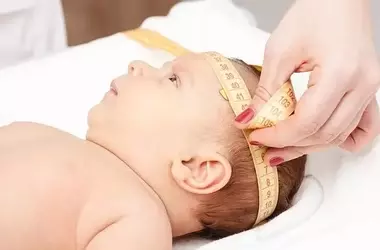
Infant Head Circumference Trajectories and Autism Risk: A Longitudinal Study
A study conducted in Israel investigated the relationship between head growth patterns in infants during their first year of life and a subsequent diagnosis of autism. The findings, published in 'Autism Research,' revealed that infants with consistently small or large head circumferences had a significantly higher likelihood of being diagnosed with autism. This association was even stronger for the extreme 5% with the smallest or largest head sizes.
 Feb 08, 2026
New Pathway for Alzheimer's Treatment Through Diabetes-Linked Enzyme
Researchers have discovered a potential new therapeutic approach for Alzheimer's disease by targeting the enzyme PTP1B, commonly associated with diabetes and obesity. By inhibiting PTP1B, the brain's immune cells (microglia) become more effective at clearing toxic amyloid-beta plaques, leading to restored cognitive function in mouse models. This breakthrough suggests a crucial link between metabolic disorders and Alzheimer's, opening avenues for drugs that reactivate microglial activity without causing harmful inflammation.
 Feb 08, 2026
Blood Test Shows Promise for Early Parkinson's Detection
A new study reveals that specific biological markers in blood samples may detect Parkinson's disease years before physical symptoms emerge. These molecular signatures, indicative of cellular DNA repair and stress responses, diminish once the disease is established, opening a potential window for early intervention. The research, published in npj Parkinson's Disease, leveraged gene expression analysis and machine learning to identify these crucial early indicators.
 Feb 08, 2026
PTSD Treatment Enhances Cognitive Abilities in Veterans, Study Shows
A recent study focusing on U.S. veterans undergoing treatment for Post-Traumatic Stress Disorder (PTSD) revealed significant improvements in cognitive functions such as episodic visual memory, motor learning, and sustained visual attention. These gains were directly linked to a reduction in PTSD symptoms. The research compared cognitive processing therapy and Sudarshan Kriya yoga, finding both equally effective in improving cognitive performance, though spatial working memory saw a decline. The findings underscore the broader benefits of PTSD treatment beyond symptom alleviation.
 Feb 07, 2026
The Impact of Self-Kindness on Adolescent Psychological Development
New research highlights how self-kindness profoundly influences the psychological richness experienced by teenagers. This study differentiates psychological richness from traditional concepts of happiness, defining it as a life enriched by diverse and perspective-shifting experiences. Focusing on the components of self-compassion, the findings suggest that positive traits like self-kindness and mindfulness are crucial predictors for adolescents navigating challenges, fostering a deeper understanding of the world, and preventing self-judgment from hindering their growth. Published in 'Applied Psychology: Health and Well-Being', this longitudinal study provides insights into fostering mental well-being.