 Breaking News & Live Updates
- Breaking News & Live Updates
- Breaking News & Live Updates
- Breaking News & Live Updates
- Breaking News & Live Updates
- Breaking News & Live Updates
- Breaking News & Live Updates
- Breaking News & Live Updates
- Breaking News & Live Updates
- Breaking News & Live Updates
Genetic Factors in Military Elite Resilience
A recent study on U.S. Army Special Forces candidates highlights the role of specific genetic variations in determining how individuals cope with extreme physical and mental demands. The research uncovered significant connections between a soldier's genetic makeup and their cognitive abilities, psychological robustness, and physiological stress responses during a rigorous selection process. These discoveries were recently documented in the scientific publication Physiology & Behavior.
Becoming a U.S. Army Special Forces member requires successfully passing the Special Forces Assessment and Selection course, recognized globally as one of the most challenging military evaluations. This program demands nearly three weeks of intense physical exertion, coupled with sleep deprivation and complex problem-solving scenarios, resulting in a high attrition rate of approximately 70%. This rigorous environment provides a unique opportunity for researchers to investigate human endurance.
The study, led by Martha Petrovick from MIT Lincoln Laboratory and Harris R. Lieberman from the U.S. Army Research Institute of Environmental Medicine, sought to understand why some individuals excel in these demanding conditions while others falter. Resilience, generally defined as the capacity to positively adapt to adversity, trauma, or threats, involves both psychological stability and physiological recovery. Beyond physical training and mental preparation, biological factors, particularly genetics, significantly influence how the brain manages chemicals and how the body processes stress hormones. The researchers hypothesized that specific genetic variations previously linked to mental health or stress responses would also serve as indicators of resilience in these elite soldiers.
The study involved 800 male soldiers, all young and fit active-duty personnel averaging 25 years old, who volunteered for the selection course. Before the assessment, blood samples were collected to analyze 47 genes known to affect brain function, sleep cycles, and hormone regulation. The analysis identified several genetic variations associated with superior cognitive performance and higher resilience scores, with the influence of these genes often varying based on the soldier's ancestral background. Key genes included COMT, involved in dopamine breakdown and linked to intelligence in White Hispanic candidates; TPH2, which regulates serotonin and affected non-verbal intelligence in White Hispanic soldiers; and PER3, which influences circadian rhythms and correlated with vocational aptitude. Additionally, CRHR1, crucial for the body’s stress response, and MAOB, which breaks down neurotransmitters like dopamine and epinephrine, were linked to self-reported resilience. The study also found genetic ties to physiological stress markers, such as variations in FKBP5 impacting cortisol levels in Black participants and CYP1A2 affecting cortisol in White Hispanic soldiers. While these genetic markers were associated with resilience, no single gene could predict success or failure, underscoring that resilience is a complex interplay of genetics, environment, physical training, and psychological readiness.
Despite these findings offering valuable insights into human endurance and stress coping mechanisms, it is important to acknowledge the study's limitations. The participant group consisted solely of male soldiers, which means the results may not be generalizable to women or the broader civilian population. Furthermore, as an observational study, it identified statistical associations rather than direct causation between genes and performance. The genetic associations were also specific to certain racial and ethnic groups, highlighting the ongoing need for diverse representation in genetic research. Nevertheless, this research provides a rare window into the biological underpinnings of high performance and resilience, demonstrating that genetic factors influencing susceptibility to mental health issues also shape resilience in healthy, high-performing individuals under extreme conditions. This understanding could inform future research into optimizing training and developing new strategies to help individuals recover from severe stress, with potential applications extending beyond military contexts to anyone facing challenging life experiences.
Other Articles
 Jan 17, 2026
The Art of Sustainable Endurance: Navigating Desire-Goal Conflicts
This article explores the concept of "desire-goal motivational conflict," where the urge for immediate comfort clashes with the pursuit of long-term objectives. Drawing insights from a study on endurance athletes, it highlights how perceived discomfort can undermine motivation, leading to thoughts of quitting. The piece emphasizes that endurance is a dynamic process of moment-to-moment decisions and offers practical strategies for managing these internal conflicts, such as recalibrating goals and strategically adjusting effort to ensure completion without burnout.
 Jan 16, 2026
Gendered Approaches to Math: Girls Favor Algorithms, Boys Opt for Shortcuts
Recent studies indicate a persistent gender gap in mathematical problem-solving strategies, extending from high school to adulthood. Girls and women are more inclined to use traditional, step-by-step algorithms, while boys and men prefer mental shortcuts. This divergence in methods has significant implications for performance on complex math problems and long-term career choices in STEM fields, challenging common perceptions about mathematical ability and academic success.
 Jan 15, 2026
The Psychological Shield Against Dementia: Cultivating Purpose for Brain Health
Emerging research indicates that certain psychological states, such as optimism, conscientiousness, and particularly a strong sense of purpose, can significantly impact our risk of developing dementia. Studies show that cultivating a sense of purpose may reduce dementia risk by up to 28%, even in individuals with genetic predispositions. This highlights the importance of integrating psychological well-being into a holistic approach to brain health.
 Jan 14, 2026
Music Education's Impact on Children's Cognitive Development
A study using the Adolescent Brain Cognitive Development (ABCD) dataset indicates that consistent music training enhances vocabulary skills in children, potentially mitigating academic challenges associated with lower-income environments. This research, published in the Annals of the New York Academy of Sciences, highlights music's role as a cognitive equalizer.
 Jan 14, 2026
Books Over Screens: Enhancing Early Childhood Language and Emotional Skills
A study published in 'Computers in Human Behavior' reveals that replacing screen time with shared reading significantly improves language and emotional development in preschoolers, regardless of whether the screen content is educational. This research highlights the unique benefits of interactive reading experiences over digital media for young children's cognitive and socio-emotional growth.
 Jan 13, 2026
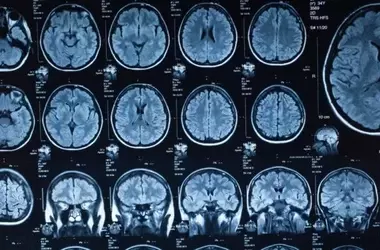
Scientists Uncover Five Distinct Phases of Brain Structural Development Across the Human Lifespan
New research challenges the conventional understanding of brain development, revealing that brain structure undergoes five distinct, non-linear phases throughout life. Analyzing thousands of brain scans from individuals aged zero to ninety, scientists identified critical turning points at approximately ages nine, 32, 66, and 83. These findings suggest a more dynamic and complex maturation process for the human brain, with implications for understanding neurological and mental health conditions.