 Noticias de última hora y actualizaciones en vivo
- Noticias de última hora y actualizaciones en vivo
- Noticias de última hora y actualizaciones en vivo
- Noticias de última hora y actualizaciones en vivo
- Noticias de última hora y actualizaciones en vivo
- Noticias de última hora y actualizaciones en vivo
- Noticias de última hora y actualizaciones en vivo
- Noticias de última hora y actualizaciones en vivo
- Noticias de última hora y actualizaciones en vivo
- Noticias de última hora y actualizaciones en vivo
Electrocardiograph: Structure, Function, and Clinical Interpretation

1. Objective
The objective of this article is to provide a comprehensive and neutral explanation of the electrocardiograph as a diagnostic tool. It aims to clarify how the device works, what information it provides, and how it is used in different healthcare settings. The article also explores its limitations, safety considerations, and broader implications in medical diagnostics.
2. Basic Concept Explanation
An electrocardiograph is a device that records the electrical signals generated by the heart as it contracts and relaxes. The output produced by this device is called an electrocardiogram (ECG or EKG), which is a graphical representation of these electrical activities over time.
The heart’s electrical system controls the timing of each heartbeat. As electrical impulses travel through the heart muscle, they trigger contractions that pump blood throughout the body. The electrocardiograph detects these electrical impulses using electrodes placed on the skin.
A standard electrocardiograph setup includes:
- Electrodes attached to specific locations on the body
- Lead wires that transmit signals
- A recording device that displays or prints the waveform
Different configurations, such as 12-lead ECG systems, provide multiple perspectives of the heart’s electrical activity.
3. Core Mechanisms and In-Depth Explanation
Physiological Basis
The heart’s electrical activity originates in the sinoatrial node, often referred to as the natural pacemaker. Electrical impulses spread through the atria, reach the atrioventricular node, and then propagate through the ventricles via specialized conduction pathways.
These electrical events correspond to distinct components on an ECG waveform:
- P wave: atrial depolarization
- QRS complex: ventricular depolarization
- T wave: ventricular repolarization
The timing, amplitude, and shape of these waves provide information about cardiac function.
Signal Detection
Electrodes placed on the skin detect voltage differences caused by the heart’s electrical activity. These signals are extremely small, typically measured in millivolts, and require amplification.
The electrocardiograph uses differential amplifiers to enhance signal quality while minimizing noise from external sources such as muscle activity or electrical interference.
Signal Processing
After amplification, the signal undergoes filtering to remove artifacts. Digital processing techniques may be applied to:
- Enhance waveform clarity
- Detect abnormalities
- Store and transmit data
Modern systems often include automated interpretation algorithms, although these outputs are subject to clinical verification.
Lead Systems
A lead represents a specific electrical viewpoint of the heart. In a standard 12-lead ECG:
- Limb leads provide frontal plane views
- Chest leads provide horizontal plane views
This multi-angle approach allows for a more comprehensive assessment of cardiac activity.
4. Comprehensive Overview and Objective Discussion
Clinical Applications
Electrocardiographs are widely used in:
- Routine health examinations
- Emergency settings for acute cardiac events
- Monitoring during surgery
- Long-term ambulatory monitoring
They assist in identifying conditions such as arrhythmias, myocardial infarction, and conduction abnormalities.
Advantages
- Non-invasive method of assessment
- Rapid acquisition of results
- Broad applicability across medical settings
Limitations
- Provides indirect information about heart structure
- Interpretation can be complex and requires expertise
- Susceptible to noise and artifacts
Safety and Operational Considerations
Electrocardiographs are generally considered safe, as they only record electrical activity and do not emit energy into the body. However, proper electrode placement and device maintenance are essential for accurate results.
Artifacts caused by movement, poor electrode contact, or external interference can affect the quality of the recording and may lead to misinterpretation.
Broader Context
The electrocardiograph has evolved from analog systems to digital platforms integrated with electronic health records. Advances in wearable technology have expanded its use beyond clinical environments, enabling continuous monitoring in daily life.
However, the interpretation of ECG data remains dependent on clinical context, and automated systems are typically used as supplementary tools rather than standalone diagnostic methods.
5. Summary and Outlook
The electrocardiograph is a fundamental tool in cardiovascular assessment, providing valuable insights into the heart’s electrical activity. Its non-invasive nature and rapid output make it a widely used diagnostic method.
Future developments may include enhanced signal processing, integration with artificial intelligence, and improved portability. These advancements may expand its applications while maintaining the need for careful interpretation and clinical oversight.
6. Q&A Section
Q1: What does an electrocardiograph measure?
It measures the electrical activity of the heart and represents it as a waveform.
Q2: Is an electrocardiogram the same as an electrocardiograph?
No. The electrocardiograph is the device, while the electrocardiogram is the recorded output.
Q3: Why are multiple leads used in ECG recordings?
Multiple leads provide different perspectives of the heart’s electrical activity, improving diagnostic accuracy.
Q4: Can an ECG detect all heart conditions?
No. It provides information about electrical activity but may not detect all structural or functional abnormalities.
Q5: What factors can affect ECG accuracy?
Improper electrode placement, patient movement, and electrical interference can all impact signal quality.
Sources
https://www.nhlbi.nih.gov/health/electrocardiogram
https://www.ncbi.nlm.nih.gov/books/NBK459364/
https://www.ahajournals.org/doi/10.1161/CIRCULATIONAHA.110.962753
https://www.who.int/publications/i/item/9789241549950
https://www.ncbi.nlm.nih.gov/pmc/articles/PMC6932537/

Otros artículos
 Apr 15, 2026
Infusion Pump: Principles, Functions, and Clinical Context
 Por Dr. Mei Wong
 Apr 13, 2026
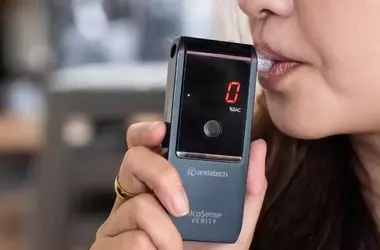
Breath Alcohol Testing Devices (Breathalyzers)
This article provides a comprehensive overview of breath alcohol testing devices, commonly known as breathalyzers. It explains the fundamental differences between fuel cell and semiconductor sensor technologies, discusses their accuracy and reliability, and reviews the legal standards for blood alcohol concentration (BAC) in driving enforcement. The article also covers factors affecting measurement validity and concludes with frequently asked questions.
 Por Dr. Felipe Torres
 Apr 13, 2026
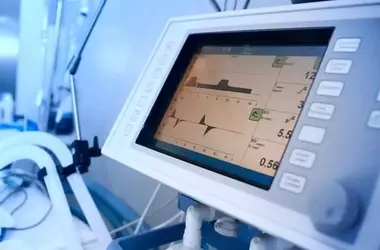
Mechanical Ventilators
This article explains what a mechanical ventilator is, how it functions, and how it is used in clinical settings. It covers noninvasive and invasive ventilation modes, including CPAP and BiPAP, and discusses the physiology of positive pressure support. The article also reviews risks and complications, and concludes with a question-and-answer section.
 Por Anjali Deshpande
 Apr 10, 2026
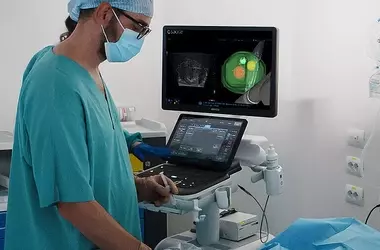
Ultrasound Diagnostic Systems: Principles, Imaging Mechanisms, and Clinical Interpretation
This article examines ultrasound diagnostic systems as non-invasive imaging technologies that use high-frequency sound waves to visualize internal structures. It defines the concept, explains the underlying physics, and explores how images are generated and interpreted. The discussion also covers system components, accuracy considerations, limitations, and future developments, followed by a structured question-and-answer section.
 Por Grace Nwoye, MPH
 Apr 10, 2026
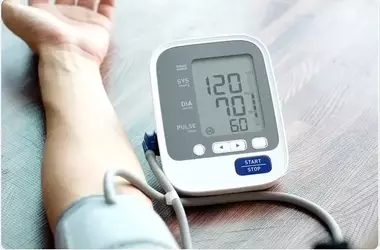
Understanding Blood Pressure Monitors: Principles, Accuracy, and Role in Health Assessment
This article examines blood pressure monitors as medical devices used to measure arterial pressure. It outlines what blood pressure monitors are, how they work, and why they are important in health assessment. It further explores measurement principles, accuracy considerations, device types, and their role in broader health contexts. The discussion concludes with a neutral overview of limitations, future directions, and common questions.
 Por Dr. Peter Van Dijk
 Apr 09, 2026
Ultrasound Imaging Systems: Principles, Technology, and Clinical Context
Ultrasound imaging systems, often referred to as diagnostic ultrasound or sonography devices, are medical tools that use high-frequency sound waves to visualize internal body structures. This article defines ultrasound imaging, outlines its purpose, and previews the discussion of its underlying physical principles, technological mechanisms, and broader applications. It further presents an objective overview of capabilities and limitations, followed by a summary, future outlook, and a structured question-and-answer section.
Por Dr. Felipe Torres