 Noticias de última hora y actualizaciones en vivo
- Noticias de última hora y actualizaciones en vivo
- Noticias de última hora y actualizaciones en vivo
- Noticias de última hora y actualizaciones en vivo
- Noticias de última hora y actualizaciones en vivo
- Noticias de última hora y actualizaciones en vivo
- Noticias de última hora y actualizaciones en vivo
- Noticias de última hora y actualizaciones en vivo
- Noticias de última hora y actualizaciones en vivo
- Noticias de última hora y actualizaciones en vivo
Infusion Pump: Principles, Functions, and Clinical Context

1. Objective
The objective of this article is to provide a clear and structured understanding of infusion pumps as medical devices. It aims to explain their definition, core components, working principles, and application scenarios. Additionally, the article explores safety concerns, operational challenges, and the broader healthcare context in which infusion pumps are used. By the end, readers will have a comprehensive and neutral understanding of the topic.
2. Basic Concept Explanation
An infusion pump is an electronic or mechanical device used to administer fluids into a patient’s body in controlled amounts. These fluids may include medications, blood products, or nutritional solutions. Infusion pumps are commonly used in hospitals, outpatient clinics, and sometimes in home care settings.
Unlike manual methods such as gravity-driven intravenous administration, infusion pumps allow for precise control over the rate, volume, and timing of fluid delivery. This precision is particularly important when administering drug that require strict dosage control.
Infusion pumps can be categorized into several types based on their mechanism and application:
- Volumetric pumps
- Syringe pumps
- Ambulatory pumps
- Patient-controlled analgesia pumps
Each type is designed to meet specific clinical requirements and varies in size, complexity, and functionality.
3. Core Mechanisms and In-Depth Explanation
The functioning of an infusion pump relies on a combination of mechanical, electronic, and software-based systems.
Mechanical Components
At the core of most infusion pumps is a mechanism that physically moves fluid through tubing. This may involve:
- Peristaltic motion using rollers that compress tubing
- Motor-driven syringe plungers
- Pressure-based systems
These mechanisms ensure consistent and measurable fluid movement.
Sensors and Feedback Systems
Modern infusion pumps incorporate sensors that monitor:
- Flow rate
- Pressure within the tubing
- Air bubbles
- Occlusions or blockages
Feedback from these sensors allows the device to adjust operation or trigger alarms if irregularities are detected.
Control Systems
Infusion pumps use microprocessors and software algorithms to regulate delivery parameters. Healthcare providers input desired settings such as infusion rate and total volume. The system continuously compares actual performance with programmed values to maintain accuracy.
Safety Features
Key safety mechanisms include:
- Alarm systems for occlusion, air-in-line, or battery failure
- Dose error reduction systems (DERS)
- Lockout intervals in patient-controlled devices
These features aim to reduce risks associated with incorrect dosing or mechanical failure.
4. Comprehensive Overview and Objective Discussion
Applications
Infusion pumps are used in various medical contexts:
- Intensive care units for critical drug delivery
- Oncology for chemotherapys administration
- Diabetes management through insulin pumps
- Home care for long-term therapies
Advantages
- High precision in fluid delivery
- Ability to administer very small or continuous doses
- Reduced need for constant manual monitoring
Limitations
- Dependence on proper programming and user training
- Risk of mechanical malfunction or user error
- Maintenance and calibration requirements
Safety and Risk Considerations
Despite advanced features, infusion pumps have been associated with safety incidents, often due to:
- Incorrect programming
- Software errors
- Device misuse
Regulatory agencies have highlighted the importance of standardized protocols and regular device checks to mitigate risks.
Broader Context
The development of infusion pump technology reflects broader trends in healthcare, including automation, patient safety initiatives, and the integration of digital systems. However, the effectiveness of these devices depends not only on technology but also on clinical workflows and human factors.
5. Summary and Outlook
Infusion pumps represent a significant advancement in the controlled delivery of medical fluids. Their ability to provide precise, programmable administration has made them integral to modern healthcare. However, their use requires careful attention to training, maintenance, and system design.
Future developments may focus on improving interoperability with electronic health records, enhancing user interfaces, and incorporating advanced analytics to further reduce risks and improve efficiency.
6. Q&A Section
Q1: What distinguishes an infusion pump from manual intravenous methods?
An infusion pump provides automated and precise control over fluid delivery, whereas manual methods rely on gravity and require frequent adjustments.
Q2: Are infusion pumps used outside hospitals?
Yes, certain types are designed for home use, particularly for chronic conditions requiring continuous therapy.
Q3: What are the main risks associated with infusion pumps?
Risks include incorrect programming, mechanical failure, and improper maintenance.
Q4: How do infusion pumps detect problems during operation?
They use sensors to monitor flow, pressure, and air presence, triggering alarms when abnormalities occur.
Q5: What factors influence the choice of infusion pump type?
Factors include the type of medication, required precision, duration of therapy, and patient mobility.
Sources
https://www.fda.gov/medical-devices/general-hospital-devices-and-supplies/infusion-pumps
https://www.ncbi.nlm.nih.gov/books/NBK482457/
https://www.who.int/publications/i/item/9789241549950
https://www.ncbi.nlm.nih.gov/pmc/articles/PMC3462046/
https://www.ecri.org/components/HRC/Pages/SafSecInfusionPumps.aspx

Otros artículos
 Apr 13, 2026
Breath Alcohol Testing Devices (Breathalyzers)
This article provides a comprehensive overview of breath alcohol testing devices, commonly known as breathalyzers. It explains the fundamental differences between fuel cell and semiconductor sensor technologies, discusses their accuracy and reliability, and reviews the legal standards for blood alcohol concentration (BAC) in driving enforcement. The article also covers factors affecting measurement validity and concludes with frequently asked questions.
 Por Dr. Felipe Torres
 Apr 13, 2026
Mechanical Ventilators
This article explains what a mechanical ventilator is, how it functions, and how it is used in clinical settings. It covers noninvasive and invasive ventilation modes, including CPAP and BiPAP, and discusses the physiology of positive pressure support. The article also reviews risks and complications, and concludes with a question-and-answer section.
 Por Anjali Deshpande
 Apr 10, 2026
Ultrasound Diagnostic Systems: Principles, Imaging Mechanisms, and Clinical Interpretation
This article examines ultrasound diagnostic systems as non-invasive imaging technologies that use high-frequency sound waves to visualize internal structures. It defines the concept, explains the underlying physics, and explores how images are generated and interpreted. The discussion also covers system components, accuracy considerations, limitations, and future developments, followed by a structured question-and-answer section.
 Por Grace Nwoye, MPH
 Apr 10, 2026
Understanding Blood Pressure Monitors: Principles, Accuracy, and Role in Health Assessment
This article examines blood pressure monitors as medical devices used to measure arterial pressure. It outlines what blood pressure monitors are, how they work, and why they are important in health assessment. It further explores measurement principles, accuracy considerations, device types, and their role in broader health contexts. The discussion concludes with a neutral overview of limitations, future directions, and common questions.
 Por Dr. Peter Van Dijk
 Apr 09, 2026
Ultrasound Imaging Systems: Principles, Technology, and Clinical Context
Ultrasound imaging systems, often referred to as diagnostic ultrasound or sonography devices, are medical tools that use high-frequency sound waves to visualize internal body structures. This article defines ultrasound imaging, outlines its purpose, and previews the discussion of its underlying physical principles, technological mechanisms, and broader applications. It further presents an objective overview of capabilities and limitations, followed by a summary, future outlook, and a structured question-and-answer section.
Por Dr. Felipe Torres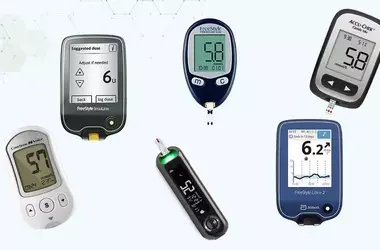 Apr 09, 2026
Blood Glucose Monitors: Principles, Measurement Methods, and Clinical Context
Blood glucose monitors are devices designed to measure the concentration of glucose in the blood, providing essential information for understanding metabolic status. This article defines what blood glucose monitoring is, explains how these devices function, explores their measurement mechanisms, and presents an objective discussion of their role in health management. It concludes with a summary, future outlook, and a structured question-and-answer section.
Por Dr. Felipe Torres