 Breaking News & Live Updates
- Breaking News & Live Updates
- Breaking News & Live Updates
- Breaking News & Live Updates
- Breaking News & Live Updates
- Breaking News & Live Updates
- Breaking News & Live Updates
- Breaking News & Live Updates
- Breaking News & Live Updates
- Breaking News & Live Updates
The Dual Impact of the World Cup: Unpacking Fan Psychology and Societal Effects
Beyond the Game: The Profound Sociopsychological Footprint of Global Football Tournaments
The Health Risks of Fandom: When Passion Becomes Perilous
For dedicated supporters, the emotional rollercoaster of their favorite team's performance can have tangible health consequences. Research indicates that the distress experienced during significant losses can elevate the risk of cardiovascular events, including strokes. This highlights how deeply intertwined fan identity is with psychological and physiological responses to sporting outcomes.
The Fleeting Nature of Victory's Euphoria
While wins undoubtedly bring joy and a surge in subjective well-being, studies show that this upliftment is often transient. For instance, the elation felt by fans after their team's triumph, particularly against formidable rivals, tends to dissipate by the next morning. A draw, surprisingly, can even lead to a dip in mood, underscoring the delicate balance of fan emotions.
The World Cup's Role in Shaping Collective Identity
Beyond individual experiences, the World Cup serves as a powerful catalyst for collective memory and national pride. Akin to historical events like wars or significant presidencies, the tournament fosters a shared sense of identity and belonging. Recalling national hosting of the event can notably enhance feelings of patriotism and solidarity among citizens.
The Paradox of Unity: Sports and Social Divides
Despite its potential to unite, major sporting events can also exacerbate existing social divisions, a phenomenon termed the 'Olympic Paradox.' Intense international competition, while bringing some groups together, can simultaneously amplify biases and discrimination against negatively stereotyped out-groups. This suggests a complex societal impact where unity for some may come at the cost of exclusion for others.
The All-Encompassing Influence of Global Football
In essence, the World Cup is far more than just a series of football matches. It's a profound social and psychological experiment that subtly, yet significantly, reshapes individual emotions and collective behaviors, leaving an indelible mark on participants and observers alike.
Other Articles
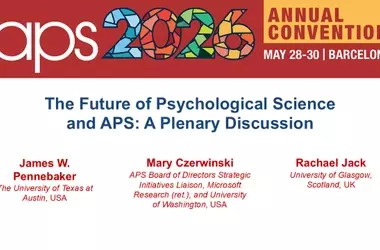
Navigating the Evolution of Psychological Science and APS: A Plenary Discussion
This plenary session explores the dynamic landscape of psychological science and the American Psychological Society (APS), addressing the significant transformations impacting the field. Chaired by James W. Pennebaker, the discussion features insights from Pennebaker, Mary P. Czerwinski, and Rachael E. Jack on challenges, professional development, and the urgent need for global collaboration within the discipline.
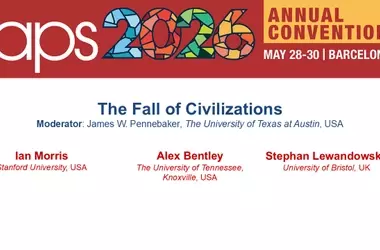
The Dynamics of Civilizational Decline: A Psychological Perspective
This discussion explores the factors contributing to the decline and eventual collapse of businesses, communities, and entire civilizations. Drawing on insights from psychological science, the panel investigates the destabilizing elements affecting large groups, examines contemporary signs of decline in Western societies, and considers how psychological researchers can contribute to understanding and addressing these complex challenges.
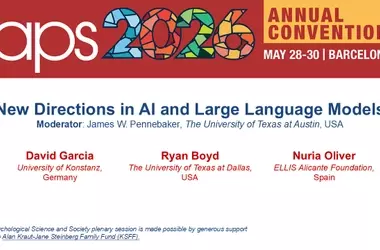
The Impact of AI and LLMs on Psychological Science
This article discusses the profound shifts artificial intelligence and large language models (LLMs) are bringing to psychological science. A panel of experts, including James W. Pennebaker, Alex Bentley, Ian Morris, and Stephan Lewandowsky, will explore how these technologies are reshaping our understanding of statistics, predictions, theories, and human cognition. The session, supported by the Alan Kraut-Jane Steinberg Family Fund, aims to foster dialogue on these transformative developments.

The Enduring Debate: Trauma, Memory, and the Body's Score
The phrase "the body keeps the score" has become widely popular, reflecting the widespread belief that trauma significantly impacts physical well-being. However, the underlying concept that traumatic memories are repressed within the body, unconsciously influencing current symptoms, is a contentious idea with a long and debated history in psychological science. This article examines the resurgence of this theory, particularly in popular culture, and scrutinizes the scientific validity of repressed memories and alternative therapies.
School Systems' Influence on Genetic and Environmental Factors in Academic Success
A new study reveals that the impact of genetics on academic achievement is profoundly shaped by family background, gender, and the national school system. Early educational tracking, common in some European countries, tends to amplify the role of family socioeconomic status while diminishing genetic influences. Conversely, systems with later tracking allow genetic predispositions to play a more significant role in educational outcomes. This research, published in 'Social Science Research,' underscores the complex interplay between inherited traits and environmental factors in shaping a student's educational journey.

Cognitive Advantages of Print: How Physical Books Enhance Brain Activity and Comprehension
A recent study highlights that reading print comic books improves the brain's ability to process and recall narrative details more effectively than digital tablets. The research suggests that physical books offer stable sensory and spatial cues, reducing the cognitive effort required for memory and comprehension. This provides crucial insights into how different reading formats influence our understanding and memory retention.