 Breaking News & Live Updates
- Breaking News & Live Updates
- Breaking News & Live Updates
- Breaking News & Live Updates
- Breaking News & Live Updates
- Breaking News & Live Updates
- Breaking News & Live Updates
- Breaking News & Live Updates
- Breaking News & Live Updates
- Breaking News & Live Updates
The Brain's Interplay: Stress and Itch Perception
New research has shed light on the intricate connection between our mental state and physical sensations, specifically how stress impacts the perception of itching. Scientists have identified a neural pathway in the brain responsible for modulating itch responses, revealing a complex interplay where acute stress can temporarily alleviate itching, while prolonged stress might intensify it. This breakthrough could revolutionize treatments for chronic itch conditions.
Delving into the Neural Pathways: Stress, the Brain, and Itch
Researchers at the Indian Institute of Science (IISc), including PhD student Jagat Narayan Prajapati and Assistant Professor Arnab Barik, recently published their findings in the journal Cell Reports. Their investigation centered on the lateral hypothalamic area (LHA) of the brain, a region known for its involvement in stress regulation, motivation, and emotional states. Utilizing genetically engineered mouse models, the team pinpointed a distinct population of LHA neurons that become active when the body experiences acute stress. These neurons act as a biological 'mute button,' effectively dampening the sensation of itch during stressful episodes.
The study demonstrated that artificially activating these stress-responsive neurons significantly reduced scratching behavior in mice, regardless of whether the itch was chemically induced and short-lived or chronic and psoriasis-like. Conversely, when these neurons were silenced, stress no longer provided relief from itching, confirming their crucial role in this suppressive mechanism. Interestingly, while acute stress leveraged these neurons to suppress itch, chronic inflammatory conditions, such as those mimicking psoriasis, led to hyperactivity and altered activity patterns in these same neurons. This suggests that sustained stress can paradoxically exacerbate chronic itching by disrupting the very system designed to suppress it.
This pioneering research underscores the brain's profound influence on sensory perception, distinguishing how it prioritizes different sensory inputs. For instance, pain often triggers a withdrawal response, whereas itching typically prompts scratching. Stress appears to selectively modulate these signals, directing resources towards more immediate threats during acute situations. The findings also indicate that existing treatments for chronic itch, which predominantly target skin-level symptoms, might benefit from a brain-centric approach. By understanding these central mechanisms, the scientific community hopes to develop novel therapeutic strategies that address the neurological underpinnings of stress-related itch conditions.
A New Frontier in Understanding Chronic Itch
This groundbreaking research opens up new avenues for understanding and potentially treating chronic itch, a debilitating condition affecting millions globally. The discovery that acute stress can suppress itch, while chronic stress can worsen it, highlights the delicate balance within our neural systems. It encourages a shift in perspective from solely focusing on peripheral symptoms to exploring the central nervous system's role in modulating sensations. Future investigations will likely delve deeper into the molecular characteristics of these LHA neurons and explore how stress-related neural circuits evolve over extended periods, particularly in the context of chronic diseases. This holistic approach offers a promising future for individuals suffering from persistent itching, envisioning treatments that target the brain's emotional and sensory processing centers for more effective and lasting relie
Other Articles
 Feb 21, 2026
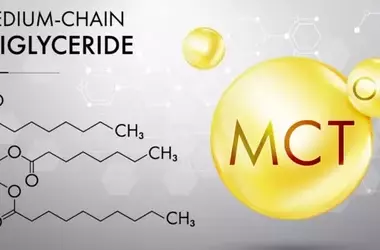
MCT Oil's Cognitive Boost for Young Adults: Immediate and Sustained Effects
A recent study indicates that medium-chain triglyceride (MCT) oil may enhance cognitive functions in healthy young adults. Both single doses and a month-long daily regimen of MCT oil showed improvements in inhibitory control and working memory processing speed, suggesting its potential beyond neurological conditions. This research opens new avenues for understanding nutritional impacts on healthy brain function.
 Feb 19, 2026
The Oxytocin Switch That Controls Your Social Vibe
A recent study highlights that brain communication extends beyond rapid electrical signals, encompassing a slower, widespread 'chemical atmosphere' that modulates our emotional states. This research pinpoints SNAP-47 as a crucial protein regulating the gradual release of oxytocin within the brain, acting as the brain's 'social thermostat' to foster social readiness and connection. This internal oxytocin, distinct from its bloodstream counterpart, influences how we interact with others, suggesting that variations in this protein can impact social anxiety and bonding capabilities.
 Feb 19, 2026
Brain's Wiring and "Aha!" Moments: A New Perspective on Insightful Problem Solving
New research suggests that the structural wiring of the brain, particularly in language-processing areas, influences an individual's propensity for sudden insights. The study, published in BMC Psychology, indicates that less organized white matter pathways in the left hemisphere may facilitate these "Aha!" moments, proposing that a less rigid neural structure allows for more creative connections and breakthroughs in problem-solving.
 Feb 18, 2026
Therapy Dogs: Petting Locations Don't Impact Well-being Boost
A new study by researchers from UBC Okanagan's B.A.R.K. dog therapy program indicates that the specific area of a therapy dog a person pets—be it the head, mid-section, or tail-end—does not significantly alter the positive impact on human well-being. Participants reported similar reductions in stress, loneliness, and homesickness, alongside increases in happiness, optimism, and social connection, regardless of where they interacted with the dogs. This suggests that simply engaging with a therapy dog is enough to reap significant psychological benefits.
 Feb 18, 2026
The Ethical Underpinnings of Dog Training Methods: A New Perspective
A groundbreaking study reveals a significant correlation between dog owners' chosen training methods and their broader ethical perspectives on animals. This research highlights that debates over dog training are not merely factual but deeply rooted in individual values concerning animal welfare, bridging a long-standing communication gap in the dog training community.
 Feb 16, 2026
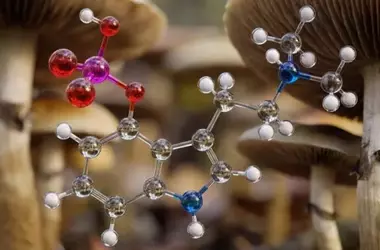
Low-Dose Psilocybin Mitigates Weight Gain and Hyperglycemia in Obese Mice
A study conducted on mice fed a high-fat/high-fructose diet revealed that treatment with low-dose psilocybin significantly reduced weight gain, liver steatosis, hyperglycemia, and insulin resistance over 12 weeks. The research, published in "Pharmacological Research," suggests that psilocybin's therapeutic effects on metabolic health may stem from a liver-centric mechanism rather than its psychoactive properties, offering a novel approach for obesity and related disorders.