 Breaking News & Live Updates
- Breaking News & Live Updates
- Breaking News & Live Updates
- Breaking News & Live Updates
- Breaking News & Live Updates
- Breaking News & Live Updates
- Breaking News & Live Updates
- Breaking News & Live Updates
- Breaking News & Live Updates
- Breaking News & Live Updates
Brain's Wiring and "Aha!" Moments: A New Perspective on Insightful Problem Solving
Recent investigations into the architecture of the brain indicate a significant link between its structural organization and the occurrence of spontaneous insights, often termed "Aha!" moments. This groundbreaking study posits that individuals prone to these sudden revelations exhibit distinct white matter characteristics within specific language-related networks of the left brain hemisphere, suggesting a more flexible neural framework supports creative problem-solving.
For numerous decades, scientists have delved into the enigma of insight, a phenomenon where solutions to complex problems manifest abruptly and unexpectedly, contrasting sharply with the methodical, step-by-step approach of analytical reasoning. While functional MRI and EEG have been instrumental in mapping the brain activity during such instances, the underlying physical structures remained largely unexplored. The current research aimed to bridge this gap by examining whether stable variations in white matter—the neural fibers connecting different brain regions—could predict an individual's inclination toward insightful problem-solving.
Dr. Carola Salvi of Cattolica University of Milan and Simone A. Luchini of Pennsylvania State University, co-authors of the study, emphasized the novelty of their approach. Previous research primarily focused on measuring the quantity or quality of solutions, not the manner in which they were conceived. They highlight that insight, characterized by its suddenness and accuracy, involves unique neural activation patterns, including a surge of activity in the right temporal cortex just before a solution comes to mind. Their objective was to uncover the structural prerequisites that predispose certain individuals to experience these epiphanies more frequently.
The scientists utilized Diffusion Tensor Imaging (DTI), a technique that tracks water molecule movement in brain tissue, to analyze the white matter microstructure. This method allowed them to investigate whether stable anatomical differences in neural wiring correlate with a propensity for insightful versus analytical problem-solving. In healthy white matter, water movement typically aligns with nerve fiber direction, a property quantified as fractional anisotropy (FA). Higher FA values usually indicate well-organized and efficient neural pathways, often linked to superior cognitive function.
The study involved 38 participants who completed the Compound Remote Associates (CRA) task, a common measure of creative potential. This task required individuals to identify a unifying fourth word for a set of three seemingly unrelated words. Following each successful attempt, participants reported whether their solution was achieved through step-by-step analysis or sudden insight. This self-assessment enabled the researchers to gauge each individual's "insight propensity," which was then correlated with their DTI scan results, after accounting for factors like age and gender.
Surprisingly, the findings revealed a counter-intuitive pattern: individuals with a higher propensity for insight exhibited lower fractional anisotropy in the dorsal language network of the left hemisphere. This network encompasses crucial pathways like the arcuate fasciculus and superior longitudinal fasciculus, vital for language processing and semantic understanding. This suggests that a less rigidly organized neural structure in these areas might actually be beneficial for insight. Rather than being confined to dominant interpretations, a more flexible left hemisphere could allow for a broader exploration of associations, leading to creative breakthroughs.
This "release effect" is particularly intriguing. It implies that creativity and insight may not always stem from stricter cognitive control but rather from a partial relaxation of it. By allowing weaker or more distant associations to emerge, the brain can effectively reframe problems, a process central to experiencing an "Aha!" moment. Conversely, no significant structural correlations were observed for step-by-step analytical problem-solving, suggesting that this mode of thought may rely more on dynamic brain activity than on fixed structural traits.
This aligns with other studies indicating that disruptions in left frontotemporal regions can enhance artistic creativity. The collective evidence suggests a regulatory role of the left hemisphere in creativity, where a slight reduction in its constraints might facilitate novel idea generation. This perspective highlights a delicate balance between neural constraint and flexibility as a cornerstone of insightful thinking.
Despite these compelling findings, the study acknowledges certain limitations. The sample size, while typical for DTI research, was relatively small, warranting further validation with larger, more diverse groups. Furthermore, the study establishes a correlation, not causation, leaving open the question of whether these structural differences are innate or develop over time with creative engagement. Future research could integrate structural imaging with real-time functional tracking to observe how these white matter pathways operate during moments of insight, gradually unraveling the neurobiological underpinnings of human creativity.
Other Articles
 Feb 18, 2026
Therapy Dogs: Petting Locations Don't Impact Well-being Boost
A new study by researchers from UBC Okanagan's B.A.R.K. dog therapy program indicates that the specific area of a therapy dog a person pets—be it the head, mid-section, or tail-end—does not significantly alter the positive impact on human well-being. Participants reported similar reductions in stress, loneliness, and homesickness, alongside increases in happiness, optimism, and social connection, regardless of where they interacted with the dogs. This suggests that simply engaging with a therapy dog is enough to reap significant psychological benefits.
 Feb 18, 2026
The Ethical Underpinnings of Dog Training Methods: A New Perspective
A groundbreaking study reveals a significant correlation between dog owners' chosen training methods and their broader ethical perspectives on animals. This research highlights that debates over dog training are not merely factual but deeply rooted in individual values concerning animal welfare, bridging a long-standing communication gap in the dog training community.
 Feb 16, 2026
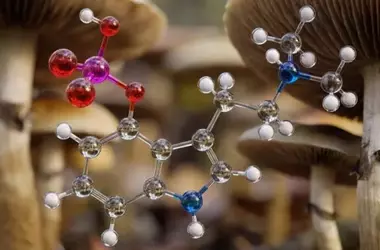
Low-Dose Psilocybin Mitigates Weight Gain and Hyperglycemia in Obese Mice
A study conducted on mice fed a high-fat/high-fructose diet revealed that treatment with low-dose psilocybin significantly reduced weight gain, liver steatosis, hyperglycemia, and insulin resistance over 12 weeks. The research, published in "Pharmacological Research," suggests that psilocybin's therapeutic effects on metabolic health may stem from a liver-centric mechanism rather than its psychoactive properties, offering a novel approach for obesity and related disorders.
 Feb 15, 2026
Sweetened Drinks and Teen Cognitive Health: A Sleep Link
New research reveals a strong connection between daily consumption of sugary sodas and sports drinks and cognitive impairments in teenagers, including difficulties with memory, concentration, and decision-making. Published in "Nutritional Neuroscience," the study suggests that disrupted sleep patterns act as a key mediator in this relationship. This indicates that while the adolescent brain undergoes rapid development, it is particularly vulnerable to the effects of high sugar intake and sleep deprivation, with potential long-term implications for academic performance and overall well-being.
 Feb 14, 2026
The Neural Symphony of Love: How Romance Transforms the Brain
Love, far from being merely an emotion, is a profound neurochemical phenomenon. Early romantic love ignites the brain's reward pathways, leading to a surge of dopamine that generates euphoria, motivation, and heightened physical sensations. Concurrently, stress hormones increase, and critical judgment areas of the brain temporarily quiet, fostering deep connections without undue scrutiny of imperfections. As relationships mature, the neural landscape shifts from dopamine-fueled passion to attachment-promoting hormones like oxytocin and vasopressin, establishing long-term stability and commitment.
 Feb 13, 2026
Processed Foods in Early Childhood Linked to Reduced Cognitive Abilities
New research published in the British Journal of Nutrition indicates that young children consuming a diet rich in ultra-processed foods, such as processed meats and sugary snacks, tend to exhibit lower intelligence scores as they enter early schooling. This negative correlation is even more pronounced in children who experienced physical growth delays during infancy, highlighting the critical impact of early nutrition on brain development.