 Breaking News & Live Updates
- Breaking News & Live Updates
- Breaking News & Live Updates
- Breaking News & Live Updates
- Breaking News & Live Updates
- Breaking News & Live Updates
- Breaking News & Live Updates
- Breaking News & Live Updates
- Breaking News & Live Updates
- Breaking News & Live Updates
Beyond Stereotypes: Emotions Driving Black Women's Political Engagement
Unveiling the Emotional Drivers of Black Women's Political Action
Understanding the Emotional Landscape of Political Participation
A recent academic inquiry explores the intricate connection between emotions such as apprehension, indignation, and optimism, and the manner in which Black women engage in political processes beyond casting ballots. This research indicates that the specific emotion experienced and its underlying cause dictate whether individuals will undertake minimal-effort tasks, like endorsing petitions, or commit to more demanding actions, such as participating in demonstrations. The findings, detailed in 'The Journal of Race, Ethnicity, and Politics,' reveal that Black women are spurred to action by a diverse array of feelings, moving beyond simplistic categorizations.
Addressing Gaps in Existing Political Science Research
Academics frequently investigate the role of emotions in predicting voting patterns. Historically, much of this investigation concentrated on white Americans, with an implicit assumption that the conclusions were universally applicable. When studies did focus on minority groups, they often isolated race or gender. Dr. Jamil S. Scott-Cummings from Georgetown University and Dr. Kenicia Wright from Arizona State University sought to illuminate the distinct experiences of Black women by employing an intersectional framework. This approach considers how overlapping social identities, such as race and gender, collectively influence an individual's lived reality and the systemic inequities they encounter.
Deconstructing the 'Strong Black Woman' Trope
The researchers observed that Black women have historically contended with intense societal pressures to suppress their feelings. Preconceived notions, often portraying them as perpetually incensed or limitlessly resilient, tend to overlook their true emotional depth. Given Black women's profound involvement in American politics, the study aimed to explore how a full spectrum of sentiments impacts their civic participation.
The Historical Context of Emotional Expression
Throughout history, the socio-political climate in the United States has, at times, rendered the full expression of emotions perilous for Black women. Controlling narratives regarding their conduct persist today, often racialized. The enduring image of the 'strong Black woman' can, paradoxically, exacerbate emotional distress and feelings of frustration.
Categorizing Political Actions by Personal Investment
Scott-Cummings and Wright categorized political activities based on their personal cost. Low-cost endeavors demand minimal time or risk, encompassing actions like signing online petitions, sporting campaign buttons, boycotting products, or sharing political content on social media. Conversely, high-cost activities necessitate greater resources or entail a higher degree of personal jeopardy. These include financial contributions, contacting public officials, volunteering for campaigns, or attending protests. The researchers acknowledged that for Black women, facing multiple layers of disadvantage, the stakes associated with such costly actions could be significantly higher than for other demographics.
Methodology: Analyzing Data from Marginalized Populations
To substantiate their hypotheses, the researchers analyzed data from the Collaborative Multiracial Post-Election Survey conducted in 2016 and 2020. This survey intentionally oversampled marginalized communities, enabling the authors to study thousands of Black women without the sample size constraints typically encountered in standard surveys.
Emotional Responses Across Diverse Political Topics
The study investigated participants' sentiments regarding three distinct subjects: race relations, personal financial stability, and recent election outcomes. For each topic, individuals self-reported their levels of anger, fear, and hope using a standardized scale. Statistical models were then employed to ascertain how these emotions correlated with various forms of political engagement.
Controlling for Influencing Factors in Political Engagement
The team also accounted for numerous other variables known to affect political involvement, including demographic characteristics such as age, education, and income. They further controlled for factors like religious affiliation, community involvement, and ideological orientation. The models even incorporated concepts like linked fate, which posits that an individual's personal success is intertwined with the success of their broader racial group.
The Nuance of Emotions in Race Relations Engagement
When questions pertained to race relations, both adverse and favorable emotions showed a correlation with political action. Anger and fear concerning race relations predicted greater engagement in low-cost activities. The researchers theorize that for many Black women, the ramifications of political abstention are too profound to disregard. While anger and fear might not propel these women towards high-cost actions regarding race relations, these emotions do motivate them to partake in tasks that leverage their political influence without demanding excessive time. Hope regarding race relations, on the other hand, was associated with high-cost participation.
Hope as a Catalyst for Sustained Political Effort
This observation supports the notion that hope fuels the resolve required to dedicate substantial time and energy to political transformation. Black women are frequently recognized as the cornerstone of the Democratic Party due to their high levels of mobilization. The survey data suggest that a sense of hope makes them more inclined to undertake the most demanding political tasks.
Government Responsiveness and Low-Cost Activism
The researchers also identified additional patterns. For instance, Black women more inclined to engage in low-cost political activities concerning race relations often perceived the government as unresponsive to their racial group. This suggests that low-cost political engagement does not necessitate the same degree of trust or commitment to the political system as high-cost actions demand.
Financial Anger Driving High-Cost Political Involvement
The results shifted when the focus turned to personal finances. Black women disproportionately face specific economic challenges in the United States, frequently surpassing other groups in educational attainment while confronting persistent wage disparities and significant student loan debt. In this context, anger regarding personal finances predicted high-cost political participation. Feelings of hope or fear related to financial matters did not emerge as statistically significant predictors of either low-cost or high-cost political acts. The relationship between financial emotions and political engagement proved distinctly different from responses concerning racial issues.
The Distinct Impact of Financial Emotions on Political Action
Had the researchers not differentiated between low-cost and high-cost activities, this crucial detail would have been overlooked. The survey demonstrates that Black women's sentiments about their financial constraints motivate specific avenues of their political engagement. Anger serves as the primary emotional impetus for undertaking high-risk political tasks related to finances.
Election-Related Emotions: Fear Driving High-Cost Participation
The 2016 survey data, which inquired about election outcomes, revealed yet another pattern. Anger concerning the election correlated with low-cost participation, while fear regarding the election was linked to high-cost participation.
Challenging Existing Paradigms on Fear and Political Mobilization
This latter finding diverges from existing political science literature, where previous studies generally indicate that fear prompts individuals to seek information rather than engage in direct action. Discovering that fear motivates Black women to undertake demanding political activities represents a novel understanding of how negative emotions can mobilize specific populations.
Limitations and Future Research Directions
The researchers acknowledged certain limitations within their study. The survey data captures correlations at a particular moment in time. Given the observational nature of the information, the researchers cannot definitively assert that a specific emotion directly caused a particular action; the results merely indicate that certain feelings and actions frequently co-occur. Additionally, the surveys did not encompass every conceivable form of political participation. Black women possess a rich history of organizing through social clubs, historically Black sororities, and specialized civic groups, activities that were not quantified in the survey questions. Future research could further investigate why fear specifically motivates Black women to engage in high-cost political action. Scott-Cummings and Wright also propose exploring the emotional drivers of other minority women, as understanding these diverse emotional responses offers a more precise depiction of what propels political engagement in a multicultural society.
Other Articles

Exploring the Nuances of Dark Personality Traits and Workplace Well-being
New psychological research investigates the influence of abrasive personality traits on employee mental health. The study indicates that narcissism, when coupled with high emotional intelligence, may enhance psychological well-being, whereas psychopathy tends to yield adverse outcomes. Machiavellianism showed a weak negative correlation, which diminished after considering other factors. This research, conducted in India, highlights the intricate interplay between personality, emotional intelligence, and workplace satisfaction, emphasizing cultural considerations.

The Impact of Shared Perceptions on Relationship Satisfaction in Cohabiting Couples
A new study reveals that couples who align in their perceptions of moving in together experience greater relationship satisfaction. This research highlights how shared subjective interpretations of major life transitions contribute to relationship well-being, even though this alignment does not necessarily strengthen over the initial six months of cohabitation. Psychologists emphasize the importance of understanding both partners' perspectives to gain insights into shared life events and their impact on romantic relationships.

Dark Triad Traits and Personal Values: A Meta-Analytic Review
A meta-analysis revealed that individuals scoring high on Dark Triad personality traits (narcissism, Machiavellianism, psychopathy) tend to prioritize self-enhancement and openness-to-change values. Conversely, they show a negative association with self-transcendence and conservation values. The study underscores the distinct motivational profiles linked to these socially aversive traits, with psychopathy exhibiting the strongest relationships across most value dimensions, except for self-enhancement, where narcissism prevails.

Understanding the Interplay Between Narcissism and Social Status Seeking
A study in the Journal of Personality reveals a reciprocal relationship between grandiose narcissism and the pursuit of social status. Individuals with high grandiose narcissism are driven to seek and perceive themselves as having high status, and achieving status, in turn, amplifies this narcissistic trait. Conversely, vulnerable narcissism is linked to a decreasing desire for status over time. The research suggests that genuine social inclusion may mitigate grandiose narcissistic tendencies, emphasizing the complex dynamics of personality and social motivations.
Sleep Quality Influences Political Engagement
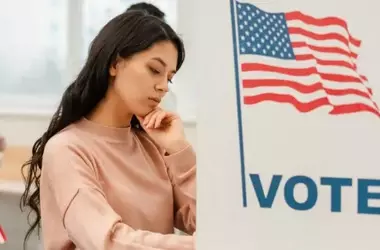
New research suggests that the quality of an individual's sleep significantly impacts their political behavior. Restful sleep is linked to higher voter turnout, while poor sleep correlates with engagement in non-traditional political activities like protests. This study highlights the importance of biological factors, particularly restorative rest, as a resource for civic participation, influencing how and whether people engage with their government.

The Impact of Perceived Falsehood on Social Harmony
New research published in *Political Psychology* reveals that people react more negatively to others they perceive as holding false beliefs than to those with merely different opinions. This distinction, explored through various online studies with over 2,000 U.S. adults, suggests that threats to a shared understanding of reality, rather than simple disagreement, are a primary driver of emotional distress and social avoidance. The findings challenge traditional views on belief homophily, highlighting the importance of perceived factual accuracy in social interactions.