 Breaking News & Live Updates
- Breaking News & Live Updates
- Breaking News & Live Updates
- Breaking News & Live Updates
- Breaking News & Live Updates
- Breaking News & Live Updates
- Breaking News & Live Updates
- Breaking News & Live Updates
- Breaking News & Live Updates
- Breaking News & Live Updates
Dark Triad Traits and Personal Values: A Meta-Analytic Review
A recent comprehensive meta-analysis has illuminated the intricate relationship between the Dark Triad personality traits—narcissism, Machiavellianism, and psychopathy—and an individual's personal values. The findings indicate a consistent pattern: heightened Dark Triad traits are significantly linked to a stronger endorsement of self-enhancement and openness-to-change values, while showing a marked aversion to self-transcendence and conservation values. This research, published in the Personality and Social Psychology Bulletin, provides a deeper understanding of the motivational underpinnings of these socially challenging personality characteristics.
The Dark Triad traits represent a cluster of undesirable personality attributes. Narcissism is characterized by an inflated sense of self-importance, a constant craving for admiration, and a belief in one's inherent right to special treatment. Machiavellianism denotes a manipulative and strategic interpersonal style, often involving deceit to achieve personal objectives. Psychopathy, on the other hand, is defined by a lack of empathy, minimal guilt, impulsivity, emotional detachment, and a readiness to flout societal norms or inflict harm on others. While these traits share commonalities, they are not interchangeable; an individual may exhibit high levels in one area while being less pronounced in others. Individuals with elevated Dark Triad scores are generally more inclined to exploit others, engage in manipulation, and prioritize their own benefits over collaborative efforts. However, possessing some of these characteristics does not automatically signify a mental disorder or guarantee harmful behavior in every situation. The Dark Triad construct primarily serves as a framework in personality research to analyze patterns in social interactions, leadership styles, interpersonal relationships, and professional conduct.
Understanding the Connection Between Dark Triad Traits and Personal Values
The study, led by Nikolay B. Petrov, embarked on a systematic review of existing research to synthesize the associations between Dark Triad traits and personal values. Personal values are fundamental, enduring motivational principles that individuals consider crucial in their lives, guiding their decisions, priorities, and actions. While generally stable, these values can evolve in response to life experiences and societal expectations. Drawing on Schwartz's theory of personal values, which identifies ten universal values organized in a circular structure, the researchers categorized these into two primary contrasts: self-transcendence versus self-enhancement, and openness to change versus conservation. Unlike specific situational goals, personal values exert a broad influence across various life domains, shedding light on attitudes, ethical judgments, and behavioral consistency.
The research team meticulously searched academic databases, including Google Scholar, PsycINFO, ProQuest, and Web of Science, using keywords related to the Dark Triad and personal values. After an initial screening, 34 studies comprising 38 distinct samples were deemed suitable for meta-analysis. The cumulative findings consistently demonstrated positive correlations between all three Dark Triad traits and both self-enhancement and openness-to-change values. Conversely, a negative association was observed with self-transcendence and conservation values. This implies that individuals with more pronounced Dark Triad characteristics are more likely to embrace values centered on personal gain and novelty, while placing less emphasis on the well-being of others and the preservation of established traditions.
Distinguishing Motivational Priorities Among Dark Triad Traits
A fascinating nuance emerged from the analysis, highlighting subtle differences in the strength of these motivational links among the Dark Triad traits. Psychopathy demonstrated the most robust connections with openness-to-change, self-transcendence, and conservation values. However, self-enhancement values were most strongly linked to narcissism. Notably, the negative correlation between psychopathy/Machiavellianism and self-transcendence was twice as strong as that between narcissism and self-transcendence. This suggests a qualitative difference: while a narcissistic individual might simply be indifferent to the welfare of others, a psychopathic or Machiavellian person may harbor an active disregard or aversion to it. These findings contribute significantly to the scientific understanding of personality psychology, revealing the specific value orientations associated with each Dark Triad trait.
While the study provides compelling evidence for these associations, the authors prudently caution that their meta-analysis explored correlations rather than causality. It remains an open question whether Dark Triad traits directly lead to the adoption of certain values, or if pre-existing motivational goals influence individuals to behave in ways consistent with their inherent personality traits. Furthermore, the analysis did not include sadism, often considered the fourth 'dark' trait, due to insufficient available data for a meaningful exploration. Future research incorporating longitudinal designs and examining the interplay of environmental factors could further elucidate the complex causal pathways between personality and values.
Other Articles

Understanding the Interplay Between Narcissism and Social Status Seeking
A study in the Journal of Personality reveals a reciprocal relationship between grandiose narcissism and the pursuit of social status. Individuals with high grandiose narcissism are driven to seek and perceive themselves as having high status, and achieving status, in turn, amplifies this narcissistic trait. Conversely, vulnerable narcissism is linked to a decreasing desire for status over time. The research suggests that genuine social inclusion may mitigate grandiose narcissistic tendencies, emphasizing the complex dynamics of personality and social motivations.

Sleep Quality Influences Political Engagement
New research suggests that the quality of an individual's sleep significantly impacts their political behavior. Restful sleep is linked to higher voter turnout, while poor sleep correlates with engagement in non-traditional political activities like protests. This study highlights the importance of biological factors, particularly restorative rest, as a resource for civic participation, influencing how and whether people engage with their government.

The Impact of Perceived Falsehood on Social Harmony
New research published in *Political Psychology* reveals that people react more negatively to others they perceive as holding false beliefs than to those with merely different opinions. This distinction, explored through various online studies with over 2,000 U.S. adults, suggests that threats to a shared understanding of reality, rather than simple disagreement, are a primary driver of emotional distress and social avoidance. The findings challenge traditional views on belief homophily, highlighting the importance of perceived factual accuracy in social interactions.

Self-Regulation's Influence on Romantic Partner Selection
New research suggests that an individual's self-regulatory focus, whether geared towards personal growth (promotion orientation) or security (prevention orientation), significantly impacts their perception of their own desirability and the standards they set for romantic partners. This influence, even beyond general self-esteem, dictates the type of partners individuals pursue. The findings, published in the 'Journal of Personality', provide insights into the psychological mechanisms behind romantic aspirations, although further research across diverse demographics is needed.
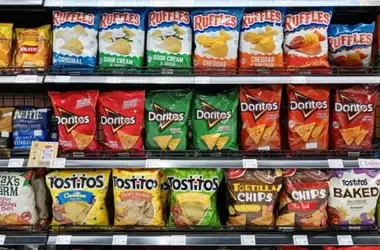
American Views on Ultra-Processed Food Regulations Revealed in New Study
A recent study in PLOS One explores American attitudes towards government regulation of ultra-processed foods. It finds broad support for informational policies but less enthusiasm for taxes or stringent restrictions. Public opinion is significantly shaped by personal health beliefs, income, and political alignment, highlighting the complex interplay of factors influencing policy acceptance.

Dark Triad Traits and Cosmetic Surgery Desire
A new study reveals a strong connection between dark personality traits (narcissism, psychopathy, and Machiavellianism) and a desire for cosmetic surgery among university students. Narcissism, in particular, emerged as a key predictor. The research, conducted in the Kurdistan Region of Iraq, suggests that these traits, often linked to a need for admiration and social dominance, may drive individuals towards aesthetic enhancements, highlighting the psychological motivations behind such procedures.