 Breaking News & Live Updates
- Breaking News & Live Updates
- Breaking News & Live Updates
- Breaking News & Live Updates
- Breaking News & Live Updates
- Breaking News & Live Updates
- Breaking News & Live Updates
- Breaking News & Live Updates
- Breaking News & Live Updates
- Breaking News & Live Updates
Australia's Groundbreaking Social Media Ban: A Global Social Experiment
Australia has embarked on an unprecedented societal trial with its recent prohibition of social media platforms for individuals under the age of 16. This landmark decision, coming into effect on December 10, 2025, has already led to the suspension of hundreds of thousands of accounts and is attracting considerable international scrutiny. The primary objective of this governmental intervention is to alleviate the widespread health problems, both psychological and physical, that have been linked to excessive engagement with digital social platforms among young people.
Australia's Bold Step: Restricting Social Media Access for Minors
In a move that has resonated across the globe, Australia initiated a ban on social media access for children under 16 years old, starting December 10, 2025. On the very first day, an astonishing 200,000 TikTok accounts were deactivated, signaling the significant reach and impact of this new legislation. Before this decisive action, approximately 85% of Australian children aged 8 to 15 were active on at least one social media platform. The initial public response to this ban has been largely favorable, with a noticeable absence of widespread discontent from both parents and children, which is a testament to the perceived urgency of addressing the negative consequences of social media.
Australian leaders are being lauded for their political will and resolve in prioritizing the well-being of young citizens over commercial interests. This legislation acknowledges the pervasive issues, such as insufficient sleep, depression, and obesity, that are often exacerbated by smartphone usage and social media addiction among adolescents. While professional organizations globally have issued guidelines for parental monitoring of screen time, the inherent design of these platforms often prioritizes profit over user well-being, creating addictive environments that are challenging for individuals, especially children, to disengage from.
This pioneering legislative effort has surprised many international observers who doubted that any government would possess the fortitude to implement such stringent measures. As Australia enters its summer break, Prime Minister Anthony Albanese has encouraged children to substitute screen time with enriching activities like sports, music, reading, and direct social interactions. Researchers and policymakers worldwide are closely observing the outcomes of this "grand social experiment," anticipating that within a year, there will be a measurable reduction in mental health issues, obesity rates, and sleep disturbances among the nation's youth. A recent study from the University of Pennsylvania further reinforces these concerns, indicating a higher prevalence of depression, obesity, and sleep problems among 12-year-olds who own smartphones compared to their non-smartphone-owning peers.
This bold policy from Australia serves as a critical inflection point, challenging the global community to re-evaluate the impact of technology on youth development. It underscores the potential for governmental action to safeguard the health of future generations and could inspire similar policy discussions and implementations in other nations grappling with the same challenges. The long-term results of this Australian initiative will undoubtedly offer invaluable insights into the complex interplay between technology, youth, and public health.
Other Articles
 Dec 13, 2025
Music: A Holistic Experience of Sound, Emotion, and Movement
This article explores the profound connection between music, the brain, and the body, drawing insights from Dr. Rebecca Lepping's research. It highlights how music is not merely a cerebral activity but a full-body experience, engaging both physical and emotional responses. The piece also discusses how conditions like depression can alter musical perception and the promising role of music therapy in addressing various health challenges, emphasizing the need for standardized research in the field.
 Dec 12, 2025
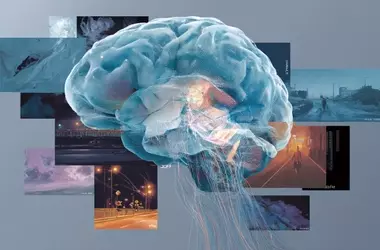
AI Brain Model Offers New Insights into Real-World Fear Processing
Researchers at the University of Hong Kong have pioneered an AI-powered brain model that accurately tracks fear in real-world scenarios, diverging from traditional lab-based studies. This innovative model has revealed that oxytocin specifically lessens fear in social contexts. These discoveries provide a novel pathway for developing targeted treatments for conditions like social anxiety and phobias, potentially revolutionizing how emotional disorders are understood and addressed.
 Dec 11, 2025
New Research Uncovers Broader Visual Processing Differences in Dyslexia
A recent study published in Neuropsychologia suggests that adults with dyslexia exhibit distinct visual processing patterns compared to typical readers, even when observing non-textual objects. The findings point to reduced neural activity in dyslexic brains concerning the differentiation of specific items like faces or houses, indicating that dyslexia's impact extends beyond phonological deficits to encompass a wider range of visual information processing.
 Dec 11, 2025
The Complex Bonds: Unpacking Human-Animal Relationships and Their Psychological Impact
This article explores the multifaceted relationship between humans and animals, highlighting how pets serve as emotional anchors while also presenting challenges such as financial strain and grief. It delves into the historical evolution of these bonds, the rise of the 'pet effect,' and the potential drawbacks of relying solely on companion animals for emotional support. The discussion extends to the emergence of AI pets, examining their convenience against their capacity to foster genuine human connection and personal growth, ultimately advocating for more thoughtful pet ownership decisions.
 Dec 11, 2025
The Fading Lunar Rhythm: How Artificial Light Disrupts Our Internal Clocks
This article explores how artificial lighting interferes with the human body's intrinsic lunar clock, a biological system synchronized with the moon's 29.5-day cycle. While this internal clock influences sleep, reproduction, and migration across various species, urban illumination, screen usage, and satellite brightness diminish its natural rhythm. Research on menstrual cycles and sleep patterns suggests that although electric light weakens this lunar influence, it doesn't entirely eliminate it. The disruption raises concerns about the long-term impact on human physiology and behavior, as well as on other species reliant on lunar cues for critical life events.
 Dec 10, 2025
Imagination's Instant Impact on Brain and Preferences
New research from the University of Colorado Boulder and the Max Planck Institute reveals that vividly imagining positive social interactions can swiftly change how much you like someone and how your brain processes information about them. The study, published in "Nature Communications," shows that the brain's reward-learning circuitry responds to imagined experiences similarly to real ones, suggesting imagination is an active process that shapes expectations and choices. These findings pave the way for novel approaches in mental health, social anxiety reduction, and skill enhancement.