 Breaking News & Live Updates
- Breaking News & Live Updates
- Breaking News & Live Updates
- Breaking News & Live Updates
- Breaking News & Live Updates
- Breaking News & Live Updates
- Breaking News & Live Updates
- Breaking News & Live Updates
- Breaking News & Live Updates
- Breaking News & Live Updates
Music: A Holistic Experience of Sound, Emotion, and Movement
Our appreciation for music extends far beyond mere auditory processing; it is an intricate interplay involving both our cognitive faculties and our physical being. Dr. Rebecca Lepping, a distinguished neuroscientist in music at the University of Kansas, has dedicated her career to unraveling this complex relationship. Her journey into this field began with a childhood immersed in instrumental music, leading her from performance studies to a deep fascination with the psychological underpinnings of musical engagement. This intellectual curiosity propelled her through advanced degrees in psychology and music, culminating in her leadership of the Power of Music (PROMUS) Laboratory.
Dr. Lepping's groundbreaking work underscores that our connection to music is profoundly embodied. Her studies have shown that unlike emotional environmental sounds, which primarily activate language-related brain regions, emotional music triggers areas associated with movement and bodily sensations. This suggests that while we categorize environmental sounds by their origin, we interpret music through the feelings and physical responses it evokes within us. This holistic engagement, encompassing both overt actions like foot-tapping and subtle internal physical and emotional shifts, clarifies why music possesses such a powerful and intimate resonance.
Furthermore, Dr. Lepping investigates how various health conditions can impact this musical interaction. For instance, her research reveals that individuals experiencing major depression exhibit diminished activity in the anterior cingulate gyrus—a brain region crucial for emotion—when listening to music. This indicates that depression can dull one's emotional and physical reactions to music. These findings propose a compelling avenue for music's therapeutic application: by potentially retraining brain functions, music could lead to more refined and personalized interventions. In collaboration with experts like Dr. Amy Wilson, a music therapist whose work emphasizes music's role in fostering hope, Dr. Lepping also champions the use of music therapy for conditions such as dementia. They advocate for more rigorous and standardized research methods to fully harness and validate music therapy's significant potential in enhancing societal well-being and acknowledging music's intrinsic value.
Understanding music's deep impact reveals a path to healing and enriched living. By recognizing music as a fundamental aspect of human experience, we can unlock new avenues for emotional expression, cognitive stimulation, and holistic well-being, fostering a more harmonious and compassionate world.
Other Articles
 Dec 12, 2025
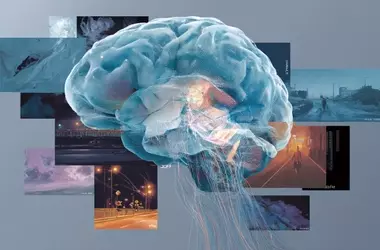
AI Brain Model Offers New Insights into Real-World Fear Processing
Researchers at the University of Hong Kong have pioneered an AI-powered brain model that accurately tracks fear in real-world scenarios, diverging from traditional lab-based studies. This innovative model has revealed that oxytocin specifically lessens fear in social contexts. These discoveries provide a novel pathway for developing targeted treatments for conditions like social anxiety and phobias, potentially revolutionizing how emotional disorders are understood and addressed.
 Dec 11, 2025
New Research Uncovers Broader Visual Processing Differences in Dyslexia
A recent study published in Neuropsychologia suggests that adults with dyslexia exhibit distinct visual processing patterns compared to typical readers, even when observing non-textual objects. The findings point to reduced neural activity in dyslexic brains concerning the differentiation of specific items like faces or houses, indicating that dyslexia's impact extends beyond phonological deficits to encompass a wider range of visual information processing.
 Dec 11, 2025
The Complex Bonds: Unpacking Human-Animal Relationships and Their Psychological Impact
This article explores the multifaceted relationship between humans and animals, highlighting how pets serve as emotional anchors while also presenting challenges such as financial strain and grief. It delves into the historical evolution of these bonds, the rise of the 'pet effect,' and the potential drawbacks of relying solely on companion animals for emotional support. The discussion extends to the emergence of AI pets, examining their convenience against their capacity to foster genuine human connection and personal growth, ultimately advocating for more thoughtful pet ownership decisions.
 Dec 11, 2025
The Fading Lunar Rhythm: How Artificial Light Disrupts Our Internal Clocks
This article explores how artificial lighting interferes with the human body's intrinsic lunar clock, a biological system synchronized with the moon's 29.5-day cycle. While this internal clock influences sleep, reproduction, and migration across various species, urban illumination, screen usage, and satellite brightness diminish its natural rhythm. Research on menstrual cycles and sleep patterns suggests that although electric light weakens this lunar influence, it doesn't entirely eliminate it. The disruption raises concerns about the long-term impact on human physiology and behavior, as well as on other species reliant on lunar cues for critical life events.
 Dec 10, 2025
Imagination's Instant Impact on Brain and Preferences
New research from the University of Colorado Boulder and the Max Planck Institute reveals that vividly imagining positive social interactions can swiftly change how much you like someone and how your brain processes information about them. The study, published in "Nature Communications," shows that the brain's reward-learning circuitry responds to imagined experiences similarly to real ones, suggesting imagination is an active process that shapes expectations and choices. These findings pave the way for novel approaches in mental health, social anxiety reduction, and skill enhancement.
 Dec 09, 2025
Media Consumption Shapes Public Perceptions of Autism
A recent study highlights the profound impact of newspaper reading habits on unconscious biases toward autism. The research indicates that individuals who frequently consume right-leaning tabloid media tend to harbor more negative automatic biases, linking this to the often stereotypical and infrequent coverage of autism in such publications. Furthermore, the study reveals that an uncritical trust in newspapers correlates with less accurate knowledge about autism, emphasizing the critical role of media literacy in fostering understanding and acceptance of neurodiversity.