 Breaking News & Live Updates
- Breaking News & Live Updates
- Breaking News & Live Updates
- Breaking News & Live Updates
- Breaking News & Live Updates
- Breaking News & Live Updates
- Breaking News & Live Updates
- Breaking News & Live Updates
- Breaking News & Live Updates
- Breaking News & Live Updates
Understanding Prosthetics: A Comprehensive Scientific Overview

The loss of a limb, whether due to congenital conditions, trauma, or vascular disease, represents a significant shift in an individual's physiological structure. A prosthesis is an artificial device designed to replace a missing body part, aiming to restore both the anatomical form and, to varying degrees, the functional capabilities of the original limb. This article provides a neutral, science-based exploration of prosthetic technology. It begins by defining the foundational components and classifications of these devices, moves into the mechanical and neurological mechanisms that allow for movement, presents an objective overview of the clinical landscape, and discusses future scientific trajectories. By following a structured progression from basic engineering to practical Q&A, this discussion aims to clarify how prosthetic science bridges the gap between mechanical engineering and human biology.
Basic Concepts and Classification
Prosthetics is a field that sits at the intersection of medicine, materials science, and engineering. The primary goal is to provide a substitute that can handle the mechanical stresses of daily life while remaining compatible with the human body.
Prostheses are generally classified based on the part of the body they replace and their source of power:
- Upper-Limb Prosthetics: These replace arms or hands. They range from passive cosmetic hands to complex "myoelectric" devices controlled by muscle signals.
- Lower-Limb Prosthetics: These replace legs or feet. They must be capable of supporting a person’s full body weight and facilitating balance during locomotion.
- Body-Powered Devices: These use a system of cables and harnesses. Movement in one part of the body (like a shoulder shrug) pulls a cable to open or close a hook or hand.
- Externally Powered (Electric) Devices: These utilize batteries and small motors to move joints, often triggered by sensors placed against the skin.
The fundamental structure typically includes a socket (the interface with the residual limb), a pylon (the internal frame or "bone"), and a terminal device (the foot or hand).
Core Mechanisms: How Prostheses Function
The transition from a static piece of equipment to a functional limb involves sophisticated mechanical and biological integration.
1. The Interface and Suspension
The most critical part of any prosthesis is how it attaches to the body.
- The Mechanism: The socket is custom-molded to the shape of the residual limb. Suspension systems—such as vacuum suction, pin-locks, or sleeves—ensure the device stays attached during movement.
- The Challenge: The skin on a residual limb is not naturally designed to bear weight or endure constant friction. Engineering focuses on distributing pressure evenly to prevent tissue breakdown.
2. Mechanical Energy Return (Lower Limb)
Modern prosthetic feet do not just act as solid blocks; they act like springs.
- The Mechanism: Many feet are made of carbon fiber layers.
- The Result: During a stride, the carbon fiber compresses and stores energy as the heel hits the ground. As the user pushes off, the material "springs" back, returning energy to the gait and reducing the muscular effort required to walk.
3. Myoelectric Control (Upper Limb)
For electric arms, the brain still sends signals to the muscles in the remaining part of the limb.
- The Mechanism: Electromyography (EMG) sensors are placed inside the socket. When the user contracts a specific muscle, the sensors detect the tiny electrical burst.
- The Processing: A microcomputer in the prosthesis interprets these bursts and tells the motors in the hand or elbow to move in a corresponding way.
Presentation of the Clinical Landscape
Selecting a prosthesis involves a detailed assessment of an individual’s activity level, known in clinical terms as "K-Levels," which range from 0 (non-ambulatory) to 4 (high-impact/athletic).
Comparison of Prosthetic Technologies
| Feature | Body-Powered | Myoelectric | Passive/Cosmetic |
| Power Source | Physical movement (Cables) | Battery / Electric Motors | None |
| Weight | Relatively Light | Heavier (due to motors) | Lightest |
| Primary Benefit | Durable; tactile feedback | Greater range of motion | Realistic appearance |
| Maintenance | Low | High (charging/electronics) | Minimal |
| Common Use | Heavy manual labor | Daily tasks / Dexterity | Social settings |
The Rehabilitation Cycle
- Post-Surgical Healing: Ensuring the residual limb is properly shaped and the skin is healed.
- Temporary Fitting: Using a "check socket" to test the fit as the limb's volume changes over the first few months.
- Prosthetic Training: Working with physical or occupational therapists to learn how to balance, walk, or manipulate objects.
- Long-term Maintenance: Replacing liners and adjusting the fit as the body changes over time.
Objective Discussion and Evidence
Data regarding prosthetics emphasizes the life-changing nature of the technology while acknowledging the physical and economic barriers to access.
- Global Need: According to the World Health Organization (WHO), approximately 30 million people in low-income countries require prosthetic or orthotic devices, yet only 5% to 15% have access to them.
- Mobility Outcomes: Research indicates that lower-limb prostheses significantly reduce the metabolic cost of transport for individuals with amputations, allowing for longer durations of physical activity which improves cardiovascular health.
- The Rejection Rate: Scientific studies show that a significant percentage of upper-limb users (estimated between 20% and 40%) eventually stop using their sophisticated electric devices. The most common reasons cited are heavy weight, lack of sensory feedback, and the complexity of maintenance.
- Phantom Limb Sensation: Statistics suggest that up to 80% of individuals with amputations experience sensations or pain in the limb that is no longer there. While a prosthesis can sometimes help "mask" these sensations, it is a neurological issue that hardware alone does not always solve.
Summary and Future Outlook
The future of prosthetics lies in "Osseointegration" and "Sensory Feedback," moving away from removable sockets toward permanent biological integration.
Future developments include:
- Osseointegration: A surgical procedure where a metal implant is inserted directly into the bone. The prosthesis then attaches to this bolt, eliminating the need for a socket and reducing skin irritation.
- Targeted Muscle Reinnervation (TMR): Rerouting nerves to different muscles so that thinking "close hand" creates a clearer electrical signal for the myoelectric sensors.
- Bionic Feedback: Research into vibrating motors or electrical stimulation that "talks" back to the nerves, allowing a user to "feel" how hard they are gripping an object.
- AI-Enhanced Gait: Knee and ankle joints that use artificial intelligence to predict terrain changes (like stairs or slopes) and adjust resistance in real-time.
Question and Answer Section
Q: Can a person swim or shower with a prosthesis?
A: Standard prostheses contain metal components and electronics that can rust or short-circuit. However, specialized "waterproof" versions exist that use plastic components and stainless steel to allow for use in wet environments.
Q: How long does a prosthetic limb last?
A: On average, a prosthetic device lasts between 3 to 5 years. However, the "liner"—the soft interface between the skin and the socket—usually needs to be replaced every 6 to 12 months due to wear and hygiene factors.
Q: Is it difficult to learn how to walk with a prosthetic leg?
A: It requires significant physical effort and "gait training." Walking with a prosthetic leg can require up to 60% more energy than walking with two biological legs, depending on the level of the amputation.
Q: Why are prosthetic hands often shaped like hooks?
A: While they lack the aesthetic of a human hand, "split hooks" are often more functional for heavy labor. They provide a better line of sight for picking up small objects and are much more durable and easier to clean than a "bionic" hand with a glove.
References
- https://www.who.int/news-room/fact-sheets/detail/assistive-technology
- https://www.ncbi.nlm.nih.gov/pmc/articles/PMC4354458/
- https://www.mayoclinic.org/tests-procedures/prosth-eval/about/pac-20385150
- https://www.cdc.gov/ncbddd/disabilityandhealth/features/unmet-need-for-assistive-products.html
- https://pubmed.ncbi.nlm.nih.gov/24713024/

Other Articles
 Dec 24, 2025
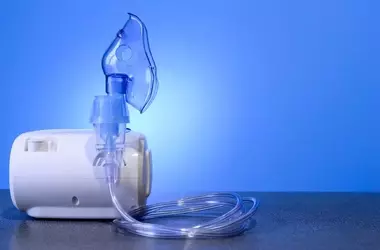
Understanding Medical Nebulizers: A Comprehensive Scientific Overview
Effective delivery of medication to the respiratory tract is a cornerstone of modern pulmonary care. A medical nebulizer is a device designed to convert liquid medication into a fine mist or aerosol, allowing it to be inhaled directly into the lungs through a mouthpiece or face mask. This method of administration is particularly significant for individuals who have difficulty using handheld inhalers, such as infants, the elderly, or those experiencing severe respiratory distress. The following discussion provides an objective examination of nebulizer technology. It begins by defining the foundational types of nebulizers available in clinical and home settings, explores the specific physical mechanisms used to create breathable aerosols, compares the advantages and limitations of various designs, and concludes with an outlook on the future of inhalation therapy. By adhering to a structured technical framework, this article serves as a neutral resource for understanding how these devices facilitate targeted drug delivery to the lower respiratory system.
 By Daniel Brooks
 Dec 24, 2025
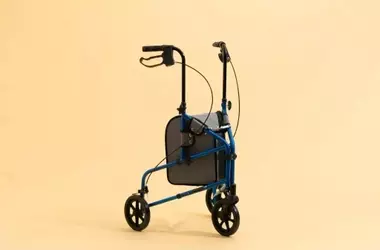
Understanding Mobility Walkers: A Comprehensive Technical and Functional Overview
The ability to move independently is a fundamental aspect of human physical health and autonomy. However, due to aging, injury, or neurological conditions, stability can become compromised. A mobility walker, often referred to simply as a "walker," is an assistive device designed to provide an additional point of support, increasing a person’s base of stability and redistributing body weight from the lower extremities to the upper body. This article offers a neutral, science-based examination of mobility walkers, exploring their various designs, the mechanical principles that allow them to prevent falls, and the objective factors considered during their selection and use. By moving from structural definitions to clinical discussions and future trends, this text serves as a factual resource for understanding how these tools facilitate safer locomotion.
 By Elena Petrova
 Dec 24, 2025
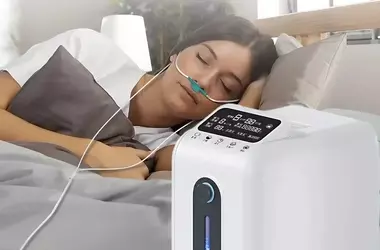
Understanding Home Oxygen Concentrators: A Comprehensive Scientific Overview
In the realm of respiratory support technology, the ability to access medical-grade oxygen outside of a hospital setting has become a cornerstone of chronic disease management. A home oxygen concentrator is an electrically powered medical device designed to pull in ambient air, remove nitrogen, and deliver a continuous or pulsed flow of concentrated oxygen to a user via a nasal cannula or mask. Unlike traditional oxygen tanks, which store a finite amount of compressed gas or liquid, these machines generate oxygen indefinitely as long as they have a power source. This article provides a neutral, science-based examination of home oxygen concentrators. It explores the fundamental differences between ambient and medical-grade air, details the mechanical "Pressure Swing Adsorption" process that powers these units, presents an objective overview of different device types, and discusses the future of portable respiratory technology. By moving from core mechanics to practical Q&A, this text serves as a factual resource for understanding how these devices assist in maintaining pulmonary stability.
 By Ahmed El-Sayed