 Breaking News & Live Updates
- Breaking News & Live Updates
- Breaking News & Live Updates
- Breaking News & Live Updates
- Breaking News & Live Updates
- Breaking News & Live Updates
- Breaking News & Live Updates
- Breaking News & Live Updates
- Breaking News & Live Updates
- Breaking News & Live Updates
Understanding Neuro-Identitarianism: Alienation in Modern Society
A systemic psychotherapist's viewpoint suggests that understanding human emotional challenges requires examining their social and interpersonal contexts. This perspective contrasts with a purely psychiatric approach, which the cultural critic Mark Fisher observed tends to medicalize understandable human reactions to difficult circumstances, attributing them to individual brain chemistry rather than external pressures.
In recent times, psychiatric diagnoses have become increasingly prevalent, extending beyond mental health issues to encompass a wide spectrum of human experiences. The neurodiversity movement has seen a significant surge in diagnoses, with autism assessments and ADHD medication prescriptions dramatically increasing. Celebrities openly discussing their diagnoses further amplify this trend, while social media reinterprets various aspects of human experience through a neurobiological lens, such as labeling social anxiety as 'rejection sensitivity dysphoria' or mid-life crises as 'autistic burnout'.
Prominent autism researcher Professor Uta Frith has voiced concerns that the concept of autism has broadened to such an extent that its original meaning, as a lifelong neurodevelopmental condition with specific social-communication difficulties, is being lost. She highlights the reliance on subjective reporting rather than objective biological markers for diagnosis, leading to many individuals receiving diagnoses despite lacking the pervasive social-communication challenges typically associated with the condition. Similarly, Dr. Sami Timimi, a critical psychiatrist, points out the exponential growth of ADHD diagnoses, despite the absence of clear genetic, neurochemical, or brain imaging biomarkers. He notes that diagnosis often relies on subjective questionnaires that do not adequately consider age-appropriate developmental norms, leading to a shrinking definition of what is considered typical behavior.
Beyond the medical community's growing concern about over-diagnosis, a more profound question arises: why are so many individuals increasingly identifying as neurodivergent and seeking such recognition? The answer likely extends beyond the influence of psychiatric discourse alone. While psychiatric frameworks provide a language for this phenomenon, its widespread appeal suggests deeper societal currents are at play. Timimi argues that by removing the contentious 'neuro' prefix, the demand for diagnosis primarily reflects a claim to distinctiveness, where individuals assert that their experiences and needs diverge from those deemed 'neurotypical'.
Observing neurodiversity blogs and social media reveals a consistent narrative: a pre-diagnosis self marked by profound uncertainty about one's needs, desires, and abilities, accompanied by persistent feelings of inadequacy, overwhelm, loneliness, and misunderstanding. In this context, diagnosis transcends a mere medical classification; it becomes an ontological event. The realization of being neurodiverse retrospectively provides coherence to a fragmented past, transforming confusion into a defined identity. This narrative often positions the world and its institutions as unaccommodating to the neurodivergent individual, with neuro-actualization offering a pathway to resistance through a rights-based framework for identifying and addressing their needs.
The descriptions of the pre-diagnosed self, characterized by fundamental uncertainty, bear a striking resemblance to Marx's concept of alienation, particularly alienation from 'species-being' or Gattungswesen. Humans are intrinsically social beings who develop self-understanding through collective life and perceive themselves as integral to the species. Marx argued that alienation from species-being occurs when individuals are reduced to mere instruments serving purposes external to their own.
In contemporary capitalism, processes of alienation have intensified to near-dystopian levels. Sociologist Zygmunt Bauman's concept of 'liquid modernity' describes a society marked by social fragmentation and enforced individualism. Isolated from one another, people increasingly perceive others as external and judgmental. Modern societies grapple with eroded community ties, declining civic engagement, and a technologically mediated existence that has supplanted embodied social interactions. Even consciousness itself has become a commodity, with the attention economy fostering distraction, compulsion, and fragmentation, drawing individuals towards screens rather than human connection, and alienating them from their inner lives. Consequently, contemporary capitalism inadvertently cultivates feelings of inadequacy, overwhelm, loneliness, and misunderstanding.
The diagnostic framework, while providing a means to articulate distress, simultaneously reinforces the experience of alienation. It tends to localize the problem within the individual's 'brain-wiring,' neglecting the possibility that these 'neurodiverse' experiences might reflect broader collective human experiences or systemic issues necessitating societal change. Suggesting that the experiences of those seeking diagnosis could be universal is often met with resistance, perceived as invalidating or diminishing neurodivergent experiences, which are asserted as unique and incomprehensible to neurotypical individuals.
This dynamic means that attempts to articulate the widespread unease of an individualized, disconnected, and disembodied existence ultimately reinforce individualism and estrangement, leaving the underlying conditions that generate suffering unaddressed. This paradox is inherent to liquid modernity, where distress is individualized, the self becomes the sole focus of explanation, and identity transitions from a given to a competitive pursuit. As the German sociologist Ulrich Beck noted, "how one lives becomes a biographical solution to systemic contradictions."
Diagnosis promises to validate an individual's experiences and needs within a competitive landscape of identities, leveraging the language of disability and civil rights to assert those needs. This rise of neuro-identitarianism is part of a broader 'hyper-liberal' cultural shift, where philosopher John Gray argues that self-defined identity has become so elevated that politics is reduced to the affirmation of the self. This can manifest as nativist ethnic nationalism on the right or symbolic politics of representation on the left, ultimately fragmenting public life into moralized conflicts among competing subjectivities, rather than pursuing structural change and the common good.
This fragmentation has tangible consequences. In the UK, special educational needs provision costs are soaring unsustainably, as parents are forced into adversarial battles with local authorities for their children's support. Meanwhile, schools are struggling with overcrowded classrooms, exhausted teachers, and diminished universal provisions due to years of austerity. Since 2012, the number of young adults claiming disability benefits has doubled, with a significant portion citing autism or ADHD. Diagnosis has become a temporary fix, a pathway to state benefits that fails to address a dysfunctional labor market that underinvests in young people and offers precarious, low-wage jobs often insufficient to cover living expenses.
Neuro-identitarianism, in this sense, reflects a broader societal trend. As essential services like housing, healthcare, education, and employment decline, resistance increasingly takes an individualized, shortsighted form, diverting collective pressure that could otherwise demand systemic reform. A profound irony is that those with the most severe needs, often functionally impaired and lacking the capacity to advocate for themselves, are increasingly marginalized amidst the clamor generated by neuro-influencers.
Neuro-identitarianism is an understandable response to the alienation prevalent in late capitalism. The pursuit of diagnosis reflects a fundamental human need for one's subjective experience to be acknowledged, a need amplified in atomized societies where genuine opportunities for connection and understanding are diminishing. However, the tragedy of neuro-identitarianism lies in its creation of special interest groups defined by difference, competing for recognition alongside other identity-based movements. This ultimately stifles the potential for broader solidarity. By denying shared human experiences within an often unwelcoming world, it further separates individuals from their common humanity, perpetuating the very alienation it aims to address.
Other Articles

Long-Term Impact of Childhood Hyperactivity on Life Quality
A new longitudinal study reveals that children and adolescents exhibiting symptoms of attention-deficit hyperactivity disorder (ADHD) consistently experience reduced overall well-being throughout their developmental years. The research, published in the "Journal of Attention Disorders", indicates that these disparities affect physical, emotional, and social functioning from ages 4 to 17, highlighting the pervasive and lasting consequences of childhood hyperactivity.

Concussions and Arrest Risk Among NFL Players: A Deep Dive
A study published in 'Deviant Behavior' indicates that professional football players with a history of documented concussions face a higher likelihood of arrest. This research provides initial evidence linking brain injuries from high-impact sports to subsequent encounters with the criminal justice system. The findings underscore the importance of comprehensive player support and brain health monitoring beyond the immediate injury period.

Literary Masterpieces Unveil the Enduring Nature of Maladaptive Daydreaming Through Centuries
A recent groundbreaking study reveals that intense, disruptive fantasy, now known as maladaptive daydreaming, is not a modern psychological phenomenon but has been vividly documented in classic literature for centuries. This research, published in "Psychology of Consciousness: Theory, Research, and Practice," analyzes 20 works of fiction from the 17th to the 21st centuries, demonstrating that compulsive fantasy is an intrinsic aspect of human experience rather than a fleeting trend. The study bridges the gap between clinical science and the humanities, offering a deeper understanding of this complex mental process.

A Neurodivergent's Candid Journey Through Internal Family Systems Training
This article explores one neurodivergent individual's challenging experience with Internal Family Systems (IFS) training. Despite initial hopes for complex trauma healing, the author encountered difficulties connecting with the model's concepts, particularly the 'parts' communication, which was potentially influenced by antipsychotic medication and past institutionalization. The piece highlights the importance of individualized therapeutic approaches and raises critical questions about the accessibility and effectiveness of mainstream trauma therapies for neurodivergent and psychiatrically marginalized populations.

Navigating the Complexities of AI in Mental Health Support
This compilation of recent research highlights the evolving role of AI chatbots in mental health. It scrutinizes the potential benefits and significant risks associated with AI-powered emotional support, including concerns over emotional attachment, user grief following AI model changes, and inherent racial biases in treatment recommendations. The studies advocate for robust ethical frameworks and careful consideration of AI's societal impact.
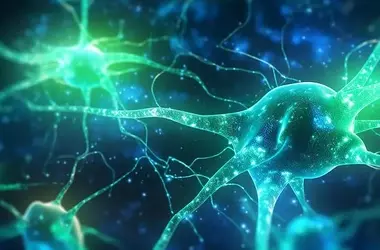
Excessive Brain Inhibition Linked to Age-Related Memory Decline
A recent study indicates that an overabundance of inhibitory connections in the brain's prefrontal cortex may contribute to memory and cognitive decline in older age. Researchers observed heightened levels of specific proteins and increased inhibitory synapses in cognitively impaired aged mice. Furthermore, artificially increasing inhibition in younger mice replicated these cognitive deficits, suggesting a causal relationship. These findings highlight the delicate balance of neural activity necessary for healthy brain function and may influence future treatments for age-related cognitive issues.