 Breaking News & Live Updates
- Breaking News & Live Updates
- Breaking News & Live Updates
- Breaking News & Live Updates
- Breaking News & Live Updates
- Breaking News & Live Updates
- Breaking News & Live Updates
- Breaking News & Live Updates
- Breaking News & Live Updates
- Breaking News & Live Updates
Understanding Migraine: A Scientific and Technical Overview

Migraine is a complex neurological disorder characterized by recurrent episodes of moderate-to-severe headache, often accompanied by various autonomic and sensory symptoms. Unlike standard tension-type headaches, a migraine is recognized by the International Classification of Headache Disorders (ICHD) as a distinct primary headache disorder involving specific neurovascular alterations. This article provides an objective analysis of migraine, beginning with its fundamental classification and symptoms, moving into the biological mechanisms of the trigeminovascular system, presenting a global perspective on diagnosis and management, and concluding with current research trajectories.
Through this structural exploration, we aim to answer key questions regarding what happens in the brain during an attack, why certain individuals are more predisposed, and how the scientific community currently views its management.

1. Basic Conceptual Analysis: Classification and Symptomology
Migraine is globally recognized as one of the leading causes of disability. According to the World Health Organization (WHO), it is estimated that nearly 1 in 8 people globally live with this condition.
Primary Classifications
Clinical diagnosis typically divides migraine into two main categories:
- Migraine without Aura: The most common form, characterized by unilateral (one-sided) pulsing pain, nausea, and sensitivity to light (photophobia) or sound (phonophobia).
- Migraine with Aura: Occurs in approximately 25-30% of cases, where the headache is preceded or accompanied by transient neurological disturbances, such as visual flashes, tingling sensations, or speech difficulties.
The Phases of a Migraine Attack
A single episode can span four distinct physiological stages:
- Prodrome: Premonitory symptoms (mood changes, food cravings) appearing hours or days before the pain.
- Aura: Short-lived sensory or visual disturbances.
- Headache (Attack): The phase of active pulsing pain.
- Postdrome: Often described as a "migraine hangover," characterized by exhaustion or cognitive clouding.
2. Core Mechanisms and In-depth Explanation
Historically, migraine was thought to be a purely vascular event (vasodilation). However, modern neuroscience identifies it as a neurovascular disorder involving the trigeminovascular system.
Cortical Spreading Depression (CSD)
CSD is believed to be the primary mechanism behind the migraine aura. It is a wave of electrophysiological hyperactivity followed by a wave of inhibition (depression) that spreads across the cerebral cortex. This wave triggers the activation of pain-sensing fibers in the meninges (the brain's protective membranes).
Activation of the Trigeminovascular System
- Sensitization: Nerves belonging to the trigeminal nerve system—the largest cranial nerve—release neuropeptides, most notably Calcitonin Gene-Related Peptide (CGRP) and Substance P.
- Neurogenic Inflammation: These peptides cause blood vessels in the meninges to dilate and become "leaky," leading to localized inflammation.
- Signal Transmission: Pain signals are transmitted back through the trigeminal ganglion to the brainstem (thalamus) and eventually to the cerebral cortex, where the sensation of pain is processed.
The Genetic Component
Data from the American Migraine Foundation suggests that migraine has a high degree of heritability. If one parent has the condition, there is a 50% probability the child will also develop it; this rises to 75% if both parents are affected .
3. Presenting the Full Picture: Diagnosis and Clinical Landscape
The diagnosis of migraine remains primarily clinical, based on patient history and the exclusion of secondary causes (such as tumors or infections).
Diagnostic Criteria
The International Headache Society (IHS) provides standardized criteria for diagnosis, requiring at least five attacks lasting 4–72 hours that meet specific requirements for intensity, location, and associated symptoms .
Management Landscape
Management is categorized into three main pillars:
- Acute Intervention: Utilizing specific agents like Triptans or Gepants that target CGRP receptors to stop an attack once it has started.
- Prophylactic (Preventive) Treatment: Indicated for those with frequent attacks (usually 4 or more days per month). This includes beta-blockers, anti-seizure medications, or monoclonal antibodies targeting the CGRP pathway.
- Neuromodulation: The use of external electrical or magnetic devices to alter nerve activity and reduce the frequency of episodes.
| Strategy | Goal | Common Methods |
| Acute | Abort active pain | CGRP antagonists, Triptans |
| Preventive | Reduce frequency | Beta-blockers, Monoclonal antibodies |
| Lifestyle | Minimize triggers | Regular sleep, hydration, stress management |
4. Summary and Future Outlook
The scientific understanding of migraine has shifted from a "simple headache" to a complex neurological phenomenon involving brain excitability and molecular signaling. While the condition remains chronic for many, targeted molecular therapies represent a significant leap in precision medicine.
Future Directions in Research:
- PACAP Targeting: Researching Pituitary Adenylate Cyclase-Activating Polypeptide (PACAP), another molecule similar to CGRP that may play a role in migraine.
- AI Diagnostics: Utilizing machine learning to analyze wearable data (heart rate, sleep patterns) to predict the onset of a migraine before the pain begins.
- Neuroplasticity Studies: Investigating how the brain "remembers" pain and whether chronic migraine can be "rewired" through specific neurological exercises.
5. Q&A: Clarifying Common Technical Inquiries
Q: How does a migraine differ from a sinus headache?
A: Studies show that a large percentage of self-diagnosed "sinus headaches" are actually migraines. While both can involve facial pressure, a migraine is usually associated with nausea and sensitivity to light, which are not typical of sinus issues.
Q: Why do certain foods trigger a migraine?
A: Certain substances, such as tyramine (found in aged cheeses) or nitrates, can interact with the vascular system or trigger the release of chemicals that activate the trigeminal nerve in predisposed individuals.
Q: What is the "Migraine Threshold"?
A: This is a theoretical concept suggesting that everyone has a "breaking point" at which a migraine is triggered. In individuals with the disorder, this threshold is lower due to genetic factors or nervous system hypersensitivity.
Q: Can environmental changes, like weather, cause an attack?
A: Yes. Changes in barometric pressure can affect the pressure in the sinuses and the brain's electrical activity, which may lower the threshold for the activation of the trigeminovascular system.
This overview is intended for informational and educational purposes, reflecting the current scientific consensus on migraine. For localized clinical data or diagnostic support, individuals should refer to the European Headache Federation (EHF) or the National Institute of Neurological Disorders and Stroke (NINDS).

Other Articles
 Dec 19, 2025
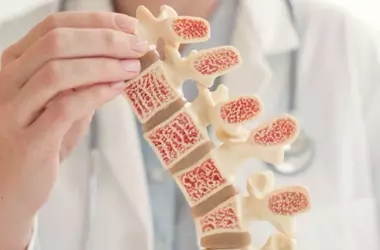
Understanding Osteoporosis: A Scientific and Technical Overview
Osteoporosis is a systemic skeletal disorder characterized by low bone mass and the microarchitectural deterioration of bone tissue. This condition leads to increased bone fragility and a consequent susceptibility to fractures, even from minor trauma or routine movement. Often termed a "silent" condition because it progresses without overt symptoms until a fracture occurs, osteoporosis represents a significant intersection of endocrinology, orthopedics, and cellular biology.
 By Dr. Farah Noor
 Dec 19, 2025
Understanding High Cholesterol: A Scientific and Technical Overview
High cholesterol, clinically referred to as hypercholesterolemia, is a metabolic condition characterized by excessive levels of cholesterol—a waxy, fat-like substance—circulating in the bloodstream. While cholesterol is a fundamental structural component of cell membranes and a precursor for hormones and vitamin D, an imbalance in its transport system can lead to systemic health implications. This article provides an objective analysis of the biological functions of cholesterol, the mechanisms that govern its regulation, the clinical criteria for diagnosis, and the current landscape of scientific research regarding its management.
 By Mei Lin Zhou
 Dec 19, 2025
Understanding Kidney Stones: A Scientific and Technical Overview
Kidney stones, medically termed nephrolithiasis or renal calculi, are solid, crystal-like deposits that form within the kidneys when mineral and acid salts in the urine become highly concentrated. These formations can range in size from microscopic grains to several centimeters in diameter and can affect any part of the urinary tract, from the renal pelvis to the bladder. This article provides an objective analysis of kidney stones by examining their chemical composition, the biological mechanisms leading to crystallization, the clinical landscape of diagnosis and intervention, and the current trajectory of urological research.
 By Dr. Rosa Martínez