 Breaking News & Live Updates
- Breaking News & Live Updates
- Breaking News & Live Updates
- Breaking News & Live Updates
- Breaking News & Live Updates
- Breaking News & Live Updates
- Breaking News & Live Updates
- Breaking News & Live Updates
- Breaking News & Live Updates
- Breaking News & Live Updates
Understanding Dermatological Medications: A Comprehensive Scientific Overview

The skin is the largest organ of the human body, acting as a critical barrier against environmental pathogens, ultraviolet radiation, and physical trauma. Dermatological medications are a diverse group of pharmaceutical agents specifically formulated to treat diseases and conditions affecting the skin, hair, and nails. These treatments range from surface-level topical creams to complex systemic drug that alter immune responses. This article provides a neutral, evidence-based examination of the pharmacological landscape of skincare. It explores the foundational classification of skin treatments, the biological mechanisms through which these drug interact with skin cells, and an objective discussion of the clinical outcomes and challenges associated with their use. By following a path from basic definitions to future scientific trends, this overview aims to provide a clear understanding of the role these medications play in modern medicine.
Basic Concepts and Classification
Dermatological medications are primarily categorized by their delivery method and the specific biological process they target. Because the skin has multiple layers—the epidermis, dermis, and hypodermis—the way a drug is administered determines which layer it can effectively reach.
Common classifications include:
- Topical Medications: Applied directly to the skin surface in the form of creams, ointments, gels, or lotions. These are used for localized issues like infections or rashes.
- Systemic Medications: Taken orally or via injection to treat conditions that are widespread or rooted deep within the body's systems, such as severe psoriasis.
- Biologics: A newer class of systemic drug produced from living organisms that target specific parts of the immune system that cause inflammation.
- Photodynamic Therapy Agents: Drug that make skin cells sensitive to specific light wavelengths, used in treating certain skin cancers or precancerous growths.
Core Mechanisms: How Skin Medications Function
The effectiveness of dermatological drug relies on their ability to penetrate the skin barrier or modulate internal inflammatory pathways.
1. Anti-inflammatory and Immunomodulatory Mechanisms
Many skin diseases, such as eczema or psoriasis, are caused by an overactive immune response.
- Corticosteroids: These mimic natural hormones to suppress the production of inflammatory chemicals. They reduce swelling, redness, and itching by constricting blood vessels and stabilizing cell membranes.
- Calcineurin Inhibitors: These block a specific enzyme involved in activating T-cells, which are the immune cells responsible for the skin inflammation seen in atopic dermatitis.
2. Antimicrobial and Antifungal Action
When the skin barrier is breached, pathogens can colonize the tissue.
- Antibiotics: Target the cell walls or metabolic processes of bacteria (like Propionibacterium acnes in acne).
- Antifungals: Work by disrupting the synthesis of ergosterol, a vital component of fungal cell membranes, causing the fungal cells to leak and die.
3. Keratolytic and Retinoid Pathways
- Keratolytics: Substances like salicylic acid break down "keratin," the protein that holds skin cells together. This allows the outer layer of skin to shed more easily, preventing clogged pores.
- Retinoids: These are derivatives of Vitamin A. They work at a genetic level to speed up cell turnover and prevent skin cells from sticking together, which is fundamental in treating acne and photo-aging.
Presentation of the Clinical Landscape
Dermatological therapy is often a multi-step process that balances the potency of a drug with the sensitivity of the patient's skin.
Comparison of Common Dermatological Medication Modalities
| Category | Typical Form | Primary Goal | Common Use Case |
| Corticosteroids | Ointment/Cream | Reduce inflammation | Eczema, Psoriasis |
| Retinoids | Gel/Oral Capsule | Regulate cell growth | Acne, Aging, Psoriasis |
| Antibiotics | Topical/Oral | Eliminate pathogens | Acne, Rosacea, Infections |
| Biologics | Injection | Block immune signals | Chronic severe Psoriasis |
| Antifungals | Cream/Powder | fungal spores | Athlete's foot, Ringworm |
The Clinical Lifecycle
- Diagnostic Mapping: Identifying the condition through visual inspection, skin scrapings, or biopsies.
- Vehicle Selection: Choosing the right "base" for a topical drug. For example, ointments are better for dry, scaly skin, while gels are preferred for oily or hair-bearing areas.
- Step-Up Therapy: Starting with mild topical treatments and moving to stronger systemic options only if the initial response is insufficient.
- Maintenance: Long-term use of "barrier repair" creams or low-potency agents to prevent the recurrence of chronic conditions.
Objective Discussion and Evidence
Statistical data and clinical observations highlight the efficacy of skin medications while noting the importance of safety protocols.
- Impact on Chronic Disease: According to the World Health Organization (WHO), skin diseases are among the most common human health afflictions. Data indicates that modern biologics have allowed up to 80-90% of patients with severe psoriasis to achieve nearly clear skin, a significant increase from older therapies.
- The Problem of Antibiotic Resistance: An objective challenge in dermatology is the overuse of antibiotics for acne. Research suggests that long-term use can lead to resistant bacterial strains, prompting a shift toward using benzoyl peroxide or retinoids as primary treatments.
- Side Effect Profiles: Potent medications carry risks. For example, long-term use of strong topical steroids can cause "skin atrophy" (thinning of the skin). Systemic retinoids require strict monitoring due to potential impacts on liver function and fetal development.
- Absorption Variables: The thickness of the skin varies across the body (e.g., the eyelids versus the soles of the feet). Clinical evidence shows that the same medication can be absorbed up to 10 times more efficiently on the face than on the forearm, requiring different concentrations for different body parts.
Summary and Future Outlook
Dermatological pharmacology is moving toward "personalized" or "precision" dermatology. Instead of treating all rashes with the same cream, scientists are identifying the specific genetic markers of a disease.
Future developments include:
- Microbiome-Based Therapy: Using "good" bacteria to crowd out harmful ones, potentially treating acne or eczema without traditional antibiotics.
- Nanotechnology: Engineering tiny particles to carry drug deeper into the skin layers, allowing for lower doses and fewer side effects.
- JAK Inhibitors: A new class of drug that block the "Janus kinase" signaling pathway, showing promise for conditions that previously had few treatments, such as vitiligo (loss of skin pigment) and alopecia areata (hair loss).
Question and Answer Section
Q: Is a "cream" the same as an "ointment"?
A: No. Creams are usually half-water and half-oil, making them easy to spread and absorb. Ointments are much oilier (usually 80% oil) and stay on the skin longer, providing a stronger barrier and better absorption for very dry areas.
Q: Why do some skin medications take so long to work?
A: The skin's natural renewal cycle takes approximately 28 to 30 days. Many medications, especially retinoids, work by changing how new cells are formed. Therefore, it often takes at least one full skin cycle to see visible changes.
Q: Can I use a friend's prescription steroid cream for a mystery rash?
A: This is objectively discouraged. Steroid creams come in many different "potencies." Using a high-potency steroid on the face or in skin folds can cause permanent damage, and if the rash is actually a fungal infection, steroids can make the infection significantly worse.
Q: Does the "natural" label mean a skin product is safer?
A: In a clinical sense, "natural" does not mean "non-reactive." Many plant-based extracts can cause allergic contact dermatitis. Standardized medications are tested for stability and irritation levels in a way that many unregulated natural products are not.
References
- https://www.who.int/news-room/fact-sheets/detail/skin-diseases
- https://www.aad.org/public/diseases/a-z/psoriasis-treatment
- https://www.ncbi.nlm.nih.gov/pmc/articles/PMC2705019/
- https://www.mayoclinic.org/diseases-conditions/atopic-dermatitis-eczema/diagnosis-treatment/drc-20353279
- https://pubmed.ncbi.nlm.nih.gov/30234561/

Other Articles
 Dec 23, 2025
Understanding Cardiovascular Medications: A Comprehensive Scientific Overview
The cardiovascular system, consisting of the heart and a vast network of blood vessels, is responsible for transporting oxygen, nutrients, and hormones to tissues throughout the body. Cardiovascular medications represent a broad category of pharmaceutical agents designed to manage conditions affecting this system, such as hypertension, coronary artery disease, heart failure, and arrhythmias. The primary objective of these medications is to modulate physiological processes—including heart rate, blood vessel diameter, and blood volume—to maintain stable circulation and prevent long-term organ damage. This article provides a neutral, evidence-based exploration of the field, detailing the foundational categories of heart medications, the biochemical mechanisms through which they influence the body, and an objective discussion regarding their clinical roles. By navigating from basic concepts to future scientific outlooks, this overview aims to provide a clear understanding of the pharmacological tools used in modern cardiovascular care.
 By Daniel Brooks
 Dec 23, 2025
Diphenhydramine: A Technical and Pharmacological Overview
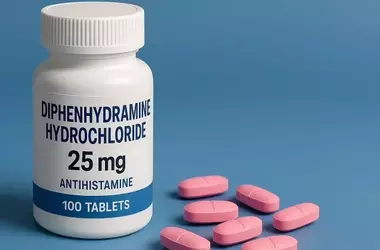
Diphenhydramine is a first-generation antihistamine belonging to the ethanolamine chemical class. It is primarily utilized for its ability to antagonize H1 receptors, thereby mitigating the physiological effects of histamine in the body. Beyond its role in addressing allergic responses, diphenhydramine possesses significant anticholinergic and sedative properties, leading to its application in managing motion sickness, localized skin irritations, and temporary sleep disturbances. This article provides an objective analysis of diphenhydramine, examining its molecular structure, the biochemical mechanisms of histamine blockade, its metabolic trajectory within the liver, and the regulatory standards governing its use. By exploring the interaction between the compound and the central nervous system, this text aims to clarify the functional scope and technical constraints of this pharmacological agent.
 By Dr. Hannah Fischer
 Dec 23, 2025
Understanding Antiviral Medications: A Comprehensive Scientific Overview
Viruses are microscopic entities that require living host cells to replicate, often leading to a wide range of infectious diseases in humans. Antiviral medications are a class of specialized pharmaceutical agents designed to inhibit the development and spread of these viral pathogens within the body. Unlike antibiotics, which destroy bacteria, antivirals do not typically "kills" the virus; instead, they interfere with specific stages of the viral life cycle to suppress replication and reduce the severity of the infection. This article provides a neutral, evidence-based exploration of the field, detailing the foundational differences between viruses and other pathogens, the biochemical mechanisms by which these drug operate, a classification of common antiviral types, and an objective discussion on the challenges of drug resistance. By following a structured progression from basic concepts to future scientific outlooks, this overview aims to provide a clear understanding of the role antivirals play in modern clinical medicine.
 By Paolo Ricci