 Breaking News & Live Updates
- Breaking News & Live Updates
- Breaking News & Live Updates
- Breaking News & Live Updates
- Breaking News & Live Updates
- Breaking News & Live Updates
- Breaking News & Live Updates
- Breaking News & Live Updates
- Breaking News & Live Updates
- Breaking News & Live Updates
Understanding Aphasia Treatment: A Comprehensive Scientific Overview

Language is a fundamental tool for human connection, yet for millions of individuals, this ability is disrupted by a neurological condition known as aphasia. Aphasia is an acquired communication disorder that impairs a person's ability to process, produce, or understand speech and written language, typically resulting from damage to the brain's language-dominant hemisphere. Aphasia treatment refers to the systematic clinical interventions designed to restore linguistic function, develop compensatory communication strategies, and improve the social participation of affected individuals. This article provides a neutral, evidence-based examination of the therapeutic landscape, exploring the biological foundations of brain recovery, the specific methodologies used in speech-language pathology, and the current scientific data regarding recovery outcomes.
Basic Concepts and Classification
To understand the scope of treatment, it is essential to recognize that aphasia is a spectrum of disorders rather than a single condition. It is most commonly caused by a stroke, but can also result from traumatic brain injury, tumors, or progressive neurological diseases.
The clinical approach to treatment is often determined by the specific type of aphasia diagnosed:
- Expressive Aphasia (Broca’s): Characterized by difficulty producing speech. Treatment focuses on building sentence structure and word retrieval.
- Receptive Aphasia (Wernicke’s): Characterized by difficulty understanding language. Treatment focuses on auditory comprehension and monitoring one's own speech output.
- Global Aphasia: A severe form affecting both production and comprehension. Treatment often begins with non-verbal communication tools.
- Anomic Aphasia: Characterized by a persistent inability to find the correct words for objects or ideas.
The primary goal of any intervention is to maximize the individual's ability to communicate, whether through the recovery of natural speech or the use of assistive technology.
Core Mechanisms: How Treatment Functions
The effectiveness of aphasia treatment relies on the brain's innate ability to reorganize itself after an injury, a process known as Neuroplasticity.
1. Neural Reorganization
When the primary language centers (usually in the left hemisphere) are damaged, treatment aims to stimulate surrounding healthy tissues or equivalent areas in the right hemisphere to take over language tasks. Intensive, repetitive practice acts as a biological signal that encourages the brain to forge new neural pathways.
2. Restorative vs. Compensatory Mechanisms
- Restorative Mechanism: These techniques aim to "fix" the broken language system by targeting specific linguistic deficits, such as the ability to name objects or use correct grammar.
- Compensatory Mechanism: These techniques focus on "working around" the deficit. If speech is no longer viable, the mechanism involves training the individual to use gestures, drawing, or digital devices to convey their message.
3. Behavioral Stimulation
Speech-Language Pathology (SLP) utilizes behavioral tasks that increase in complexity. This gradual stimulation ensures that the brain remains challenged but not overwhelmed, which is critical for maintaining the momentum of recovery.
Presentation of the Therapeutic Landscape
Aphasia treatment is typically delivered by a Speech-Language Pathologist (SLP) and may involve various specialized techniques.
Primary Treatment Modalities
| Category | Specific Technique | Primary Function |
| Impairment-Based | Semantic Feature Analysis | Improving word-finding by describing an object's characteristics. |
| Constraint-Induced | CILT (Constraint-Induced Language Therapy) | Forcing the use of verbal speech by preventing the use of gestures. |
| Social/Participation | Conversation Coaching | Training communication partners to support the individual. |
| Technological | AAC (Augmentative and Alternative Communication) | Using tablets or apps to generate speech or symbols. |
Detailed Overview of Approaches
- Melodic Intonation Therapy (MIT): This method utilizes the right hemisphere’s affinity for rhythm and music. By "singing" phrases, individuals with severe expressive aphasia can sometimes produce words that they cannot say in a normal speaking voice.
- Telerehabilitation: A modern shift where therapy is conducted via secure video conferencing. This increases accessibility for those with mobility issues or living in remote areas.
- Group Therapy: Provides a low-pressure environment where individuals can practice communication in social settings, reducing the isolation often associated with the disorder.
Objective Discussion and Evidence
The efficacy of aphasia treatment is supported by a growing body of clinical research, though recovery rates are highly individualized.
- The "Plateau" Myth: Historical views suggested that recovery stopped after six months. However, modern longitudinal data shows that with continued intervention, individuals can continue to make gains in communication for years following the initial injury.
- Intensity and Frequency: Evidence suggests that "intensive" therapy—defined as many hours of practice per week over a shorter duration—often yields more significant improvements in language scores compared to low-intensity therapy spread over a long period.
- Recovery Statistics: According to the National Aphasia Association, approximately one-third of stroke survivors experience aphasia. While complete recovery to pre-injury levels is not always possible, significant functional improvement is observed in the majority of those who undergo structured rehabilitation.
- Pharmacological Research: While no drug is currently approved specifically to "cure" aphasia, research is ongoing into "nootropics" and medications that affect dopamine or acetylcholine to see if they can enhance the effects of traditional speech therapy.
Summary and Future Outlook
Aphasia treatment has transitioned from a narrow focus on "fixing speech" to a holistic approach that prioritizes "functional communication." The integration of neuroscience and technology has provided new avenues for those who previously had limited options.
Future developments in the field are focused on:
- Brain Stimulation: Using non-invasive techniques like Transcranial Magnetic Stimulation (TMS) to "prime" the brain before a therapy session to increase neuroplasticity.
- Personalized Algorithms: Using AI to create customized therapy apps that adapt in real-time to an individual's specific successes and failures.
- Biological Repair: Exploring the potential of stem cell therapy to repair damaged neural tissue in the language centers.
Question and Answer Section
Q: Can aphasia be cured completely?
A: In some cases, particularly after a small stroke or transient injury, full recovery is possible. For most, the goal is "functional recovery," where the person can participate in daily life and communicate effectively, even if some linguistic challenges remain.
Q: Does treatment work if the brain injury happened years ago?
A: Yes. Because the brain remains plastic throughout life, therapy can still be effective years after the injury occurred. This is often referred to as the "chronic phase" of recovery.
Q: What is the role of family in treatment?
A: Family members often act as "communication partners." Training them to use techniques like "supported conversation"—using simple sentences, writing down key words, and being patient—is a critical component of successful long-term management.
Q: Will learning a second language help or hurt recovery?
A: For bilingual individuals, research generally suggests that treatment in one language can sometimes "generalize" or help the other language. Multilingualism is not considered a barrier to recovery.
References
Other Articles
 Dec 22, 2025
Understanding Cataract Treatment: A Comprehensive Scientific Overview
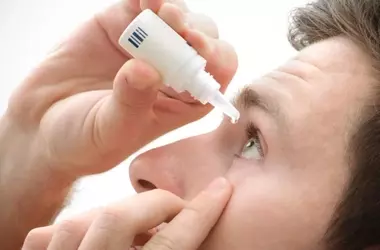
A cataract is a physiological condition characterized by the gradual clouding of the eye's natural crystalline lens, which sits behind the iris and the pupil. This opacification obstructs the passage of light to the retina, leading to blurred vision, increased sensitivity to glare, and potential vision loss. Cataract treatment refers to the medical and surgical strategies employed to restore visual clarity, primarily through the removal of the clouded lens and its replacement with an artificial substitute. This article provides a neutral, evidence-based exploration of the condition’s biological roots, the mechanical principles of modern surgical interventions, and an objective overview of the current clinical landscape. The following sections will detail how these treatments function and what the data suggests regarding their long-term efficacy.
 By Dr. Luis Herrera
 Dec 22, 2025
Understanding Varicose Vein Treatment: A Scientific and Technical Overview
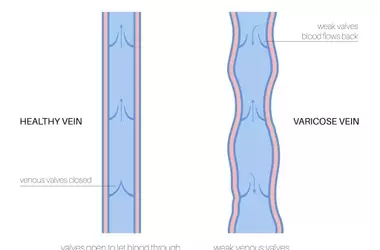
Varicose veins are a common physiological condition involving enlarged, twisted, and sometimes painful veins that typically appear in the lower extremities. This condition occurs when the internal valves of the veins fail to function correctly, causing blood to pool rather than flow efficiently toward the heart. Varicose vein treatment encompasses a range of medical interventions—from conservative lifestyle modifications to minimally invasive procedures and surgical corrections—designed to alleviate symptoms, improve venous circulation, and prevent complications. This article provides an objective exploration of the biological mechanisms of venous insufficiency, details the various therapeutic options available today, and discusses the clinical evidence regarding their application. By moving from fundamental concepts to advanced medical landscape, this overview aims to provide a clear understanding of how spinal health and vascular integrity are maintained.
 By Dr. Anna Müller
 Dec 22, 2025
Understanding Eczema Treatment: A Comprehensive Scientific Overview
Eczema, scientifically known as atopic dermatitis, is a chronic inflammatory skin condition characterized by a compromised skin barrier, leading to symptoms such as redness, intense itching, and dryness. Treatment for eczema refers to a systematic range of therapeutic interventions designed to restore the skin's moisture, suppress overactive immune responses, and prevent secondary infections. This article provides an objective examination of the management strategies currently available in dermatology. It will explore the biological factors contributing to skin barrier dysfunction, detail the mechanisms of topical and systemic therapies, present a balanced view of the clinical landscape, and conclude with future research directions. By following this structured overview, readers will gain a neutral understanding of how various treatments address the physiological challenges of sensitive and reactive skin.
 By Dr. Maria Santos