 Breaking News & Live Updates
- Breaking News & Live Updates
- Breaking News & Live Updates
- Breaking News & Live Updates
- Breaking News & Live Updates
- Breaking News & Live Updates
- Breaking News & Live Updates
- Breaking News & Live Updates
- Breaking News & Live Updates
- Breaking News & Live Updates
The Optimal Time to Text After a First Date: A Scientific Approach
In the evolving landscape of contemporary romance, a common conundrum persists: the precise moment to dispatch a message following an initial rendezvous. While generational wisdom often advocated for a waiting period, such as the famed 'three-day rule,' recent academic inquiry suggests a more nuanced and surprisingly precise window for optimal engagement. This study, encompassing a significant cohort of individuals, meticulously examined the impact of various texting intervals on post-date romantic perceptions and intentions, revealing that the morning after a date emerges as the most auspicious moment for digital outreach.
Details on Post-Date Texting Dynamics Unveiled by Research
A comprehensive investigation involving over 500 participants by Teichmann et al. (2026) rigorously explored three prevalent post-date communication approaches: dispatching a message immediately after the date, sending it the subsequent morning, or delaying communication for two days. Participants subsequently articulated their inclinations toward pursuing the connection, their perception of chemistry, and their eagerness for a follow-up encounter. The cornerstone metric was 'relationship intentions,' gauged by responses to the prompt: "I am prepared to cultivate a sustained relationship with my date."
The findings emphatically demonstrated that texting on the morning following the date generated the highest levels of relationship intent. Both immediate texting and a two-day delay resulted in less favorable outcomes, albeit for distinct reasons. This pattern illustrates a clear 'inverted U-shaped' curve, pinpointing the morning after as the prime opportunity for communication. Furthermore, morning-after texts correlated with heightened perceptions of chemistry. Participants who received a message either immediately post-date or the next morning expressed greater motivation for a subsequent meeting, in contrast to those who experienced a two-day silence. Intriguingly, the study highlighted that women exhibited greater sensitivity to texting timelines, displaying more pronounced positive and negative reactions, while men's relationship intentions remained largely unaffected by the timing.
The study elaborated on why premature communication might be counterproductive. Texting directly after a date, while signaling strong interest and attraction, was also perceived by recipients, particularly women, as potentially indicating neediness. This intense initial enthusiasm can render the prospective relationship seemingly 'too accessible' or overly rapid, thereby diminishing excitement. Conversely, an extended delay in communication, specifically waiting two days, proved more detrimental. Such prolonged silence instilled doubt, leading to reduced perceptions of chemistry, diminished motivation, and lower relationship intentions. This delay projected an image of unreliability, a critical detractor for those seeking a stable connection. Moreover, it undermined the principle of reciprocity, where mutual interest, if not promptly acknowledged, tends to wane. The essence here is that feigning indifference through delayed responses does not enhance appeal; rather, it often backfires.
The triumph of the next-morning text lies in its capacity to strike an exquisite equilibrium. It conveys sustained interest—"You're still on my mind after last night"—without appearing overly zealous or prematurely invested. This brief interlude cultivates anticipation without allowing the nascent connection to dissipate. It subtly activates the reciprocity effect ("They're interested in me!") while simultaneously showcasing dependability ("They followed through"). Ultimately, attributes such as self-assurance, emotional equilibrium, and reliability are qualities universally sought in a partner, all subtly reinforced by this judicious timing.
This research offers clear, actionable guidance for individuals navigating the complexities of contemporary dating. The principal takeaways are to text within a 24-hour window, ideally the morning following the date. It advises against immediate texting if one wishes to avoid appearing excessively keen and strongly cautions against waiting beyond a single day, debunking the myth that 'playing it cool' is always effective. For recipients, while timing offers some insight, it's not an infallible indicator. One should consider whether the timing reflects genuine interest or merely adherence to perhaps misinformed advice. In summation, if authentic interest exists, there's no need to create artificial distance. A simple, timely message, strategically delivered the next morning, often provides the impetus to transform a pleasant date into a blossoming relationship.
Other Articles
 Jan 25, 2026
The Orthogonal Nature of Artificial Intelligence
This article explores the unique cognitive dimension of artificial intelligence, contrasting it with human cognition. It argues that AI doesn't simply replicate human thought but operates on an orthogonal plane, generating coherence without developmental history or personal identity. The piece suggests that perceived AI "hollowness" is a misinterpretation arising from evaluating it with human-centric metrics, and emphasizes the potential for new insights when human and machine intelligences intersect diagonally.
 Jan 24, 2026
Motivation's Impact on Memory Formation and Learning
New research suggests that motivation acts less like a volume knob for effort and more like a camera lens that changes how the brain records events. A theoretical framework published in the Annual Review of Psychology proposes that distinct chemical signals in the brain create specific motivational “moods” that determine whether we remember the big picture or focused details. These moods are categorized into "interrogative" and "imperative" states, each influencing memory formation differently and holding implications for education and clinical practice.
 Jan 23, 2026
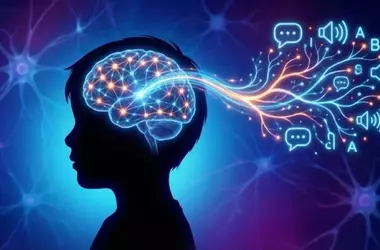
Early Intervention Boosts Spoken Language in Autistic Children
Groundbreaking research indicates that a significant majority of non-speaking autistic children develop verbal communication skills through early intervention. The study emphasizes the critical role of therapy duration over weekly intensity and highlights motor imitation as a key predictor of linguistic progress. These findings offer crucial insights for tailoring interventions to maximize language acquisition in young autistic individuals.
 Jan 23, 2026
The Peril of AI Over-Reliance: Understanding Cognitive Atrophy
The increasing dependence on Artificial Intelligence (AI) for tasks like thinking, writing, and analysis is raising concerns about 'cognitive atrophy.' This phenomenon, highlighted by recent incidents and research, suggests that outsourcing our cognitive load to AI can lead to a decline in critical skills and an increased susceptibility to misinformation. This article explores the signs of such over-reliance and offers practical strategies to reclaim independent thinking, fostering a balanced and responsible approach to AI integration in our daily lives.
 Jan 20, 2026
The Impact of Relationships on Emotional Well-being: A Longitudinal Study
This study explores how changes in romantic relationship status and quality affect emotional well-being, using longitudinal data from over 12,000 German adults. It reveals that while relationships generally boost well-being, the quality of the relationship is paramount. Low-quality relationships can be more detrimental than singlehood, with loneliness being a key factor influenced by partnership status. The research also touches upon gender differences and the societal pressures faced by single individuals.
 Jan 20, 2026
Familiar Rewards Bias Decision-Making by Engaging the Premotor System
A recent neuroscience study published in The Journal of Neuroscience reveals how environmental cues linked to specific rewards can influence human decision-making. The research demonstrates that these cues activate the brain's premotor system, preparing for action even before a conscious decision is made. This phenomenon, known as Pavlovian-to-instrumental transfer, suggests that external triggers like advertising may unconsciously shape behavior by pre-activating motor pathways. The findings highlight the motor system's integral role in decision-making, moving beyond its traditional view as a mere output mechanism.