 Breaking News & Live Updates
- Breaking News & Live Updates
- Breaking News & Live Updates
- Breaking News & Live Updates
- Breaking News & Live Updates
- Breaking News & Live Updates
- Breaking News & Live Updates
- Breaking News & Live Updates
- Breaking News & Live Updates
- Breaking News & Live Updates
The Neurological Underpinnings of Musical Connection and Social Bonding
Music has long served as a fundamental element in human collective experiences, from ancient communal rituals to contemporary musical gatherings. A groundbreaking study has now illuminated the scientific basis behind this phenomenon, demonstrating that exposure to melodically agreeable chord sequences during interpersonal encounters actively reinforces neural pathways responsible for social affiliation and emotional understanding. This investigation employed functional near-infrared spectroscopy (fNIRS) to monitor cerebral blood flow, revealing heightened activity in areas linked to social cognition and affective processing when participants engaged in face-to-face interactions while listening to harmonious music. The findings suggest that predictable, pleasant auditory input creates an optimal physiological state for social engagement, effectively acting as a biological facilitator for human connection.
This pioneering research underscores the direct relationship between an individual's subjective sense of camaraderie and objective changes in their brain's social networks. When music featuring consonant, structured progressions was present, participants not only reported a stronger feeling of connection but also exhibited increased neural activity in relevant brain regions. Conversely, the absence of music or the introduction of discordant, unpredictable sound patterns led to a dissipation of these social enhancements. This observation was made possible by fNIRS, a technology that permits brain imaging during natural social interactions, unlike traditional MRI which necessitates immobility. The study's results suggest that specific musical compositions, particularly those prevalent in Western genres such as jazz and pop, may have evolved to tap into innate physiological responses that promote social cohesion.
The implications of this research extend beyond understanding social dynamics, opening doors for innovative therapeutic interventions. The identified mechanism, where music bolsters brain systems supporting sociality, could be harnessed in music therapy. This approach may benefit individuals facing social isolation, such as those with autism spectrum disorder or severe social anxiety, by providing a structured auditory environment that primes their brains for more effective social interaction. Such applications represent a significant step towards developing evidence-based treatments that leverage the inherent power of music to foster human connection and well-being.
This exploration into the neurological effects of music on social bonding underscores the profound and often underestimated influence of sound on our interpersonal lives. Recognizing music's capacity to unify and heal challenges us to consider its broader role in society. By fostering environments enriched with harmonically pleasing sounds, we can potentially enhance communal ties, reduce feelings of isolation, and cultivate a more empathetic and connected world. This scientific validation of music's social power inspires us to integrate it more thoughtfully into therapeutic practices and daily life, promoting a sense of shared humanity and emotional resonance.
Other Articles
 Mar 19, 2026
Unraveling the Neural Pathways of Scientific Creativity
A recent neuroimaging study sheds light on the brain networks engaged during the generation of scientific creative ideas. Published in "Psychology of Aesthetics, Creativity, and the Arts", the research reveals that scientific creativity relies on an intricate coordination between the default mode network, the executive control network, and the salience network, similar to general creative thinking. This investigation involved 47 undergraduate STEM majors and utilized fMRI to observe brain activity as they formulated scientific hypotheses, providing novel insights into the neurological underpinnings of scientific innovation.
 Mar 19, 2026
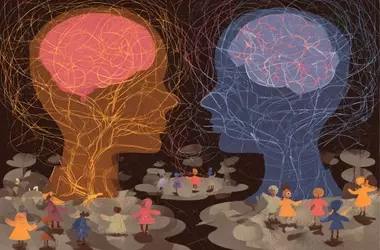
The Neurological Basis of Group Survival
New UCLA research indicates that social species' brains synchronize for collective survival, acting as a self-correcting organism. The prefrontal cortex monitors individual and group needs, enabling automatic compensation when a member struggles. This understanding of "resilience circuits" could inform treatments for social isolation in conditions like depression and schizophrenia.
 Mar 19, 2026
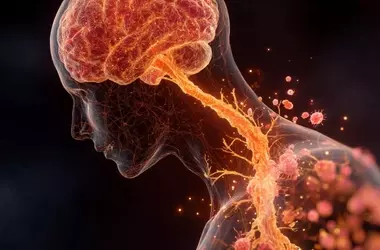
The Brain-Skin Connection: How Stress Triggers Eczema Flares
New research illuminates the direct neural pathways through which psychological stress exacerbates atopic dermatitis, commonly known as eczema. A study involving patient data and mouse models identifies specific sympathetic neurons (Pdyn+) that transmit stress signals from the brain to the skin, activating inflammatory immune cells (eosinophils) via the CCL11–CCR3 signaling pathway and beta-2 adrenergic receptors. This discovery highlights the critical role of neuro-immune communication in skin conditions and suggests that stress management, alongside targeted therapies, could offer more effective treatment strategies.
 Mar 19, 2026
Understanding the Systemic Challenges Autistic Students Face in Education
A recent study highlights the systemic barriers hindering autistic students' self-advocacy in schools. It reveals that despite individual efforts, institutional structures related to meaning, mattering, and management make the educational experience difficult for them. The research identifies six core obstacles: erasure, conformity, isolation, oppression, hidden expectations, and authority, advocating for systemic changes rather than solely focusing on individual skill development.
 Mar 19, 2026
Your Music Playlist May Offer Clues About Your Intelligence
A recent study in the Journal of Intelligence reveals that daily music listening habits, particularly lyrical preferences, subtly reflect an individual's general cognitive ability. Contrary to popular belief, musical elements like tempo and genre are less indicative than the thematic content of lyrics. This research suggests that digital footprints from everyday activities could provide insights into cognitive skills, potentially complementing traditional intelligence assessments. It opens avenues for understanding cognitive abilities in natural settings, moving beyond formal testing environments.
 Mar 17, 2026
The Impact of Diminishing Positive Emotions on Depressive Symptoms
This study explores how dampening positive emotions, characterized by thoughts like "This won't last" or "I don't deserve this," contributes to depressive symptoms. It differentiates between future-oriented dampening, strongly linked to core depressive symptoms, and self-worth related dampening, which maintains existing negative self-views. The research highlights the crucial, often overlooked, role of positive emotion regulation in understanding and treating depression.