 Breaking News & Live Updates
- Breaking News & Live Updates
- Breaking News & Live Updates
- Breaking News & Live Updates
- Breaking News & Live Updates
- Breaking News & Live Updates
- Breaking News & Live Updates
- Breaking News & Live Updates
- Breaking News & Live Updates
- Breaking News & Live Updates
Narcissism and Conspiracy Theories: Education Is Not a Shield
New research challenges the assumption that higher education inoculates individuals against believing in conspiracy theories. The findings suggest that certain narcissistic traits, such as a sense of superiority, a craving for uniqueness, and a need for definitive answers, can make people susceptible to misinformation, regardless of their academic achievements. This highlights the complex interplay between personality, cognitive processes, and belief formation, urging a deeper understanding of psychological motivations when engaging in discussions about contentious subjects.
The Psychological Roots of Conspiratorial Thinking
A recent study involving over 600 participants has revealed a significant link between narcissistic personality traits and a propensity to accept conspiracy theories and misinformation. The research, published in the Journal of Personality and Individual Differences, indicates that individuals scoring higher on measures of narcissism—characterized by grandiosity, a need to feel special, and a strong desire for cognitive closure—are more likely to endorse unfounded beliefs. Crucially, this pattern holds true irrespective of the participants' educational attainment, challenging the common notion that a higher level of education inherently safeguards against such thinking. These findings suggest that underlying psychological needs can influence how individuals evaluate information, potentially overriding critical thinking skills developed through education.
Historically, an inverse relationship between education level and belief in conspiracy theories has been observed. However, this new research uncovers a more nuanced picture, pointing to psychological factors that can counteract the protective effect of education. The study specifically investigated how narcissistic traits contribute to believing in conspiracy theories, even among those with advanced degrees. Participants were evaluated on their grandiosity (a sense of superiority), their need for uniqueness, and their desire for cognitive closure (a preference for clear, unambiguous answers). These traits were then correlated with their acceptance of various conspiracy theories and their ability to differentiate between factual statements and misinformation. The results underscore that when these narcissistic tendencies are pronounced, highly educated individuals can be just as prone to conspiratorial thinking as those with less formal education, implying that deeper psychological mechanisms are at play beyond mere knowledge acquisition.
Understanding Susceptibility to Misinformation
The study's insights into why educated individuals might embrace conspiracy theories point to "motivated reasoning," where people use their reasoning abilities to arrive at conclusions they desire, even in the absence of robust evidence. This phenomenon is particularly evident when individuals possess traits like feeling superior to experts, a strong desire for distinctiveness, or a need for certainty during periods of ambiguity. In such cases, the drive to fulfill these psychological needs can lead them to selectively interpret information or accept narratives that align with their preconceived notions, regardless of objective truth. The research emphasizes that education, while typically fostering critical thinking, does not render individuals immune to these powerful internal biases and motivations.
Recognizing the diverse factors that shape people's beliefs, including personality traits, thinking styles, and identity affiliations, is crucial for fostering more constructive social discourse. The study's findings highlight that attempts to change someone's mind, particularly on controversial subjects, may be met with resistance if their underlying psychological needs are perceived to be threatened. This suggests that simply presenting facts may not be sufficient, and a more empathetic approach that acknowledges and addresses these deeper motivations could be more effective. By understanding both our own biases and those of others, we can seek common ground and engage in more productive conversations, ultimately contributing to a more informed and coherent public sphere.
Other Articles
 Jan 17, 2026
Unconscious Bias: Why Attractiveness Discrimination Often Goes Unnoticed
New research highlights a societal blind spot: while people readily identify bias based on gender or race, discrimination rooted in physical attractiveness frequently goes unrecognized. This oversight often leads to a muted response, allowing "lookism" to persist with less public outcry, despite compelling evidence of its pervasive impact across various social and professional domains.
 Jan 16, 2026
Humans Can 'Catch' Fear From a Breathing Robot Through Touch, Study Finds
New research published in the journal Emotion indicates that humans can physically absorb fear from a robot through tactile sensations. The study found that individuals experienced an increased heart rate when holding a robot simulating rapid, fearful breathing, suggesting that emotional states can be transmitted through touch alone. This research opens new avenues for understanding emotion contagion and designing social robots.
 Jan 15, 2026
Perceptions of Childfree Individuals: Competent but Lacking Warmth?
New research indicates that individuals who choose not to have children are often perceived as highly competent but less warm than parents, adoptive parents, and even childless individuals. This perception can lead to negative biases, particularly affecting childfree women, who are rated even lower in warmth than childfree men. The study, published in the Journal of Social Psychology, highlights the growing societal trend of choosing to be childfree and the potential biases faced by this demographic.
 Jan 15, 2026
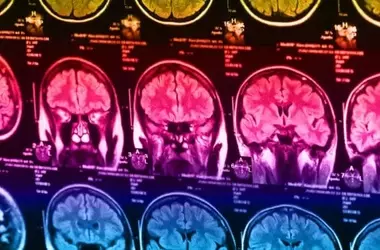
Smartphone Overuse Linked to Heightened Brain Response to Social Rejection
A study in 'Computers in Human Behavior' indicates that individuals who use smartphones excessively exhibit increased brain activity in areas associated with social pain when experiencing social exclusion. This suggests that a strong sensitivity to social rejection might drive compulsive digital engagement. These neural findings emphasize the significance of social and emotional vulnerabilities in understanding problematic smartphone use.
 Jan 12, 2026
Linguistic Cues to Personality Dysfunction: Uncovering Hidden Patterns in Everyday Language
New research suggests that individuals' everyday word choices can subtly reveal underlying personality dysfunctions. Through computational text analysis of various communication forms, from essays to online posts, scientists are identifying linguistic patterns associated with personality disorders and milder dysfunctional traits. These linguistic indicators include self-focused language, negative emotional vocabulary, and absolutist terms, offering insights into an individual's internal state and relationships. This work highlights how language can act as a crucial, early warning system for psychological struggles.
 Jan 11, 2026
The Great Recession's Lasting Impact on American Social Identity
A new study reveals that the 2008 Great Recession caused a significant and lasting shift in how Americans perceive their social class. Traditionally considered stable, class identity experienced a notable decline during this period of economic turmoil, with some data suggesting a slow recovery or persistent lower levels in subsequent years. The research, utilizing multiple large datasets, highlights how major economic shocks can profoundly alter individual and collective self-perception within society.