 Breaking News & Live Updates
- Breaking News & Live Updates
- Breaking News & Live Updates
- Breaking News & Live Updates
- Breaking News & Live Updates
- Breaking News & Live Updates
- Breaking News & Live Updates
- Breaking News & Live Updates
- Breaking News & Live Updates
- Breaking News & Live Updates
Mastering Canine Companionship: Common Training Missteps and Expert Solutions
When venturing into the rewarding endeavor of dog training, it's natural to encounter hurdles. This guide illuminates prevalent errors pet owners often commit, ranging from unclear commands to demanding too much too soon. By addressing these issues with thoughtful strategies, such as maintaining consistent communication, setting achievable goals, and fostering a positive learning environment, the path to a well-behaved canine companion becomes much clearer. The article underscores that patience, understanding, and, at times, professional guidance are paramount to cultivating a strong bond and successful training outcomes.
Navigating the Canine Classroom: Overcoming Training Hurdles
The journey of training a new dog is an adventure filled with both triumphs and challenges. Many eager pet parents, in their earnest desire to nurture a well-behaved companion, often stumble upon common mistakes that can hinder progress. Let's explore these missteps and how to gracefully overcome them.
1. The Pitfall of Mixed Signals
Effective communication forms the bedrock of any successful relationship, and this holds true for the bond shared with your furry friend. One frequent error is the use of interchangeable commands. Imagine trying to teach your dog to 'come' but sometimes using 'here' instead. This inconsistency can lead to confusion, as dogs thrive on clear, singular cues. It's crucial for all household members to adopt a unified vocabulary for commands, ensuring your dog understands exactly what is being asked of them. Moreover, maintaining a consistent daily routine, regardless of weekdays or weekends, helps your dog grasp boundaries and expectations, preventing behavioral issues that arise from varying rules.
2. Managing Expectations: It's a Marathon, Not a Sprint
New dog owners often envision their pups mastering complex tricks after just a few sessions. However, dog training is a long-term commitment that requires immense patience and repetition across diverse environments. Core life skills demand ongoing practice, often extending over the first two years of a dog's life. Even after achieving basic obedience, regular refresher sessions are vital to prevent regression and continually strengthen the special connection you share with your dog.
3. The Power of Positive Reinforcement
The most effective training methods are rooted in love and positive encouragement, not fear or intimidation. Studies consistently show that positive reinforcement yields superior long-term results compared to punishment-based techniques. The goal is to reward desirable behaviors, reinforcing them with treats, praise, or engaging playtime. When your dog exhibits an unwanted action, the strategy should be redirection rather than chastisement. For instance, if your puppy mouths your hand, gently withdraw and offer an appropriate chew toy. This approach teaches them correct behavior without instilling fear.
4. Avoiding Cue Saturation
If your dog isn't responding to commands, it might be due to an overuse of cues. Constantly repeating a command like 'sit' can desensitize your dog, leading them to wait for multiple prompts. Instead, try giving a command just once, then patiently wait a few seconds for a response. Dogs process information differently than humans, and they often need a moment to understand. Pairing verbal cues with hand signals can also be highly effective, as body language is often more intuitive for them. Remember, without proper context and consequence, your words might just be background noise to your dog.
5. The Art of Short Training Bursts
Unlike humans who can pull all-nighters, dogs learn most effectively in brief, focused training sessions. Marathon training can lead to frustration, boredom, and a loss of attention. Aim for multiple two-to-five-minute sessions throughout the day, ensuring each session ends on a positive note. This keeps the experience enjoyable and reinforces a love for learning. These short breaks also offer a great opportunity for owners to de-stress and reconnect with their pets. If you find your patience waning, it's perfectly fine to pause and resume another day; a relaxed trainer makes for a happier, more receptive dog.
6. Strategically Managing the Environment
It's unreasonable to expect your dog to exhibit more self-control than you might yourself. Dogs operate on instinct, viewing unattended food as an invitation, an open garbage can as an exciting excavation, and shoes as intriguing chew toys. While training is ongoing, proactively managing their environment is key. By minimizing temptations and setting up your home for success, you're not just helping your dog, but also setting yourself up for an easier, more harmonious existence.
7. Knowing When to Seek Expert Assistance
While training your own dog is a deeply enriching experience, understanding canine behavior and communication, there's no shame in calling for backup. If you find yourself taking more steps backward than forward, it's a sign that professional intervention might be beneficial. Addressing minor bad habits with a certified dog trainer early on can prevent them from escalating into significant behavioral issues. Whether it's potty training, leash manners, separation anxiety, or fear aggression, expert guidance can provide invaluable support and tailored strategies, ensuring both you and your dog thrive.
Embracing the journey of dog training with patience, consistency, and a readiness to learn (and sometimes, unlearn) is key. The invaluable insights shared emphasize that understanding canine psychology and employing positive, clear communication are essential for building a lasting, loving bond. Recognizing that perfection isn't the goal, but rather consistent effort and a willingness to seek expert help when necessary, empowers every pet parent to cultivate a well-adjusted and joyful companion. Ultimately, this approach not only molds a well-behaved dog but also enriches the lives of both the animal and its human family, fostering a deeper, more harmonious relationship built on trust and mutual respect.
Other Articles
 Jan 13, 2026
Mastering the Art of Dog Recall: Building a Positive Connection
Many pet owners find it challenging to get their dogs to respond consistently to commands, especially the 'come' cue. This article explores why dogs readily respond to cues associated with enjoyable activities but often ignore direct commands. It emphasizes the importance of positive reinforcement and consistent training to establish a reliable recall, transforming a common source of frustration into a rewarding experience for both dog and owner.
 Jan 13, 2026
Mastering Canine Recall: A Guide to Preventing Your Dog From Running Away
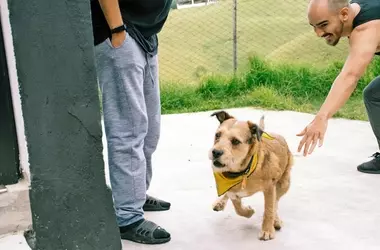
Discover effective strategies to prevent your dog from running away. This article explores a viral TikTok trick where pet owners run from their dogs to encourage them to chase, and evaluates its effectiveness with insights from dog training experts. Learn about building a strong recall foundation through consistent training and understanding your dog's motivations to ensure their safety and your peace of mind.
 Jan 13, 2026
Empowering Pups: The Benefits of Choice for Canine Companions
This article explores the profound benefits of offering dogs opportunities to make choices in their daily lives. From reducing stress to fostering deeper bonds with their human companions, enabling dogs to exert agency can significantly enhance their well-being and engagement with their environment. Simple methods like letting them pick toys or choose walk routes can lead to a happier, more confident, and less anxious dog.
 Jan 13, 2026
Understanding and Addressing Canine Clinginess: Expert Advice for Pet Owners
This article explores why dogs become excessively attached to their owners, differentiating between normal affection and problematic clinginess. It offers expert insights from animal trainers and veterinarians on the causes, including stress, changes in environment, and separation anxiety. The piece also provides practical short-term solutions and long-term training strategies to foster independence in dogs, benefiting both the pet and the owner's well-being.
 Jan 13, 2026
Grumpy Dogs May Be Smarter: A Study on Canine Temperament and Intelligence
A 2021 Hungarian study reveals a fascinating connection between a dog's grumpiness and its social learning abilities. Researchers from Eötvös Loránd University found that dogs with a more irritable temperament, often perceived as 'grumpy,' exhibited superior social learning skills, particularly when guided by a stranger. This suggests that these sensitive and goal-oriented canines may pay closer attention to human actions, making them quicker learners in certain social contexts.
 Jan 13, 2026
Parenting styles: How Do Our Upbringing Impact How We Treat Our Pets?
This article explores the fascinating connection between human parenting styles and how we raise our dogs. Drawing insights from a study published in the journal 'Animals', it delves into how our own childhood experiences and the parenting methods we received can unconsciously shape our approach to pet care. The piece also discusses various human parenting styles—authoritarian, authoritative, permissive, and uninvolved/neglectful—and their known effects on children, raising questions about similar outcomes in our canine companions.