 Notizie di ultima ora e aggiornamenti in tempo reale
- Notizie di ultima ora e aggiornamenti in tempo reale
- Notizie di ultima ora e aggiornamenti in tempo reale
- Notizie di ultima ora e aggiornamenti in tempo reale
- Notizie di ultima ora e aggiornamenti in tempo reale
- Notizie di ultima ora e aggiornamenti in tempo reale
- Notizie di ultima ora e aggiornamenti in tempo reale
- Notizie di ultima ora e aggiornamenti in tempo reale
- Notizie di ultima ora e aggiornamenti in tempo reale
- Notizie di ultima ora e aggiornamenti in tempo reale
Teaching Your Dog to Back Up: A Useful and Simple Guide
Mastering the 'back up' command offers numerous advantages for both dog owners and their canine companions. Beyond being a clever party trick, this simple instruction proves incredibly useful in everyday scenarios, from navigating tight spaces to encouraging appropriate behavior. This guide delves into the practicality of teaching your dog to move backward, offering clear instructions, advice on verbal cues, and solutions to common training hurdles, ensuring a smoother interaction between you and your pet.
The ability to instruct your dog to step away from you provides immediate solutions to many common household situations. Imagine opening your refrigerator or front door, only to find your enthusiastic dog blocking the way. The 'back up' command can gently and effectively clear the path, preventing accidental trips or escapes. Similarly, it's invaluable when your dog shows undue interest in forbidden items like a trash can, a sibling's food bowl, or even dangerous street debris during walks. While other commands like 'leave it' are helpful, 'back up' actively creates physical distance, making it harder for your dog to yield to temptation and fostering better impulse control.
Moreover, teaching your dog to retreat on command extends its utility beyond the home. On walks, this skill can be a lifesaver, redirecting your dog from potentially harmful or unhygienic objects they might encounter. The direct action of backing up provides a specific, incompatible behavior, unlike 'leave it,' which merely forbids an action without suggesting an alternative. This makes the 'back up' command a powerful tool for preventing scavenging and ensuring your dog's safety in various outdoor environments.
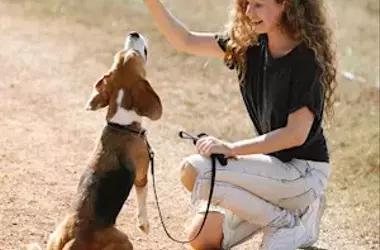
The process of teaching your dog to move backward is straightforward and rewarding. Begin by standing directly in front of your dog. As you calmly step towards them, reward any instance where they take a step backward, using a clicker, a treat, or verbal praise. Gradually, encourage multiple backward steps before offering a reward, reinforcing the desired behavior. Once your dog consistently understands that retreating earns a treat, introduce your chosen verbal cue, such as 'back up,' just before you initiate the forward motion. This builds an association between the word and the action.
Consistency is key in this training. Regular practice allows you to eventually phase out your physical movement towards your dog, relying solely on the verbal or even a visual cue, like an extended arm. When selecting your verbal cue, choose a word that is distinct from other commands your dog already knows to avoid confusion. Common choices include 'back out,' 'get back,' or 'beep beep,' but any consistent word will suffice.
During training, you might encounter some common challenges. If your dog tends to sit when prompted to back up, try holding a treat slightly above their head and moving it backward. This often encourages them to step backward rather than sit. For dogs who try to turn around instead of backing up, training in a confined space, like a narrow hallway or between two large pieces of furniture, can be effective. The limited space will naturally encourage them to back up, providing you with the perfect opportunity to reinforce this behavior. With patience and consistent application of these techniques, your dog will soon master this incredibly useful command.
Ultimately, incorporating the 'back up' command into your dog's repertoire of learned behaviors enhances their obedience and improves daily interactions. From preventing accidents in busy household areas to ensuring safety during outdoor excursions, this skill proves to be an indispensable asset. It empowers owners to guide their pets effectively, fostering a more harmonious and secure environment for everyone involved. Through positive reinforcement and consistent practice, this seemingly simple trick unlocks a world of practical benefits, making life with your canine companion even more enjoyable.
Altri articoli
 Jan 13, 2026
Understanding Your Dog's Couch-Hiding Habit and Finding Playtime Solutions
Many dog owners find themselves constantly retrieving toys from under the couch. This article delves into why dogs engage in this behavior, ranging from instinctual resource guarding to making playtime more engaging for them. It also explores practical solutions, such as using couch blockers or redirecting their hiding instincts to designated safe spaces, ensuring a more enjoyable and less frustrating experience for both pets and their human companions.
 Jan 13, 2026
Strategies to Prevent Your Dog From Eating Everything Outdoors
Dogs are natural scavengers, and their habit of consuming random items during walks can pose serious health risks and lead to costly vet visits. This article provides practical strategies to help dog owners manage and prevent their pets from ingesting dangerous or unwanted objects found in their environment, ensuring their safety and well-being.
Jan 13, 2026Unlocking Canine Communication: The Rise of Talking Buttons
This article explores the burgeoning trend of teaching pets to communicate using programmable buttons, a phenomenon gaining traction since the pandemic. Inspired by social media sensations like Bunny the Sheepadoodle, the technique, known as augmentative interspecies communication, allows dogs to express needs, feelings, and even existential thoughts. The piece delves into the functionality of these buttons, effective training methods, and ongoing scientific research that sheds light on dogs' remarkable linguistic capabilities, offering pet owners a new avenue for deeper understanding and interaction with their canine companions.
Jan 13, 2026Beyond Breed: Understanding Your Dog's Unique Behavior
This article explores how a dog's physical characteristics, rather than just their breed, significantly influence their communication and behavior. It highlights that appearance and genetics can differ greatly, and individual experiences shape a dog's personality. The piece also discusses the impact of cosmetic alterations like tail docking and ear cropping on canine communication, emphasizing the need for pet owners to appreciate their dog's unique morphology for better understanding and empathy.
Jan 13, 2026Mastering Dog Park Visits for Pawsitive Experiences
This guide provides essential advice for dog owners on navigating dog parks effectively. From understanding your dog's temperament and body language to implementing basic obedience, it covers crucial preparation steps. The article also outlines practical dos and don'ts for park visits, emphasizing safety, responsible pet ownership, and fostering positive social interactions among dogs and their owners. Learn how to ensure your canine companion enjoys their park outings to the fullest.
 Jan 13, 2026
The Science of Dog Reinforcement: Food Versus Social Interaction
A recent study explored the effectiveness of social interaction and food as reinforcers in dog training. While both can motivate dogs, food generally proves more effective. However, social interaction offers a readily available alternative, especially when food isn't an option. The research highlights the importance of understanding individual dog preferences for optimal training outcomes.