 Notizie di ultima ora e aggiornamenti in tempo reale
- Notizie di ultima ora e aggiornamenti in tempo reale
- Notizie di ultima ora e aggiornamenti in tempo reale
- Notizie di ultima ora e aggiornamenti in tempo reale
- Notizie di ultima ora e aggiornamenti in tempo reale
- Notizie di ultima ora e aggiornamenti in tempo reale
- Notizie di ultima ora e aggiornamenti in tempo reale
- Notizie di ultima ora e aggiornamenti in tempo reale
- Notizie di ultima ora e aggiornamenti in tempo reale
- Notizie di ultima ora e aggiornamenti in tempo reale
Gold Price Forecast: Will Gold Reach $6,000 by 2026?

The market for gold has recently shown considerable dynamism, with its value appreciating significantly. This upward trend is attributed to various global economic and political factors that position gold as a secure investment. Financial experts are closely monitoring these developments, offering projections on the metal's future performance and its potential to reach unprecedented price levels.
As global uncertainties persist, including ongoing geopolitical tensions and fluctuating economic conditions, the appeal of gold as a safe-haven asset continues to grow. This sustained demand, coupled with its historical reliability in wealth preservation, suggests a potentially strong outlook for gold prices in the coming years. Investors are keen to understand if gold can maintain this momentum and achieve new benchmarks by 2026.
The Ascent of Gold Prices: Recent Trends and Driving Forces
Over the past year, gold has experienced a significant surge, with its price escalating from $3,019 to $4,447 per troy ounce between March 2025 and March 2026, marking a 47% increase. This impressive performance has captivated investors, prompting questions about gold's future trajectory. Financial analysts generally hold a positive outlook, anticipating that gold will not only retain its value but potentially see further increases this year, primarily due to persistent global conflicts and economic volatility. Since 2016, gold's value has nearly quadrupled, with its price soaring from $1,250 to $4,318 per ounce by the close of 2025. This historical data underscores gold's robust growth, positioning it as a compelling asset for those looking to diversify their portfolios.
The dramatic rise in gold prices has been influenced by a confluence of factors. From 2016 to 2019, gold prices remained relatively stable before experiencing a significant uptick in 2020. This shift was largely driven by the economic uncertainty brought about by the COVID-19 pandemic, alongside heightened geopolitical tensions and rising inflation rates. During periods of economic unease, investors often turn to gold as a safe haven, which directly contributes to its price appreciation. Furthermore, the declining value of the U.S. dollar in 2025 indicated concerns about the American economy, steering more investors towards gold. The imposition of tariffs also fueled demand for gold as a secure investment, while increased accessibility through retailers made gold bullion more available to individual investors, further boosting demand and impacting its price.
Future Outlook: Expert Projections and Investment Considerations
Financial experts from leading institutions like JP Morgan and Morningstar predict continued strength in the gold market. They suggest that if global conflicts remain unresolved and central banks maintain their current monetary policies, gold will persist as a crucial safe-haven asset for both institutional and individual investors. Given these dynamics, these experts anticipate that gold will perform well throughout the current year and sustain higher prices into 2026. However, predicting gold's performance over the long term is complex, with analysts offering varied opinions on its trajectory, especially beyond 2026. The consensus suggests that a new baseline price above $5,000 per ounce could be established, though a calming of global conflicts might stabilize prices and temper the rapid increases seen in the last decade.
The value of gold in 2030 will largely depend on the monetary policies enacted by the Federal Reserve and other global central banks. Historically, gold has served as a reliable store of value for millennia. Deciding whether to invest in gold depends on individual risk tolerance, financial objectives, and existing investment portfolios. Unlike stocks or bonds, gold does not offer interest or dividends; its primary role is wealth preservation and providing stability during economic turmoil. Therefore, experts typically advise limiting gold's allocation to no more than 15% of a total investment portfolio. Despite optimistic forecasts for gold's future, the market remains volatile, suggesting potential short-term price fluctuations. Yet, its historical long-term performance indicates resilience. Gold has previously surpassed $5,000 per ounce, and as market stability returns, it may reach this level again, with some analysts even forecasting a potential $6,000 mark by 2026, contingent on prevailing economic conditions and global events.
Pseudonym for Pete Adeney, a blogger who popularized extreme early retirement through frugality and investing.
Altri articoli
 Apr 15, 2026
Rivian and Redwood Materials Partner to Revolutionize EV Battery Reuse
Electric vehicle manufacturer Rivian has partnered with Redwood Materials, founded by Tesla co-founder JB Straubel, to create an innovative energy storage system utilizing repurposed EV batteries. This collaboration aims to enhance grid stability, reduce costs, and support Rivian's expanding production at its Illinois facility, particularly with the upcoming R2 model.
Di Scott Pape Apr 15, 2026
Rivian's Stock Performance Amidst Strategic Partnerships and Market Analysis
Rivian Automotive's stock shows stability amidst market fluctuations, driven by a new partnership with Redwood Materials for energy storage and upcoming earnings reports. Technical analysis indicates a bullish short-term trend with resistance at $17.50 and support at $14.00. Analyst ratings are mixed, with some maintaining 'Buy' and others upgrading to 'Neutral'. The company's momentum score is neutral, reflecting a balanced market sentiment as it prepares for its earnings call.
Di JL Collins Apr 15, 2026
Mortgage Rate Obsession: When a Low Rate Becomes a Barrier to Life Goals
A Michigan woman is hesitant to sell her home with a desirable 2.8% mortgage rate, despite planning to move in with her husband two hours away. Financial experts from 'The Ramsey Show' advise her to prioritize her life goals over clinging to a low interest rate, highlighting the potential downsides of becoming an absentee landlord and the long-term benefits of aligning financial decisions with life changes.
Di JL Collins Apr 15, 2026
Construction Partners (ROAD) Emerges as a Leading Investment in Construction & Engineering Sector
Construction Partners Inc. (NASDAQ:ROAD) has been highlighted as a top construction and engineering stock for investment, following an upgrade to 'Buy' by B. Riley. The firm increased its price target significantly, citing an attractive entry point due to a recent stock sell-off. The company's strategic acquisition of Four Star Paving LLC further solidifies its market position in the rapidly growing Nashville metropolitan area.
Di Ramit Sethi Apr 15, 2026
Dycom Industries (DY) Presents an Attractive Investment Opportunity After Recent Stock Decline
Dycom Industries Inc. (DY) has been added to Wells Fargo's Tactical Ideas List for Q2 by analyst Eric Luebchow, who issued an Overweight rating and a $500 price target. Despite a recent 20% stock selloff, the analyst believes this dip is overdone and creates a buying opportunity ahead of several short-term business catalysts. Dycom specializes in contracting solutions for utility, digital, and telecommunications infrastructure, with plans for a new training center.
Di Ramit Sethi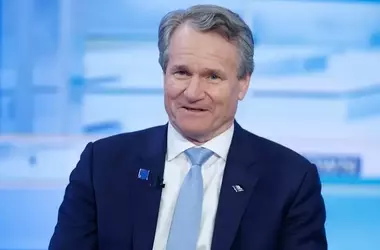 Apr 15, 2026
Bank of America's Stellar First Quarter Performance: A Reflection of a Resilient US Economy
Bank of America has announced impressive first-quarter results, with profits soaring by 17% to $8.6 billion, surpassing analyst expectations. The bank's performance, along with that of its major peers, underscores a robust period for the financial sector, fueled by strong investment banking and trading activities, and healthy consumer spending. CEO Brian Moynihan highlights the US economy's resilience despite ongoing global dynamics.
Di Vicki Robin