 Notizie di ultima ora e aggiornamenti in tempo reale
- Notizie di ultima ora e aggiornamenti in tempo reale
- Notizie di ultima ora e aggiornamenti in tempo reale
- Notizie di ultima ora e aggiornamenti in tempo reale
- Notizie di ultima ora e aggiornamenti in tempo reale
- Notizie di ultima ora e aggiornamenti in tempo reale
- Notizie di ultima ora e aggiornamenti in tempo reale
- Notizie di ultima ora e aggiornamenti in tempo reale
- Notizie di ultima ora e aggiornamenti in tempo reale
- Notizie di ultima ora e aggiornamenti in tempo reale
Generalized Anxiety Disorder: A Comprehensive Technical Overview

Generalized Anxiety Disorder (GAD) is a chronic mental health condition characterized by excessive, persistent, and uncontrollable worry regarding various aspects of daily life, such as health, work, or social interactions. Unlike situational anxiety, which is a transient response to a specific stressor, GAD is defined by a state of heightened apprehension that lasts for at least six months and is disproportionate to the actual likelihood or impact of the anticipated events. This article provides a neutral, evidence-based exploration of GAD, answering fundamental questions regarding its diagnostic criteria, the underlying neurobiological and physiological mechanisms, the multifactorial nature of its development, and the current standards for clinical management. The discussion follows a structured sequence from foundational definitions to advanced neuroscientific insights, providing an objective framework for understanding this prevalent condition.

1. Basic Conceptual Analysis: Defining the Boundaries of GAD
To understand Generalized Anxiety Disorder, it is essential to differentiate between adaptive anxiety—an evolutionary survival mechanism—and a clinical disorder.
Clinical Definition and Diagnostic Criteria
The medical community primarily utilizes the Diagnostic and Statistical Manual of Mental Disorders (DSM-5) to identify GAD. A formal diagnosis requires:
- Excessive Anxiety and Worry: Occurring more days than not for at least six months.
- Difficulty Controlling the Worry: The individual finds it challenging to shift focus away from apprehensive thoughts.
- Associated Physical and Cognitive Symptoms: At least three of the following must be present: restlessness, easy fatigability, difficulty concentrating, irritability, muscle tension, or sleep disturbance.
Statistical Context
According to the World Health Organization (WHO), anxiety disorders are the most common mental disorders globally. GAD specifically affects approximately 3.7% of the global population at some point in their lives. Data suggests that the condition often follows a chronic course but fluctuates in intensity based on environmental stressors.
2. Core Mechanisms: The Neurobiology of Constant Vigilance
The persistence of GAD is rooted in the dysregulation of specific brain circuits and the body's autonomous nervous system.
The Amygdala and Prefrontal Cortex (PFC)
A primary mechanism of GAD involves the structural and functional connectivity between the "fear center" and the "executive center" of the brain.
- Hyperactive Amygdala: In individuals with GAD, the amygdala—responsible for processing emotions and detecting potential hazards—tends to be hyper-responsive, signaling danger even in neutral environments.
- Weakened Top-Down Regulation: The Prefrontal Cortex (PFC) is responsible for rationalizing fears and inhibiting the amygdala. In GAD, this regulatory link is often weakened, meaning the brain’s "brakes" fail to suppress the "alarm" signal.
Neurotransmitter Dysregulation
The biochemical aspect of GAD involves several key signaling molecules:
- Gamma-Aminobutyric Acid (GABA): This is the primary inhibitory neurotransmitter. Research suggests that individuals with GAD may have reduced GABA receptor sensitivity, leading to a nervous system that remains in a state of over-excitation.
- Serotonin and Norepinephrine: These monoamines play roles in regulating mood and the "fight or flight" response. Imbalances in these systems contribute to the physical symptoms of restlessness and hypervigilance.
The Autonomic Nervous System (ANS)
Persistent worry keeps the body in a state of low-level sympathetic nervous system activation. This leads to elevated heart rate variability and chronic muscle tension, as the body remains "primed" for a physical response to a perceived mental hazard.
3. Presenting the Full Picture: Etiology and Clinical Discussion
GAD is a "biopsychosocial" condition, meaning it is rarely caused by a single factor but rather a convergence of variables.
Genetic Predisposition
Studies involving twins suggest that GAD has a heritability rate of approximately 30%. While no single "anxiety gene" exists, multiple genetic variations can influence how an individual's brain processes stress and regulates neurotransmitters.
Environmental and Cognitive Factors
- Cognitive Distortions: Individuals with GAD often engage in "catastrophizing"—predicting the worst possible outcome—and "intolerance of uncertainty," where the unknown is perceived as inherently dangerous.
- Life Events: Chronic exposure to unstable environments during developmental years can recalibrate the HPA (hypothalamic-pituitary-adrenal) axis, leading to long-term changes in cortisol regulation.
Comparative Overview: GAD vs. Other Anxiety Disorders
| Feature | Generalized Anxiety Disorder (GAD) | Panic Disorder |
| Focus of Worry | Multiple daily life domains | Fear of the physical attack itself |
| Duration | Persistent (6+ months) | Episodic (Sudden attacks) |
| Physical Profile | Constant muscle tension/fatigue | Acute heart palpitations/shortness of breath |
| Nature of Fear | Apprehensive expectation | Immediate "terror" response |
4. Summary and Future Outlook
The scientific understanding of GAD is moving toward a more integrated view of brain-body connectivity, emphasizing that mental apprehension has tangible physical correlates.
Future Directions in Research:
- Neuromodulation: Investigating the use of Transcranial Magnetic Stimulation (TMS) to physically strengthen the connection between the PFC and the amygdala.
- Biomarkers: Identifying specific inflammatory markers or cortisol patterns that could help categorize different subtypes of GAD for more targeted management.
- Epigenetics: Studying how lifestyle interventions or environment can "turn on" or "off" genes related to stress resilience.
- Interoception Research: Exploring how an individual's perception of their own internal bodily signals (like heartbeat) influences the intensity of their anxiety.
5. Q&A: Clarifying Common Technical Inquiries
Q: Is GAD just "worrying too much"?
A: Clinical GAD is distinguished by its intensity and impact on functioning. While everyone worries, GAD involves a "perfectionist" or "catastrophic" style of thought that is difficult to stop and is accompanied by physical symptoms like muscle aches, exhaustion, and digestive issues.
Q: How does sleep interact with GAD?
A: The relationship is bidirectional. Anxiety-induced hyperarousal makes it difficult to initiate sleep, while sleep deprivation impairs the prefrontal cortex’s ability to regulate the amygdala the following day, creating a cycle of increased anxiety.
Q: Why is muscle tension so common in GAD?
A: This is a result of the "freeze" or "ready" component of the stress response. Because the brain perceives a constant hazard, it keeps the musculoskeletal system in a state of contraction, which can lead to chronic back, neck, and shoulder discomfort.
Q: Can GAD be diagnosed with a brain scan?
A: Currently, functional MRIs (fMRI) are used in research to observe amygdala hyperactivity, but they are not used for individual clinical diagnosis. Diagnosis remains based on standardized clinical interviews and symptom history.
This article serves as an informational resource regarding the physiological and regulatory aspects of Generalized Anxiety Disorder. For specific clinical assessment, diagnostic data, or individualized health plans, consultation with a licensed healthcare professional is essential.

Altri articoli
 Dec 24, 2025
Depression: A Comprehensive Technical and Biological Overview
Depression, scientifically referred to as Major Depressive Disorder (MDD), is a complex mental health condition characterized by persistent low mood, anhedonia (the loss of interest in previously enjoyable activities), and a range of cognitive and physical impairments. It is not merely a transient emotional state but a clinical syndrome rooted in measurable neurobiological and physiological changes. This article provides a neutral, evidence-based examination of depression, exploring its diagnostic criteria, the biochemical and structural mechanisms within the brain, the multifactorial nature of its etiology, and the current landscape of clinical management. The discussion follows a structured path from foundational psychological concepts to advanced neuroscientific insights, providing an objective framework for understanding this significant global health challenge.
 Di Dr. Maria Santos
 Dec 24, 2025
Chronic Kidney Disease: A Comprehensive Technical Overview
Chronic Kidney Disease (CKD) is a progressive physiological condition characterized by the gradual loss of renal function over a period of months or years. The kidneys serve as the body's primary filtration system, responsible for removing metabolic waste, balancing electrolytes, and regulating blood pressure; in CKD, the structural integrity of the renal tissue is compromised, leading to a diminished ability to maintain internal homeostasis. This article provides a neutral, evidence-based exploration of CKD, answering fundamental questions regarding its pathological stages, the biochemical mechanisms of nephron loss, the systemic impacts of uremia, and the current standards for clinical monitoring. The discussion follows a structured sequence from anatomical basics to complex metabolic interactions, providing an objective framework for understanding this global health challenge.
 Di Yuki Tanaka, PharmD
 Dec 24, 2025
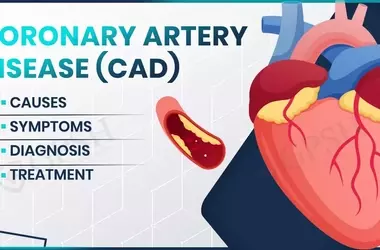
Coronary Artery Disease: A Technical and Clinical Overview
Coronary Artery Disease (CAD), also known as ischemic heart disease, is a physiological condition characterized by the narrowing or blockage of the coronary arteries—the primary vessels responsible for supplying oxygenated blood to the cardiac muscle. This condition arises primarily from the accumulation of lipid-rich plaques within the arterial walls, a process that restricts blood flow and can lead to various clinical manifestations. This article provides a neutral, evidence-based examination of CAD, answering fundamental questions regarding its pathological origins, the biochemical mechanisms of plaque formation, the diagnostic standards used in modern cardiology, and the current landscape of clinical management. The discussion follows a structured sequence from anatomical basics to complex hemodynamic interactions, offering an objective framework for understanding this prevalent cardiovascular challenge.
 Di Anjali Deshpande