 Notizie di ultima ora e aggiornamenti in tempo reale
- Notizie di ultima ora e aggiornamenti in tempo reale
- Notizie di ultima ora e aggiornamenti in tempo reale
- Notizie di ultima ora e aggiornamenti in tempo reale
- Notizie di ultima ora e aggiornamenti in tempo reale
- Notizie di ultima ora e aggiornamenti in tempo reale
- Notizie di ultima ora e aggiornamenti in tempo reale
- Notizie di ultima ora e aggiornamenti in tempo reale
- Notizie di ultima ora e aggiornamenti in tempo reale
- Notizie di ultima ora e aggiornamenti in tempo reale
Difference Between Acute and Chronic Conditions: A Clinical and Physiological Overview

In medical science, the classification of health states is primarily determined by their temporal progression and the nature of the body’s physiological response. The terms acute and chronic describe the duration, onset, and resolution pattern of a condition rather than its severity. An acute condition is typically characterized by a rapid onset and a short course, often resulting in a complete return to baseline health. Conversely, a chronic condition is defined by its persistence—lasting three months or longer—requiring ongoing management and often involving permanent structural or functional changes to the body. This article provides a neutral, evidence-based exploration of these two categories. It examines the biological mechanisms of injury and repair, the statistical distribution of these conditions in global populations, and the objective frameworks used for clinical triage. The following sections follow a structured trajectory: defining the parameters of medical timing, explaining the core mechanisms of inflammation and remodeling, presenting a comprehensive comparison of clinical utility, and concluding with a technical inquiry section to address common procedural questions.

1. Basic Conceptual Analysis: Parameters of Timing and Onset
To analyze the difference between acute and chronic conditions, one must first establish the objective criteria used to categorize them.
Acute Conditions: The Immediate Response
The term "acute" originates from the Latin word acutus, meaning sharp. In a clinical context, it refers to a condition that appears suddenly and is of limited duration.
- Onset: Seconds to days.
- Duration: Typically less than three months, often resolving within days or weeks.
- Resolution: Usually culminates in a "cure" or a full restoration of physiological function once the underlying cause (e.g., a pathogen or a physical trauma) is addressed.
Chronic Conditions: The Persistent State
A chronic condition is defined by its longevity and the lack of a spontaneous resolution.
- Onset: Often gradual or "insidious," where symptoms may be subtle or absent in the early stages.
- Duration: Minimum of three months, though many persist for the remainder of an individual's lifespan.
- Resolution: Rarely results in a complete "cure"; instead, the focus is on "stabilization" or the mitigation of further progression.
Regulatory and Statistical Context
According to the World Health Organization (WHO), the transition of global health burdens from acute infectious diseases to chronic non-communicable diseases (NCDs) represents a major shift in 21st-century medicine. NCDs now account for approximately 74% of all worldwide mortality, highlighting the increasing prevalence of long-term conditions.
2. Core Mechanisms: Inflammation, Repair, and Remodeling
The biological distinction between acute and chronic states is rooted in the body’s cellular signaling and repair pathways.
The Acute Inflammatory Response
When the body encounters an acute stressor (such as a laceration or a viral infection), it initiates the acute inflammatory cascade.
- Vasodilation: Increased blood flow to the affected area to transport white blood cells.
- Exudation: Fluid moves from blood vessels into tissues to bring in nutrients and clotting factors.
- Phagocytosis: Specialized cells identify and neutralize the source of the injury.Once the is removed, the body releases anti-inflammatory signals, and the tissue returns to its normal state.
The Chronic Inflammatory and Remodeling Mechanism
In a chronic condition, the "off-switch" for inflammation fails to activate, or the trigger remains persistent.
- Cellular Shift: The predominant cells shift from neutrophils (acute) to macrophages and lymphocytes (chronic).
- Fibrosis: Because the tissue is under constant stress, the body attempts to strengthen the area by laying down excess connective tissue (collagen), leading to scarring or "fibrosis."
- Systemic Adaptation: Organ systems may undergo "pathological remodeling." For example, in chronic hypertension, the heart muscle may thicken (hypertrophy) to overcome increased arterial resistance, which eventually reduces the heart's efficiency.
3. Presenting the Full Picture: Objective Comparison of Clinical Categories
The management of health requires different strategies depending on the chronicity of the condition.
Comparative Overview of Condition Types
| Feature | Acute Condition | Chronic Condition |
| Typical Onset | Sudden / Sharp | Gradual / Persistent |
| Primary Goal | Eradication of the cause | Management of symptoms / Prevention of decline |
| Duration | < 3 months | > 3 months |
| Common Examples | Bone fractures, Influenza, Appendicitis | Diabetes, Hypertension, Osteoarthritis |
| Intervention Frequency | High-intensity, short-term | Low-to-moderate intensity, long-term |
Data on Economic Impact
Research from the Centers for Disease Control and Prevention (CDC) indicates that the vast majority of healthcare expenditures are directed toward chronic conditions. In the United States, approximately 90% of annual healthcare costs are attributed to individuals with chronic physical and mental health conditions.
Interplay Between Acute and Chronic
It is important to note that these categories are not mutually exclusive.
- Acute Exacerbation: A person with a chronic condition (like asthma) may experience an "acute flare-up" or exacerbation, requiring immediate, short-term intervention.
- Chronic Transition: An acute injury that does not heal properly (such as a back strain) can transition into a chronic pain condition if the neurological or musculoskeletal repair mechanisms become dysfunctional.
4. Summary and Future Outlook: Integrative Management
The future of clinical medicine is moving toward a "continuum of care" model that addresses both the immediate needs of acute episodes and the long-term requirements of chronic stabilization.
Future Directions in Research:
- Digital Health Monitoring: Using wearable biosensors to detect the transition from a stable chronic state to an acute exacerbation (e.g., detecting heart rate variability changes before an asthma attack).
- Precision Immunology: Developing agents that can specifically "turn off" the chronic inflammatory markers without compromising the body's ability to mount an acute immune response.
- Regenerative Medicine: Researching how stem cells can be used to reverse the "fibrosis" associated with chronic organ disease, potentially returning a chronic state to a healthy baseline.
- Pharmacogenomics: Understanding how an individual's genetic profile influences their probability of transitioning from an acute injury to chronic pain.
5. Q&A: Clarifying Common Technical Inquiries
Q: Can an acute condition be more dangerous than a chronic one?
A: Yes. Severity is independent of duration. An acute condition, such as a myocardial infarction (heart attack), requires immediate life-saving intervention within minutes. A chronic condition, like mild hypertension, may take decades to cause significant systemic damage.
Q: Is "Recovery" different for these two types?
A: In acute cases, recovery usually means the absence of the disease. In chronic cases, recovery is often defined as "functional status"—the ability of the individual to maintain activities of daily living despite the persistence of the condition.
Q: Why do some acute infections become chronic?
A: This often occurs if the immune system is unable to fully clear the pathogen, or if the pathogen has mechanisms to "hide" in certain tissues (e.g., the virus that causes shingles remaining latent in nerve tissues).
Q: Does "Chronic" always mean "Permanent"?
A: Not necessarily. While many chronic conditions are lifelong, some can be moved into "remission" through significant physiological and lifestyle changes. However, because the underlying genetic or cellular predisposition remains, they are still categorized as chronic.
Q: How do clinical "Protocols" differ?
A: Acute protocols are often "algorithmic" and fast-paced (e.g., the ER triage process). Chronic protocols are "collaborative," involving long-term monitoring of biomarkers (like HbA1c for glucose or blood pressure readings) and periodic adjustments to the management plan.
This article serves as an informational resource regarding the physiological and clinical distinctions between acute and chronic health states. For specific medical evaluation, diagnostic testing, or the development of a health management plan, consultation with a licensed healthcare professional is essential.

Altri articoli
 Dec 26, 2025
What Is a Chronic Disease? A Technical and Clinical Overview
Achronic diseaseis defined by most health organizations as a physical or mental condition that lasts for one year or more and requires ongoing medical attention or limits activities of daily living, or both. Unlike acute conditions, which are typically characterized by a sudden onset and a brief duration, chronic diseases are marked by their persistence and the gradual progression of physiological changes. This article provides a neutral, evidence-based exploration of the chronic disease landscape. It details the biological distinction between acute and chronic states, the cellular and systemic mechanisms of long-term disease progression, the objective global impact of these conditions, and the frameworks used for clinical management. The following sections follow a structured trajectory: defining the parameters of chronicity, explaining the core mechanisms of physiological adaptation, presenting a comprehensive view of global health metrics, and concluding with a technical inquiry section to clarify common questions regarding long-term health management.
 Di Lucas Bernard
 Dec 25, 2025
Understanding Coronary Artery Disease: A Comprehensive Scientific Overview
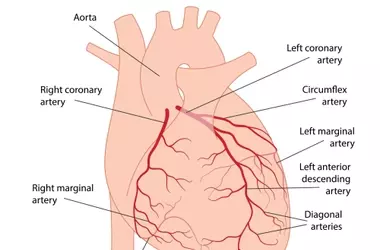
Human health is intricately tied to the efficient circulation of blood, which delivers oxygen and nutrients to every organ. At the center of this system is the heart, which requires its own dedicated blood supply to function.Coronary Artery Disease (CAD), also known as ischemic heart disease, occurs when the major blood vessels that supply the heart—the coronary arteries—become damaged or diseased, typically due to the buildup of plaque. This condition is a leading cause of cardiovascular events globally. This article provides a neutral, science-based exploration of the condition. The discussion begins with the fundamental anatomy of the heart's blood supply, details the biological progression of arterial narrowing, presents an objective overview of management modalities, and outlines current global data. By navigating from basic physiological concepts to a practical Q&A, this resource serves as an informative guide for understanding the mechanisms and implications of heart health.
 Di Sakura Watanabe
 Dec 25, 2025
Understanding Attention-Deficit/Hyperactivity Disorder: A Scientific Perspective
The human brain manages a complex array of functions ranging from physical movement to the intricate regulation of attention and impulse. When these regulatory systems operate differently from the statistical norm, it can result in a condition known asAttention-Deficit/Hyperactivity Disorder (ADHD). ADHD is a neurodevelopmental disorder characterized by persistent patterns of inattention, hyperactivity, and impulsivity that interfere with daily functioning or development. This article provides a neutral, science-based exploration of the condition, moving beyond social stigmas to examine the biological and clinical realities. The discussion will clarify the three primary presentations of ADHD, detail the neurological mechanisms involving dopamine and the prefrontal cortex, present an objective overview of management modalities, and outline current global data. By following this structured path from basic concepts to practical Q&A, this resource serves as an informative guide for understanding how neurodiversity impacts human behavior.
 Di Dr. Aisha Rahman