 Breaking News & Live Updates
- Breaking News & Live Updates
- Breaking News & Live Updates
- Breaking News & Live Updates
- Breaking News & Live Updates
- Breaking News & Live Updates
- Breaking News & Live Updates
- Breaking News & Live Updates
- Breaking News & Live Updates
- Breaking News & Live Updates
Innovative Therapy Transforms Mental Images to Combat Psychosis
A new therapeutic approach, known as iMAPS, is emerging as a potential game-changer for individuals grappling with psychosis, a condition frequently characterized by unsettling mental images. This imagery, often stemming from past traumas, anxieties, or future concerns, can exacerbate symptoms like paranoia and auditory or visual hallucinations. Current treatments, including Cognitive Behavioral Therapy (CBT) and antipsychotic medications, while beneficial, often have limitations or side effects that lead many patients to discontinue use. iMAPS offers a fresh perspective by directly addressing these intrusive mental visuals, providing patients with strategies to understand, reinterpret, and ultimately gain control over them. The University of Sheffield's research team highlights the urgent need for more effective therapies, given the substantial impact of psychosis on individuals and healthcare systems.
The iMAPS therapy works by guiding patients through a structured process to re-script their distressing mental imagery. During 12 weekly sessions, participants learn techniques such as 'safe place' visualizations and methods to alter the perceived size, shape, and texture of their intrusive images, fostering a sense of mastery. A key element is imagery rescripting, adapted from trauma therapy, which enables individuals to envision more positive outcomes for past negative experiences, thereby changing their emotional impact. Dr. Christopher Taylor, a lead researcher, emphasizes that rather than suppressing these images, the therapy teaches individuals to engage with and transform them, reducing their intensity and associated distress. The successful pilot trial, which recruited 45 patients experiencing distressing hallucinations and delusions linked to mental imagery, demonstrated the therapy's safety and effectiveness, paving the way for larger clinical trials.
The impact of iMAPS is powerfully illustrated by patient testimonials, such as that of Thom Brandwood-Spencer. Diagnosed with paranoid schizophrenia at a young age, Thom experienced profound distress from sinister visual and auditory hallucinations that disrupted his life. Through iMAPS, he learned to decouple the menacing feelings from his mental images and gained a sense of agency over his condition. He describes feeling empowered to "re-script" his experiences, enabling him to pursue higher education and dedicate himself to supporting others facing similar challenges. His story underscores the therapy's potential to not only alleviate symptoms but also to instill hope and facilitate recovery, offering a path for individuals to reclaim their lives and overcome the debilitating effects of psychosis.
This innovative therapeutic approach, by focusing on the malleable nature of mental imagery, illuminates a pathway toward greater well-being and personal empowerment for those affected by psychosis. It reinforces the idea that even the most deeply ingrained psychological patterns can be reshaped, opening doors to a future where individuals can navigate their inner worlds with newfound strength and resilience.
Other Articles
 Dec 05, 2025
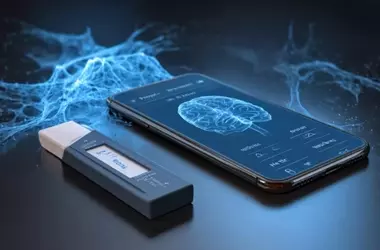
Inexpensive Saliva Test for Detecting Depression and Schizophrenia
Researchers have created a portable biosensor that can quickly measure levels of BDNF, a protein associated with mental health conditions like depression and schizophrenia. This cost-effective and non-invasive device analyzes a saliva sample in less than three minutes, offering a rapid diagnostic tool. With a unit cost of approximately $2.19, this biosensor could revolutionize mental health screening, particularly in areas with limited resources. Early detection and monitoring are crucial, as low BDNF levels are linked to depression and cognitive decline, while increases can indicate recovery.
 Dec 05, 2025
Discovery of Brain Cells Offering Potential Schizophrenia Symptom Prevention
Scientists have identified a unique population of brain cells whose excessive activity could contribute to schizophrenia-like manifestations, including cognitive impairments and sleep disturbances. In mice engineered with a schizophrenia-associated genetic mutation, deactivating these specific neurons normalized their behavior and sleep patterns. This breakthrough suggests a crucial role for these cells in brain regulation and compensation for early developmental anomalies, potentially opening new avenues for therapeutic interventions to avert the onset of schizophrenia's cognitive symptoms.
 Dec 04, 2025
Enhancing Brain's Natural 'Cleaners' to Combat Alzheimer's Plaques and Memory Loss
New research shows that boosting a regulatory protein, Sox9, in mouse models of Alzheimer's allows astrocytes to clear amyloid-beta plaques and prevent cognitive decline. This groundbreaking study highlights the potential of targeting the brain's innate immune system to combat neurodegenerative diseases.
 Dec 04, 2025
Alzheimer's Drug Lecanemab Boosts Immune Cell 'Cleaning' Mechanism to Combat Plaques
Recent research reveals that Lecanemab, an Alzheimer's medication, operates by initiating a specialized cleaning function within the brain's immune cells. The study underscores that this therapeutic antibody necessitates a precise interaction with microglia for the physical elimination of amyloid plaques, which are toxic protein accumulations linked to neurodegeneration. This discovery provides a detailed biological basis for the drug's clinical efficacy in slowing cognitive decline.
 Dec 03, 2025
AI Chatbots: A Growing Source of Mental Health Support for American Youth
A national survey reveals that a significant portion of American adolescents and young adults are utilizing AI chatbots for mental health guidance. This trend highlights a shift towards accessible, private, and affordable alternatives for emotional support, especially given the rising mental health challenges among youth and barriers to traditional care. Despite high user satisfaction, concerns remain regarding safety standards, potential biases, and the clinical appropriateness of AI-generated advice, underscoring the need for further research and regulation.
 Dec 03, 2025
Screen Time's Impact on ADHD and Brain Structure in Children
A study analyzed data from the Adolescent Brain Cognitive Development (ABCD) study, revealing a modest correlation between increased screen time in children aged 9-10 and more pronounced ADHD symptoms. Furthermore, this prolonged screen exposure was associated with a slight reduction in cortical thickness across specific brain regions. The research suggests that changes in brain structure might partially mediate the link between screen time and the severity of ADHD.