 Noticias de última hora y actualizaciones en vivo
- Noticias de última hora y actualizaciones en vivo
- Noticias de última hora y actualizaciones en vivo
- Noticias de última hora y actualizaciones en vivo
- Noticias de última hora y actualizaciones en vivo
- Noticias de última hora y actualizaciones en vivo
- Noticias de última hora y actualizaciones en vivo
- Noticias de última hora y actualizaciones en vivo
- Noticias de última hora y actualizaciones en vivo
- Noticias de última hora y actualizaciones en vivo
Understanding the Blood Pressure Monitor: A Comprehensive Scientific Overview

Blood pressure is a fundamental physiological indicator that reflects the force exerted by circulating blood against the walls of the body's arteries. A blood pressure monitor, clinically known as a sphygmomanometer, is a medical instrument used to measure this force. Monitoring blood pressure is a critical aspect of cardiovascular health management, as it allows for the early detection of hypertension (high blood pressure) and hypotension (low blood pressure). This article provides a neutral, science-based exploration of blood pressure monitors. It begins with an explanation of basic cardiovascular concepts, details the mechanical and electronic mechanisms behind various types of monitors, presents an objective comparison of modern measurement technologies, and discusses the future of hemodynamic monitoring. By following a structured progression from fundamental physics to practical Q&A, this overview aims to deliver a clear understanding of how these devices function and their role in modern health assessment.
Basic Concepts and Classification
To understand a blood pressure monitor, one must first understand what it measures. Blood pressure is expressed in two numbers: systolic pressure (the pressure when the heart beats) and diastolic pressure (the pressure when the heart rests between beats). The unit of measurement is millimeters of mercury (mmHg).
Blood pressure monitors are generally classified into three main categories based on their design and operation:
- Mercury Sphygmomanometers: The traditional gold standard in clinical settings. These use a column of mercury that rises under pressure. They are highly accurate but require manual operation and carry environmental concerns regarding mercury.
- Aneroid Sphygmomanometers: These utilize a mechanical gauge with a needle and dial. They are mercury-free and portable but require regular calibration to maintain accuracy.
- Digital (Electronic) Monitors: The most common type for home use. These use electronic sensors to detect blood flow and provide a digital readout. They are categorized into upper-arm models and wrist models.
Core Mechanisms: How Monitors Function
The operation of a blood pressure monitor relies on the principle of occlusion—temporarily stopping the blood flow in an artery and then slowly releasing it to detect the pressure at which flow resumes.
1. The Manual Mechanism (Auscultatory Method)
This method is used with mercury and aneroid monitors.
- The Process: An inflatable cuff is wrapped around the arm and inflated until the brachial artery is completely compressed (occluded), stopping blood flow.
- The Detection: A clinician uses a stethoscope to listen for Korotkoff sounds.
- The Result: The pressure at which the first rhythmic thumping sound is heard marks the systolic pressure. When the sounds disappear, the diastolic pressure is recorded.
2. The Digital Mechanism (Oscillometric Method)
Most automatic home monitors do not "listen" for sounds; instead, they measure vibrations.
- The Process: As the cuff deflates, the electronic sensor detects the oscillations (vibrations) of the arterial wall caused by the blood pushing through.
- The Calculation: An internal algorithm analyzes the patterns of these oscillations to calculate the systolic and diastolic values.
- The Result: A digital display provides the final reading along with the pulse rate.
Presentation of the Clinical Landscape
The selection of a blood pressure monitor involves balancing clinical precision with the ease of use required for the specific environment.
Comparison of Blood Pressure Monitoring Technologies
| Feature | Mercury Manual | Aneroid Manual | Digital (Upper Arm) | Digital (Wrist) |
| Accuracy | Highest (Reference) | High (requires calibration) | High (if validated) | Moderate |
| Ease of Use | Difficult (requires training) | Moderate | Easy (automatic) | Very Easy |
| Common Use | Hospitals/Labs | Clinics | Home monitoring | Travel/Portability |
| Mechanism | Auscultatory | Auscultatory | Oscillometric | Oscillometric |
Guidelines for Objective Measurement
To ensure the data provided by a monitor is accurate, specific physical protocols must be followed:
- Body Position: Sitting quietly with the back supported and feet flat on the floor for at least five minutes before measurement.
- Arm Placement: The arm should be supported at heart level.
- Cuff Size: Using a cuff that is too small can falsely elevate readings, while a cuff that is too large can lead to falsely low readings.
Objective Discussion and Evidence
Data from global health organizations emphasizes the role of blood pressure monitors in preventing major health crises while noting the importance of device validation.
- Public Health Impact: According to the World Health Organization (WHO), hypertension is a major cause of premature deaths worldwide, affecting an estimated 1.28 billion adults. Consistent monitoring is the only way to detect this "silent" condition.
- Home vs. Clinical Monitoring: Research suggests that "White Coat Hypertension" (high readings caused by anxiety in a doctor's office) can affect up to 30% of patients. Home blood pressure monitors provide an objective look at a person’s pressure in their natural environment.
- Validation Standards: Not all digital monitors are created equal. Organizations like the Association for the Advancement of Medical Instrumentation (AAMI) and the British and Irish Hypertension Society (BIHS) provide lists of "validated" devices that have passed rigorous accuracy testing.
- Device Limitations: Digital monitors may be less accurate for individuals with certain heart rhythm irregularities (arrhythmias), such as atrial fibrillation, as the irregular pulse can confuse the oscillometric algorithms.
Summary and Future Outlook
The technology of blood pressure monitoring is moving toward continuous, non-invasive, and "cuffless" systems. The goal is to capture blood pressure data throughout the day without the discomfort of a tightening cuff.
Future developments include:
- Cuffless Wearables: Using optical sensors (similar to those in smartwatches) and Pulse Transit Time (PTT) technology to estimate blood pressure.
- Smart Inflatable Devices: Miniature, ultra-thin cuffs integrated into wristbands that provide medical-grade accuracy in a wearable format.
- Artificial Intelligence Integration: Algorithms that analyze long-term blood pressure trends to predict potential cardiovascular events before they occur.
Question and Answer Section
Q: Why does the reading change every time a measurement is taken?
A: Blood pressure is dynamic, not static. It changes with every heartbeat and is influenced by stress, movement, caffeine, temperature, and even the act of talking. Taking an average of two or three readings is the standard clinical recommendation for accuracy.
Q: Are wrist monitors as accurate as arm monitors?
A: Generally, upper-arm monitors are considered more accurate because the brachial artery is larger and the device is naturally at heart level. Wrist monitors are very sensitive to body position; if the wrist is not held exactly at heart level, the reading will be incorrect.
Q: Do blood pressure monitors need maintenance?
A: Aneroid (dial) monitors need to be checked for calibration once a year. Digital monitors generally do not need calibration but should be checked against a professional mercury monitor every 1–2 years to ensure the sensors are still functioning within the correct parameters.
Q: Can a blood pressure monitor detect a heart attack?
A: No. A blood pressure monitor only measures the force of blood and pulse rate. It cannot detect the electrical signals of a heart attack or the blockage of arteries. If symptoms like chest pain occur, medical attention is required regardless of the blood pressure reading.
References
- https://www.who.int/news-room/fact-sheets/detail/hypertension
- https://www.heart.org/en/health-topics/high-blood-pressure/the-facts-about-high-blood-pressure/how-high-blood-pressure-is-diagnosed
- https://www.cdc.gov/bloodpressure/measure.htm
- https://www.mayoclinic.org/diseases-conditions/high-blood-pressure/in-depth/high-blood-pressure/art-20047889
- https://pubmed.ncbi.nlm.nih.gov/30364171/

Otros artículos
 Dec 22, 2025
Heart-Lung Machines: A Technical and Physiological Overview
A heart-lung machine, clinically referred to as an extracorporeal circulation (ECC) system or cardiopulmonary bypass (CPB) pump, is a specialized medical apparatus that temporarily assumes the functions of the heart and lungs during surgical procedures. By diverting blood away from the heart and lungs, the machine maintains the continuous delivery of oxygenated blood to the brain and other vital organs, providing a stable, bloodless, and stationary field for the surgical team. This article provides an objective analysis of heart-lung technology, exploring the mechanical components that facilitate gas exchange and blood propulsion, the physiological principles of extracorporeal support, and the current standards of safety and monitoring in cardiac surgery.
 Por Dr. Anna Müller
 Dec 22, 2025
Wearable Fall Detection Devices: A Technical and Clinical Overview
A wearable fall detection device is a specialized electronic instrument designed to automatically identify the event of a person falling and, in many cases, initiate an emergency alert. These devices utilize a combination of inertial sensors, such as accelerometers and gyroscopes, along with sophisticated mathematical algorithms to distinguish the specific physical signatures of a fall from normal activities of daily living (ADL). This article provides an objective analysis of fall detection technology, detailing the physics of impact sensing, the logic of detection algorithms, and the current clinical data surrounding their efficacy in geriatric and high-risk care.
 Por Dr. Zanele Mkhize
 Dec 22, 2025
Portable Ultrasound Devices: A Technical and Clinical Overview
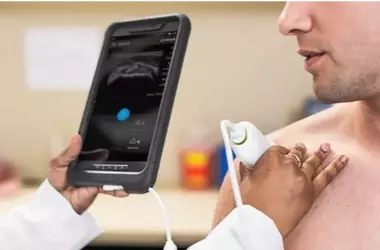
A portable ultrasound device is a compact, mobile medical imaging system that utilizes high-frequency sound waves to visualize internal body structures in real-time. Historically confined to large, stationary consoles in radiology departments, ultrasound technology has been miniaturized into handheld or tablet-based formats, often referred to as Point-of-Care Ultrasound (POCUS). This article provides an objective analysis of portable ultrasound technology, examining the physics of acoustic imaging, the engineering challenges of miniaturization, the clinical utility of mobile systems, and the future trajectory of decentralized diagnostic tools.
 Por Amina Ben Youssef