 Breaking News & Live Updates
- Breaking News & Live Updates
- Breaking News & Live Updates
- Breaking News & Live Updates
- Breaking News & Live Updates
- Breaking News & Live Updates
- Breaking News & Live Updates
- Breaking News & Live Updates
- Breaking News & Live Updates
- Breaking News & Live Updates
Cetirizine: A Technical and Pharmacological Overview

Cetirizine is a potent, second-generation antihistamine primarily utilized for the symptomatic relief of allergic conditions such as rhinitis (hay fever) and chronic urticaria (hives). Chemically, it is the carboxylated metabolite of hydroxyzine and belongs to the piperazine family of compounds. Its primary function is to act as a selective, long-acting antagonist of the peripheral histamine $H_1$ receptors. This article provides an objective analysis of cetirizine, examining its molecular structure, the biochemical mechanisms that allow it to block allergic responses with minimal sedative effects, its pharmacokinetic profile, and the regulatory standards governing its use. The discussion will proceed from fundamental biochemical concepts to core physiological mechanisms, followed by a neutral examination of its clinical utility and future research prospects.

1. Basic Conceptual Analysis: Chemical Identity and Classification
Cetirizine hydrochloride is a synthetic organic compound with the chemical formula $C_{21}H_{25}ClN_{2}O_{3}$. It is classified as a "second-generation" antihistamine, a designation that distinguishes it from earlier "first-generation" compounds like diphenhydramine.
Molecular Properties
The structure of cetirizine features a piperazine ring and a carboxylic acid group. Its high polarity and ionization at physiological pH levels significantly limit its ability to cross the blood-brain barrier. This is a critical technical distinction: while first-generation antihistamines easily penetrate the central nervous system (CNS), cetirizine remains largely in the peripheral circulation.
Regulatory and Clinical Status
According to the World Health Organization (WHO), cetirizine is recognized as an essential medicine for the management of hypersensitivity reactions. It is regulated by the U.S. Food and Drug Administration (FDA) and the European Medicines Agency (EMA), available in various formulations including tablets, syrups, and rapidly disintegrating oral strips.
2. Core Mechanisms: H1-Receptor Antagonism
The efficacy of cetirizine is derived from its interaction with the histamine $H_1$ receptor, which is responsible for the symptoms of an allergic reaction.
Selective Peripheral Blockade
Histamine is a biogenic amine released by mast cells during an immune challenge. It binds to $H_1$ receptors on vascular endothelial cells and smooth muscle cells, leading to vasodilation, increased capillary permeability, and stimulation of sensory nerves.
- Competitive Inhibition: Cetirizine does not inhibit the release of histamine. Instead, it competes with histamine for binding sites on the $H_1$ receptor. By occupying these receptors, it prevents histamine from initiating the signal transduction that leads to itching, sneezing, and watery eyes.
- Inverse Agonism: Modern pharmacological studies suggest that cetirizine may act as an inverse agonist, meaning it shifts the $H_1$ receptor from its active state to an inactive state, providing a more stable inhibition of allergic signaling.
Minimal CNS Interaction
Because cetirizine is a carboxylated derivative, it is highly "lipophobic" relative to the brain's environment. Furthermore, it is a substrate for the P-glycoprotein efflux pump, a biological mechanism that actively moves certain molecules out of the brain. These factors combined ensure that at standard doses, cetirizine has a much lower occupancy of brain $H_1$ receptors compared to first-generation antihistamines, which explains why it is generally considered "low-sedating."
3. Presenting the Full Picture: Pharmacokinetics and Clinical Discussion
Cetirizine is noted for its rapid absorption and long duration of action, typically allowing for a once-daily dosing schedule.
Pharmacokinetic Profile
- Absorption: Cetirizine is rapidly absorbed from the gastrointestinal tract, with peak plasma concentrations ($C_{max}$) usually reached within $1$ hour of oral administration.
- Metabolism: Unlike many other antihistamines, cetirizine is not extensively metabolized by the liver's Cytochrome P450 system. Instead, it is primarily excreted unchanged.
- Excretion: Approximately $70\%$ to $85\%$ of the substance is eliminated via the kidneys in urine, with the remainder excreted in feces.
- Half-Life: The elimination half-life is approximately $8$ hours in individuals aged 18 and older, though this can be extended in those with reduced renal function.
Comparative Table: First-Gen vs. Second-Gen Antihistamines
| Feature | First-Generation (e.g., Diphenhydramine) | Second-Generation (e.g., Cetirizine) |
| Receptor Selectivity | Low (Histaminic, Muscarinic, Alpha) | High (Peripheral H1) |
| CNS Penetration | High | Very Low |
| Duration of Action | Short (4–6 hours) | Long (24 hours) |
| Sedation Potential | High | Low |
Safety and Constraints
While cetirizine is generally well-tolerated, it is subject to specific physiological constraints:
- Renal Consideration: Because the kidneys are the primary route of elimination, individuals with moderate to severe renal impairment require adjusted dosing protocols to prevent accumulation.
- Sedation Variability: Although classified as non-sedating, clinical data indicates that a small percentage of users (approximately $10\%$) may experience mild somnolence, particularly at higher doses.
- Pediatric Use: Cetirizine is utilized in younger populations, but dosing is strictly calibrated based on age and weight to ensure safety (Source: WHO Model List of Essential Medicines for Children).
4. Summary and Future Outlook
Cetirizine represents a significant advancement in allergy management by decoupling the benefits of $H_1$ antagonism from the sedative side effects of the central nervous system. Its metabolic stability and predictable excretion make it a cornerstone of contemporary dermatological and respiratory care.
Future Directions in Research:
- Levocetirizine Optimization: Research continues into the (R)-enantiomer of cetirizine (levocetirizine), which has a higher affinity for the $H_1$ receptor, allowing for even lower effective doses.
- Topical and Ophthalmic Delivery: Developing specialized formulations for localized delivery to the eyes or skin to further reduce systemic exposure.
- Synergistic Studies: Evaluating the efficacy of cetirizine when paired with leukotriene receptor antagonists for complex inflammatory airway conditions.
- Environmental Impact Studies: Investigating the stability of cetirizine in wastewater systems, as its resistance to hepatic metabolism also makes it resistant to certain environmental degradation processes.
5. Q&A: Clarifying Common Technical Inquiries
Q: Is cetirizine the same as hydroxyzine?
A: Not exactly. Hydroxyzine is a first-generation antihistamine that is extensively metabolized into cetirizine in the body. While they share a similar chemical backbone, hydroxyzine crosses the blood-brain barrier much more easily, resulting in much higher levels of sedation.
Q: Why can cetirizine be taken only once a day?
A: This is due to its high affinity for the $H_1$ receptor and its relatively long half-life. Once it binds to the peripheral receptors, it dissociates very slowly, providing a consistent antihistamine effect for a full 24-hour cycle.
Q: Does food affect the absorption of cetirizine?
A: Clinical studies show that food does not significantly reduce the total amount of cetirizine absorbed (the Area Under the Curve, or AUC), although it may slightly delay the time it takes to reach peak plasma concentration ($T_{max}$).
Q: Why does it sometimes cause sleepiness despite being "second-generation"?
A: While cetirizine is designed to stay out of the brain, the blood-brain barrier is not an absolute wall. At higher doses, or in individuals with specific genetic variations in their P-glycoprotein transporters, a small amount may enter the CNS and interact with the $H_1$ receptors responsible for wakefulness.
This article provides informational and educational content regarding the pharmacology and technical characteristics of cetirizine. For specific clinical assessment or safety data, individuals should consult the National Library of Medicine (NLM) or the World Health Organization (WHO).

Other Articles
 Dec 23, 2025
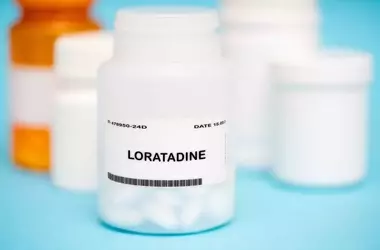
Loratadine: A Technical and Pharmacological Overview
Loratadine is a long-acting, non-sedating second-generation antihistamine primarily utilized to manage symptoms associated with allergic rhinitis and urticaria (hives). Chemically classified as a tricyclic piperidine derivative, it functions as a selective peripheral histamine H1-receptor antagonist. Unlike its predecessors, loratadine is engineered to provide relief without significant penetration into the central nervous system, thereby minimizing the drowsiness typically associated with earlier allergy treatments. This article provides an objective analysis of loratadine, examining its molecular structure, the biochemical mechanism of competitive inhibition, its metabolic conversion in the liver, and the regulatory standards governing its clinical use. The following sections will detail the cellular interactions of the compound, its pharmacokinetic profile, and a neutral discussion on its physiological impact and future research directions.
 By Dr. Omar Haddad
 Dec 23, 2025
Understanding Anti-Inflammatory Medications: A Comprehensive Scientific Overview
Inflammation is a fundamental biological response of the body to harmful stimuli, such as pathogens, damaged cells, or irritants. While acute inflammation serves as a protective mechanism to initiate healing, chronic or excessive inflammation can lead to tissue damage and various diseases. Anti-inflammatory medications are pharmaceutical agents developed to reduce swelling, pain, and redness by interfering with the biological markers that trigger inflammatory responses. This article provides a neutral, evidence-based exploration of these substances, outlining their foundational types, the biochemical pathways they influence, and the clinical considerations surrounding their use. By following a structured path from basic mechanisms to future scientific outlooks, this overview aims to deliver a clear understanding of the role anti-inflammatories play in maintaining physiological balance.
 By Mei Lin Zhou
 Dec 23, 2025
Understanding Respiratory Medications: A Comprehensive Clinical Overview
The respiratory system is a complex network of organs and tissues that facilitates the exchange of oxygen and carbon dioxide, a process essential for human life. Respiratory medications are a diverse category of pharmaceutical agents designed to prevent, manage, or treat disorders affecting the airways and lungs, such as asthma, chronic obstructive pulmonary disease (COPD), and various forms of bronchitis. The primary objective of these interventions is to maintain airway patency, reduce inflammation, and facilitate efficient gas exchange. This article provides a neutral, evidence-based examination of respiratory pharmacology. It clarifies foundational concepts of lung function, explains the biochemical mechanisms of bronchodilation and anti-inflammation, presents an objective overview of delivery systems like inhalers and nebulizers, and discusses future scientific prospects. By following a structured progression from basic mechanisms to technical Q&A, this discussion aims to deliver a clear understanding of how these medications support pulmonary health.
 By Daniel Brooks