 Breaking News & Live Updates
- Breaking News & Live Updates
- Breaking News & Live Updates
- Breaking News & Live Updates
- Breaking News & Live Updates
- Breaking News & Live Updates
- Breaking News & Live Updates
- Breaking News & Live Updates
- Breaking News & Live Updates
- Breaking News & Live Updates
Brain Structure, Narcissistic Traits, and Emotion Regulation: A New Study
New research has shed light on the complex interplay between personality, emotion regulation, and brain structure, particularly focusing on narcissistic traits and the anterior insula. This study reveals a significant connection where the physical characteristics of a specific brain area mediate the relationship between narcissistic tendencies and the habitual suppression of emotions. The findings offer a deeper understanding of how these factors influence each other, providing valuable insights for potential therapeutic interventions.
The Intricate Dance Between Narcissism, Emotion, and Brain Anatomy Unveiled
In a groundbreaking study recently featured in the Journal of Affective Disorders, a team of researchers led by Lisa Schmidt at the Philipps-Universität Marburg in Germany meticulously investigated the profound connections between narcissistic personality traits and an individual's propensity to mask their emotions. The study meticulously mapped the brain structures of 172 healthy adults, aged 18 to 45, who had no pre-existing psychiatric or neurological conditions. This deliberate selection allowed for a focused examination of personality variations without the confounding influences of medication or severe mental health challenges.
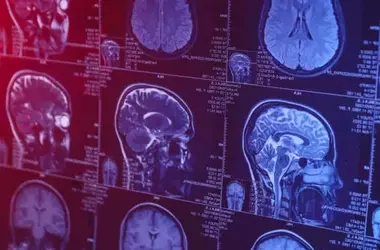
Participants underwent comprehensive assessments, completing questionnaires designed to evaluate their personality and emotional habits. To gauge narcissistic tendencies, a detailed assessment was used, dissecting both grandiose and vulnerable aspects across various sub-categories such as exploitative behavior and fragile self-esteem. Emotion regulation strategies were also measured, focusing on the frequent use of cognitive reappraisal and expressive suppression in daily life. Subsequently, high-resolution magnetic resonance imaging (MRI) scans were performed to analyze the structural characteristics of the anterior insula, a critical brain region involved in sensory integration, emotional awareness, and empathy. The scientists measured the volume of gray matter and the extent of gyrification, or surface folding, within this area. Gyrification is considered an early life indicator of brain development. The researchers then employed advanced statistical mediation models to decipher whether emotion regulation habits could explain the link between brain structure and narcissism, or vice versa.
The meticulous analysis of brain scans unveiled a compelling negative correlation: individuals with higher scores in both grandiose and vulnerable narcissism exhibited slightly smaller volumes in the right anterior insula. For vulnerable narcissism specifically, this reduced volume also extended to the left anterior insula. A key discovery from the mediation analysis was that the habitual practice of expressive suppression significantly mediated the relationship between the right anterior insula’s volume and narcissistic vulnerability. Furthermore, it also bridged the connection between the right insula’s surface folding and both grandiose and vulnerable traits. Intriguingly, the models also demonstrated a reciprocal influence: narcissistic traits mediated the relationship between the volume of both the left and right anterior insula and the reliance on expressive suppression. This complex, three-way dynamic indicates that the tendency to conceal emotions actively shapes the link between brain anatomy and personality, while personality simultaneously molds the relationship between emotional habits and brain anatomy.
Additional exploratory analyses across the entire brain revealed positive associations between specific narcissistic sub-traits and the folding of the anterior insula. Changes in the cortical thickness of the precuneus, a brain region situated in the parietal lobe, were also observed. This area is known to become highly active during self-reflection and when individuals evaluate their own traits in comparison to others. Although previous research occasionally linked narcissistic traits to the prefrontal cortex, which governs higher-level decision-making, this study did not find similar associations. The researchers posited that this discrepancy might stem from the specific questionnaires used or the differing methodologies of previous studies.
While providing invaluable insights, the study acknowledged certain limitations. The reliance on self-reported questionnaires for emotional habits and personality traits, common in psychological research, can sometimes be influenced by personal biases. Additionally, the cohort consisted of relatively young, healthy adults, meaning the findings might not directly translate to clinical populations with formal personality disorder diagnoses. Future research, incorporating a broader spectrum of behavioral data, could help isolate the unique neural signatures of narcissistic traits and potentially extend these findings to individuals undergoing psychiatric treatment.
These findings underscore the anterior insula's pivotal role as a convergence point where self-perception, physical brain structure, and emotional habits intertwine. Understanding how this brain region orchestrates emotional suppression opens new avenues for clinicians to refine therapeutic approaches. Addressing the deep-seated habit of emotional concealment could significantly benefit individuals grappling with the personal and social repercussions of narcissistic behavior, offering a path toward healthier emotional processing and improved interpersonal relationships.
Other Articles
 Apr 12, 2026
Smartphone Use Linked to Brain Changes
A comprehensive neuroimaging review reveals problematic smartphone use is associated with structural and functional brain alterations, particularly in areas governing reward, executive control, and emotional regulation. These changes are linked to how smartphones engage social cognition networks, fostering habits through digital social feedback and fear of exclusion. The findings, published in 'Progress in Neuro-Psychopharmacology and Biological Psychiatry,' highlight the complex neurobiological underpinnings of excessive smartphone engagement.
 Apr 11, 2026
AI's Impact on Consumer Impatience and Financial Decisions
New research suggests that artificial intelligence algorithms, while designed for efficiency, inadvertently heighten consumers' perception of waiting times, leading to more impulsive financial choices. This phenomenon, rooted in the 'internal clock' theory, was explored through various experiments, revealing how AI's fast processing can accelerate subjective time, making future rewards seem more distant and immediate gratification more appealing.
 Apr 11, 2026
Friendship Amplifies Oxytocin During Drum Circles in Children, Study Reveals
A recent Japanese study indicates that elementary school girls experience a rise in salivary oxytocin levels when participating in drum circles with friends, but not with strangers. Cortisol levels remained unaffected. This research, published in 'Brain and Behavior,' highlights how pre-existing social bonds can influence neuroendocrinological responses to group activities.
 Apr 10, 2026
How Perception of Social Standing and Materialism Influence Political Engagement
New research reveals that individuals' subjective social standing significantly impacts their political participation. This relationship is mediated by perceived societal fairness and materialistic values. The study highlights how a person's belief in their economic status, coupled with their attachment to wealth, can either foster civic engagement or lead to political disinterest. These findings offer insights into the psychological underpinnings of political activity and the diverse factors that drive or hinder it.
 Apr 09, 2026
Online Appearance Preoccupation: A Deep Dive into Youth's Digital Self-Image
A recent study published in "Psychology of Popular Media" investigates how online appearance preoccupation evolves among young people. The research, spanning five years, reveals that while young women initially report higher levels of concern, young men steadily catch up. Factors like social media usage, anxiety, and depression influence these trajectories, leading to a near-universal moderate-to-high level of digital self-image concern by late adolescence, highlighting the pervasive impact of idealized online imagery.
 Apr 06, 2026
Social Anxiety and Digital Addiction: The Role of Online Comparison
A recent study indicates that young adults grappling with social anxiety are more prone to developing digital addictions. This phenomenon is largely driven by a psychological tendency to constantly compare oneself to others on social media platforms. The research highlights a self-reinforcing cycle where fear of social interaction leads to increased online comparisons, ultimately fostering addictive digital behaviors. This suggests a crucial link between mental health, online habits, and the design of digital platforms.